


Winning work in construction is about more than just having the lowest price; it's about building the right relationships and getting in front of the right opportunities early. While many firms are stuck reacting to bid invitations, the most successful ones are proactively building their project pipeline. This strategic shift is where the right technology makes all the difference. Modern construction bid management software does more than just help you organize incoming bids. The best platforms give you upstream visibility, helping you identify and qualify private projects months before they’re common knowledge. This guide will explore the tools that help you manage the bidding process and, more importantly, find better projects to bid on in the first place.
Key Takeaways
- Create a single source of truth for every bid: Bid management software brings all your project documents, subcontractor communications, and bid submissions into one organized hub. This eliminates version control errors and saves your team from digging through emails for critical information.
- Prioritize function over flashy features: The best software is the one your team will actually use. Look for a simple, user-friendly interface, mobile accessibility, and seamless integrations with your existing estimating and project management tools to ensure a smooth workflow.
- Measure your success to justify the investment: To know if the software is truly working, track key metrics like your bid-to-win ratio and estimate accuracy. A clear improvement in these numbers provides tangible proof of your ROI and helps you refine your bidding strategy over time.
What Is Construction Bid Management Software?
Let's be honest: the traditional bidding process can be a mess of spreadsheets, overflowing inboxes, and last-minute phone calls. Construction bid management software is built to fix that. Think of it as a central command center designed to bring order to the chaos. It streamlines everything from sending the first invitation to awarding the final contract. Instead of juggling multiple tools and hoping nothing falls through the cracks, this software gives you a single, organized platform to manage the entire lifecycle of a bid.
These tools are designed to tackle the biggest challenges of traditional bid management by offering features that improve efficiency, accuracy, and organization. By automating repetitive tasks and creating structured workflows, bid management software helps you save a ton of time, cut down on administrative overhead, and maintain much better control over your bidding process. It’s not just about digitizing your current process; it’s about making it smarter and more effective so you can focus on building relationships and winning the right projects, not just chasing paperwork. It ensures all your bid details, files, and messages are in one central spot, creating a reliable system for your whole team.
What It Actually Does
So, what does this software actually do day-to-day? At its core, it helps you easily create, manage, and track all your bid invitations in one place. The software lets you send out invitations to bid, find and vet subcontractors, and grow your professional network. It ensures you get enough competitive bids for every scope of work on a project. By automating many of the tedious, repetitive tasks—like follow-up emails and document distribution—it frees up your team to focus on more strategic work. It’s all about giving you the tools to handle the entire process with more precision and less manual effort.
How It Simplifies Your Bidding Process
The biggest win here is simplification. Using this software can directly save you money by cutting down on manual work and administrative costs. It acts as a "single source of truth," meaning every bid detail, file, and message is stored in one central, accessible location. No more hunting through email chains for the latest addendum or wondering if a sub has the right set of plans. This centralization dramatically reduces the risk of miscommunication and errors. It also helps you ensure that every part of a project gets bid coverage, leading to more complete and competitive proposals that give you a better shot at winning the job.
Essential Features Every Bid Management Tool Should Have
When you start looking at bid management software, it’s easy to get lost in a sea of features. Every platform promises to make your life easier, but what does that actually mean in your day-to-day? The right tool does more than just digitize your current process; it fundamentally changes how you approach bidding. It shifts you from being reactive—chasing down subs and scrambling to meet deadlines—to being proactive, with a clear, organized, and repeatable system for winning work. Think of it as your preconstruction command center.
The goal is to find a platform that consolidates the chaos. Instead of juggling spreadsheets, overflowing inboxes, and stacks of paper, you get a single source of truth. This isn't just about convenience; it's about reducing risk. When all your documents, communications, and bid submissions live in one place, the chances of a costly error plummet. You’re no longer worried if a sub is bidding on an old set of plans or if a critical RFI was missed in an email chain. The best software provides a clear, transparent workflow that gives your entire team—from estimators to project managers—the visibility they need to make smart decisions. As you evaluate your options, use the following features as your checklist. These are the core functionalities that deliver real value and a tangible return on your investment.
Manage Bid Invitations and Submissions
This is the bread and butter of any bid management tool. Your current process probably involves a master spreadsheet of subcontractors and a whole lot of manual emailing. A dedicated platform transforms this. You can send out hundreds of customized bid invitations in minutes, not hours. More importantly, you can track everything that happens next. The software shows you who has opened your invitation, who has viewed the plans, and who intends to bid. This gives you a real-time pulse on your bid coverage, so you can see any gaps in your trades and send out more invites long before the deadline. It also helps you build a stronger network by finding and vetting new partners.
Organize Documents and Control Versions
We’ve all heard the horror stories: a subcontractor builds off an outdated set of drawings, leading to expensive rework and painful arguments. A central, online workspace for all your project documents is non-negotiable. This feature ensures that everyone—your internal team and every invited subcontractor—is looking at the exact same information. When you upload a new addendum or revised spec sheet, the system automatically notifies everyone and logs the change. This creates a clear digital paper trail and eliminates version control confusion. It’s about moving beyond paper-based workflows and giving your team simultaneous access to the information they need to submit an accurate and competitive bid.
Track Bids and Monitor Progress in Real-Time
Bidding day shouldn't feel like a frantic race against the clock. Real-time bid tracking gives you a bird's-eye view of your entire bidding pipeline. A visual dashboard can show you the status of every bid package, highlighting which trades have sufficient coverage and which ones need more attention. This clarity allows you to focus your efforts where they’re needed most. Some platforms even help you analyze and compare bids side-by-side, a process known as scope leveling. This helps you find the best partners by looking beyond the bottom-line price to consider their past performance, qualifications, and potential risks, ensuring you’re making the most informed decision for the project.
Centralize Team Communication and Collaboration
How many times has a critical piece of information been lost in a long email thread? Centralizing all communication within the bidding platform keeps everyone on the same page. Instead of estimators fielding one-off calls and emails, all questions, RFIs, and clarifications are logged in a single place. This creates a transparent and searchable record of all bid-related conversations. Not only does this save your team from hunting through their inboxes, but it also creates a clear audit trail. This level of organization ensures a smoother handoff when a bid is won, as the project manager has a complete history of all decisions made during the preconstruction phase.
Integrate with Your Estimating and PM Software
Your bid management software shouldn't operate in a silo. To achieve true operational efficiency, it needs to connect with the other tools in your construction software ecosystem. Look for platforms that offer seamless integrations with your estimating software, project management tools, and accounting systems. This allows for a smooth flow of information across the entire project lifecycle. For example, you can push project details from your estimating takeoff directly into a bid package, and once a bid is won, all the relevant financial and project data can be automatically transferred to your PM and accounting software. This eliminates redundant data entry, reduces human error, and saves your team a significant amount of administrative time.
The Top Construction Bid Management Software Reviewed
Choosing the right software can feel overwhelming, but it really comes down to finding the tool that fits your specific workflow. Some platforms are all-in-one project management giants, while others are laser-focused on the preconstruction phase. To help you sort through the options, I’ve broken down six of the top construction bid management software tools on the market. We’ll look at what makes each one unique so you can find the perfect match for your team.
Mercator.ai: Find and Manage Projects with AI
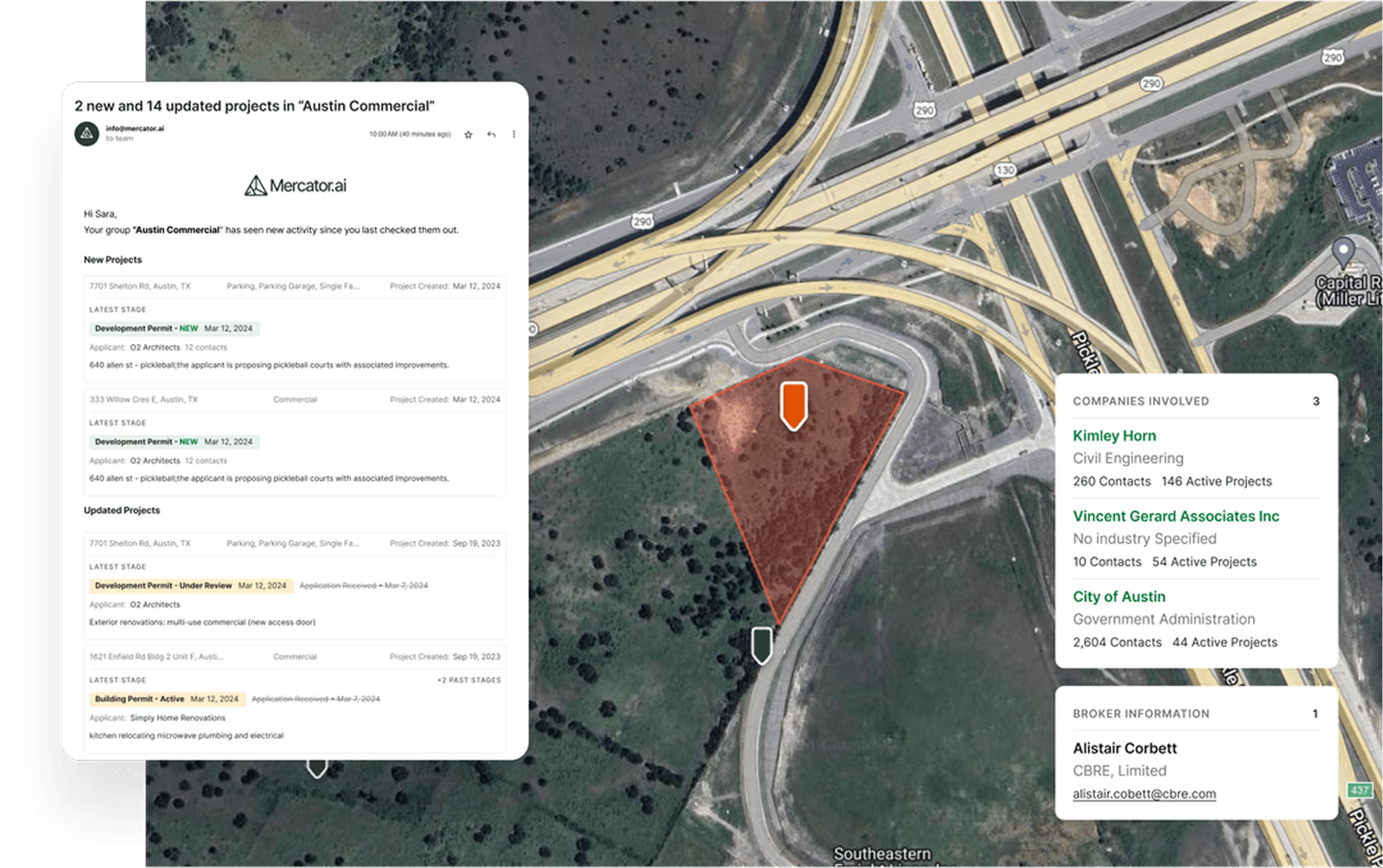
While many tools help you manage bids you already know about, Mercator.ai is built to help you find and qualify private projects months before they ever go out to bid. It uses AI to analyze datasets like title transfers, rezoning applications, and permit activity, giving you a heads-up on new opportunities. This upstream approach allows you to build relationships with project owners and developers early, positioning you as a trusted partner instead of just another bidder. It’s less about managing incoming ITBs and more about proactively creating your own pipeline of high-quality, targeted projects.
Procore: Manage the Entire Construction Lifecycle
Procore is a comprehensive platform designed to handle the entire project from start to finish. Its bid management software is just one piece of a much larger ecosystem that includes project management, financials, and quality and safety tools. According to Procore, its software helps you "manage the whole construction bidding process in one place," aiming to get you from bidding to building faster. If you’re looking for a single solution to run your entire operation and want to keep everything from preconstruction to closeout under one roof, Procore is a powerful contender.
SmartBid: Focus on Bidding and Procurement
If your main goal is to streamline your preconstruction process, SmartBid is a tool worth looking into. It’s specifically designed for general contractors to manage their bidding and procurement workflows. As SmartBid puts it, the software "helps make the preconstruction process easier for general contractors and their subcontractors." It excels at organizing subcontractor data, sending out bid invitations, and tracking who has viewed and submitted bids. This specialized focus makes it a strong choice for GCs who want a dedicated tool to master their bidding process without the complexity of a full-blown project management suite.
ConstructConnect: Tap into a Bidding Network
ConstructConnect combines bid management with a massive project and professional network. The platform helps you find new projects to bid on while also providing the tools to manage the bidding process itself. Their goal is to "save time on bidding so companies can spend more time building." This is a great option if you’re looking to expand your reach and find new opportunities while simultaneously organizing your preconstruction workflow. The integration of project leads with bid management tools makes it a powerful platform for business development.
PlanHub: Use a Cloud-Based Plan Room
PlanHub operates as an all-in-one cloud platform that connects general contractors, subcontractors, and suppliers. It functions as a digital plan room where GCs can post projects and subs can find and bid on them. PlanHub states that it "helps them find projects, manage their bids, and make their business operations smoother." Its easy-to-use interface and network approach make it simple for GCs to get more eyes on their projects and for subcontractors to find local work. If you value a straightforward, collaborative platform for sharing project documents and sourcing bids, PlanHub is an excellent choice.
BuildingConnected: Leverage Autodesk’s Bidding Tool
As part of the Autodesk Construction Cloud, BuildingConnected is a powerhouse for preconstruction. It leverages one of the largest and most active construction networks to help you find and qualify the right subcontractors for your projects. The platform streamlines bid invitations, communication, and bid analysis in one central location. Because it’s an Autodesk product, it integrates smoothly with other tools like PlanGrid and BIM 360, creating a connected workflow from preconstruction through project completion. It’s an ideal choice for teams already invested in the Autodesk ecosystem or those who prioritize robust subcontractor risk management.
What Do Real Users Think?
Marketing materials can promise the world, but the real test of any software is how it performs in the field. When you’re managing multiple bids under tight deadlines, you need a tool that’s reliable, intuitive, and actually makes your job easier. So, what are general contractors and subcontractors saying about the bid management software they use every day?
We looked at user reviews, industry surveys, and customer feedback to get a clear picture of what works and what doesn't. The consensus is that while these platforms can be game-changers for organization and efficiency, they aren't all created equal. Some excel at centralizing documents, while others are praised for their vast subcontractor networks. But across the board, contractors face similar challenges and celebrate similar wins. Understanding these common themes will help you look past the sales pitch and find a solution that fits the way your team actually works.
Performance and Reliability Ratings
When it comes to performance, contractors value speed, accuracy, and connectivity. Users often describe platforms like PlanHub as being easy to use, fast, and accurate for both finding and posting jobs. This kind of feedback highlights the importance of a straightforward interface that doesn't slow you down.
Other platforms, like SmartBid, have built a reputation as a leading solution specifically for general contractors. Meanwhile, a tool’s ability to connect with your existing software is a huge factor in its reliability. For example, Procore stands out by offering more than 500 integrations with other applications, ensuring it can fit smoothly into your established tech stack without creating data silos.
What Contractors Love
The biggest win for most contractors is centralization. Having a single place to manage bids, prepare estimates, and track progress is a massive improvement over juggling spreadsheets and overflowing inboxes. Users love that they can send bid invitations, find and vet subcontractors, and build their network all within one system. This helps ensure they get enough bids for each project without having to chase down information from multiple sources.
For companies with multiple locations, the organizational benefits are even greater. Software like SmartBid helps construction firms bring all their different offices into one cohesive system, standardizing the bidding process and improving visibility across the entire organization. This creates a single source of truth for every project out to bid.
Common Complaints and Limitations
Even with the best software, challenges remain. According to one survey, the top hurdle for general contractors implementing a new system is onboarding subcontractors. If your trade partners won't adopt the platform, you lose many of its collaborative benefits.
Another common frustration is a more strategic one: bidding on the wrong projects. While bid management software helps organize the process, it doesn't always help you find the right opportunities in the first place. Other persistent issues include communication hiccups, human errors during data entry, and the constant pressure of time constraints. These are fundamental challenges in construction that software can help manage but not completely eliminate.
Common Hurdles When Implementing New Software
Switching to a new bid management platform isn't as simple as flipping a switch. While the long-term benefits are clear—more organized bids, better communication, and a higher win rate—the transition period can present a few challenges. Thinking through these potential roadblocks ahead of time is the best way to ensure a smooth rollout for your team and your trade partners. It’s less about the software itself and more about how it fits with your people, your existing tools, and your established processes.
The most common issues aren't technical glitches; they're human ones. Getting everyone on board, from your internal team to your trusted subcontractors, requires a clear plan. You also need to make sure your new tool plays nicely with the software you already depend on, otherwise you’re just creating more work. By anticipating these hurdles, you can create an implementation strategy that minimizes disruption and gets you to a better, more efficient bidding process faster. Let's walk through the four biggest challenges you're likely to face and how to handle them.
Getting Your Subcontractors On Board
Your bid management process is a team sport, and your subcontractors are key players. If they find your new software difficult or confusing, they may be slow to respond or, worse, stop bidding on your projects altogether. In fact, a recent survey from Autodesk highlighted that for general contractors, the single biggest challenge of implementing new bid software was simply onboarding subcontractors.
To get them on board, you need to make it easy for them. Choose a platform with a simple, intuitive interface for external collaborators. When you invite them to a project, provide clear, concise instructions and highlight how the new system benefits them—like having all documents and communications in one place. A little proactive communication goes a long way in making your subs feel like valued partners rather than just another name on a bid list.
Connecting with Your Current Systems
New software should solve problems, not create them. If your bid management tool doesn't connect with your other essential systems, you risk creating isolated data silos and forcing your team into tedious, manual data entry. For your operations to run smoothly, your new platform needs to have strong integration capabilities with the tools you already use every day.
Think about your entire workflow. The bid information should flow seamlessly into your estimating software. Once a bid is won, the project details need to move into your project management and accounting systems without someone having to copy and paste everything. Before committing to a platform, map out your existing tech stack and confirm that the new software can integrate with it to create a single, unified source of truth.
Training Your Team and Setting Expectations
A powerful tool is useless if your team doesn't know how to use it properly. Rushing the implementation without adequate training is a recipe for frustration, human error, and low adoption. If your team doesn't understand the "why" behind the switch or the "how" of the new process, they'll likely revert to their old methods, defeating the purpose of your investment.
Set aside dedicated time for training and be realistic about the learning curve. Appoint a champion within your team who can become an expert and a go-to resource for questions. It's also critical to set clear expectations from the start. Communicate what the software is meant to achieve, how it will change daily tasks, and what a successful transition looks like. This ensures everyone is aligned and working toward the same goal.
Fitting It into Your Current Workflow
Adopting new software is an opportunity to refine your existing processes, not just digitize them. Simply dropping a new tool into an old, inefficient workflow won't fix the underlying problems. You need to think critically about how the software can streamline your entire bid management process, from the moment you identify an opportunity to the day you kick off the project.
The goal is to create an integrated technology strategy that eliminates redundant steps and automates the flow of information. For example, the right software should automatically transfer data from a winning bid to create a new project contract, eliminating duplicate data entry and reducing the chance of errors. Take the time to map out your ideal workflow and choose a tool that helps you achieve it.
How Much Does Bid Management Software Cost?
Let's talk about the bottom line. Investing in new software always comes down to cost versus benefit, and bid management tools are no different. The price can range from a couple of hundred dollars a month to thousands, depending on your team's size, the features you need, and the number of projects you manage. There isn't a single sticker price because most platforms tailor their pricing to fit different types of construction businesses.
Instead of just looking at the monthly subscription fee, it’s more helpful to think about the total value. The right software should pay for itself by streamlining your workflow, reducing manual errors, and helping you win more of the right projects. To figure out what you should expect to pay, you need to understand the common pricing structures, be aware of potential hidden costs, and know how to calculate the return on your investment.
A Look at Pricing Models
Most bid management software operates on a subscription basis, usually with monthly or annual payment options. You’ll typically find tiered plans that scale with your business. A small subcontractor might only need a basic plan for a few users, while a large general contractor will require an enterprise-level solution with advanced analytics and unlimited projects. Many platforms offer different pricing plans specifically for general contractors, subcontractors, and suppliers. Some even provide a free version with limited features, which can be a great way to test the software before committing. Always ask for a demo to see the platform in action and ensure it fits your team’s needs.
Watch Out for These Hidden Costs
The subscription fee is just one piece of the puzzle. When budgeting for new software, be sure to ask about any additional costs that might not be obvious upfront. These can include one-time setup or implementation fees, charges for data migration from your old system, and costs for training your team. Some companies also charge extra for premium customer support or for integrations with other software you already use. While these costs can add up, it's also important to consider the cost of not investing. When you weigh the software's price against the cost of project delays, missed bids, and frustrated crews, the value often becomes much clearer.
Calculating the ROI for Your Business
The real question isn't "What does it cost?" but "What is it worth?" The return on investment (ROI) for bid management software comes from both time savings and increased revenue. By automating repetitive tasks and creating structured workflows, these tools help you reduce administrative overhead and maintain better control over your bidding process. This efficiency gain means your team can submit more bids in less time and with greater accuracy. You can start to measure this by tracking key metrics like your bid-to-win ratio before and after implementation. Seeing how other firms have used these tools by reading through customer stories can also give you a clearer picture of the potential returns.
How to Choose the Right Bid Management Software
With so many options on the market, picking the right bid management software can feel overwhelming. The key is to remember that the "best" platform is the one that fits your specific workflow, team size, and business goals. A tool that works wonders for a national general contractor might be overkill for a specialized subcontractor. To find the perfect fit, you need to look past the flashy features and focus on the core functionalities that will actually make your bidding process more efficient and profitable. Let’s walk through the four most important factors to consider.
Consider Your Company Size and Project Volume
The right software for you depends directly on your company's size, budget, and the complexity of your projects. A small firm bidding on a handful of local jobs has very different needs than a large GC juggling dozens of multi-million dollar tenders. Before you even start looking at demos, take stock of your current and projected workload. Are you a growing team that needs a scalable solution? Or are you a stable, specialized crew that just needs to organize your current process? Some platforms are built for enterprise-level complexity, while others offer streamlined, straightforward tools perfect for smaller teams. Matching the software's capacity to your operational scale ensures you’re not paying for features you’ll never use.
Check for Must-Have Integrations
Your bid management software shouldn't operate on an island. To get the most out of it, your system needs to connect seamlessly with the other tools you rely on every day. Think about your current tech stack. Your new software should integrate with your project management tools for timeline tracking, your estimating software for bid information, and your accounting systems for financial data. This connectivity eliminates redundant data entry, reduces the risk of human error, and creates a single source of truth across your entire operation. A well-integrated system ensures a smooth flow of information from the initial bid to project completion, which is something our customers often mention as a major win.
Prioritize a User-Friendly and Mobile-Ready Design
The most powerful software in the world is useless if your team finds it too complicated to use. The best tools are simple, easy to learn, and don't require weeks of training. Look for a clean, intuitive interface that makes it easy to find information and complete tasks. More importantly, your team isn't always sitting at a desk. Project managers, estimators, and field supervisors need access to bid documents and communications on the go. A robust, mobile-ready platform is non-negotiable. Test the mobile app during your trial period to ensure it’s fast, functional, and just as easy to use as the desktop version. A great example of a simple, on-the-go tool is our Free Permits App.
Look for Strong Analytics and Reporting
Great bid management software does more than just organize your bids—it gives you the data to make smarter decisions. You need a tool with strong analytics and reporting features that help you track key performance indicators. Look for real-time dashboards and customizable reports that show your bid-to-win ratio, subcontractor performance, and profit margins by project type. This information is gold. It helps you understand which projects are most profitable, which partners are most reliable, and where you can refine your bidding strategy. Over time, these insights will help you stop chasing every project and start focusing on the bids you’re most likely to win.
Common Myths About Bid Management Software (and Why They’re Wrong)
Deciding to bring a new tool into your workflow is a big step, and it’s natural to have some reservations. When it comes to bid management software, a few common misconceptions often hold construction firms back from making a change that could transform their business development. If you’ve ever found yourself thinking that new software is too expensive, too complex, or simply unnecessary, let’s clear the air and look at the reality behind these myths.
Myth #1: "It's too expensive."
It’s easy to look at the price tag of a new software subscription and think of it purely as a cost. But that’s a limited view. The real question isn’t what it costs, but what it’s worth. A common misconception is that construction management software is too expensive, but when you consider the long-term savings from improved efficiency and fewer errors, the investment pays for itself. Think about the time your team spends manually tracking bids, the cost of a miscommunication that leads to rework, or the price of losing a bid because of a preventable mistake. Good software gives that time back and reduces costly errors, directly impacting your bottom line. Many platforms also offer flexible pricing models designed to scale with your business, so you can start with a plan that fits your current needs.
Myth #2: "It's too complicated to learn."
Your team is busy managing projects, not sitting in front of a computer all day. The fear that new software will have a steep learning curve and cause more headaches than it solves is completely valid. However, most modern bid management tools are built with the end-user in mind—that means you. They feature intuitive, user-friendly interfaces and provide plenty of training resources to get your team comfortable quickly. The best platforms are designed to feel like a natural extension of your workflow, not a disruption. Many companies share customer stories that highlight a smooth onboarding process, proving that you don’t need to be a tech wizard to get immense value from these tools.
Myth #3: "My current email system works just fine."
If you’re managing bids through email, you’re likely spending more time searching, forwarding, and organizing than you realize. While email is a familiar tool, relying on it alone can lead to missed messages, lost documents, and major inefficiencies. Think about it: Is the latest version of the plans buried in a long email chain? Are you sure every subcontractor received the most recent addendum? Dedicated bid management software solves this by creating a single source of truth. It provides a centralized communication hub where all documents, messages, and deadlines are organized and accessible to everyone who needs them. This keeps your bidding process clean, professional, and far less prone to human error.
How to Measure Your Software's Success
Adopting new software is a big step, and you need to know if it’s actually paying off. The goal isn't just to feel more organized; it's to see a real, measurable impact on your bottom line. Success isn't about how many features the software has, but how those features translate into winning more profitable work. To figure this out, you need to move beyond gut feelings and look at the data.
By tracking a few key performance indicators (KPIs), you can get a clear picture of the software's return on investment. Are you winning more of the bids you submit? Are your estimates getting more accurate? Is your team communicating more effectively? These aren't just abstract questions. The right software should provide clear, positive answers that show up in your reports. Let's break down the most important metrics to watch.
Track Your Bid-to-Win Ratio
Your bid-to-win ratio is one of the most telling signs of your bidding effectiveness. It’s simple: divide the number of projects you’ve won by the number of bids you’ve submitted. If this number starts climbing after you implement new software, you’re on the right track. A good tool helps you identify and pursue the right projects, not just bid on everything that comes across your desk. Understanding this ratio is crucial because it acts as one of the most important forward-looking metrics for your business, helping you forecast your pipeline and plan resources more accurately. A higher ratio means you’re working smarter, not just harder.
Measure Estimate Accuracy and Timelines
How long does it take your team to put together a bid? And how accurate are those estimates once the project is underway? Your bid management software should streamline this entire process. Look for a reduction in the time it takes to create and submit a bid. More importantly, track the variance between your initial estimates and the final project costs. Tighter margins here mean the software is helping you create more precise, competitive, and profitable bids. By improving your process, you can drive better operational efficiency and protect your profit margins from the start.
Gauge Communication Efficiency and Project Discovery
A major source of bidding errors and delays is poor communication. Is your team still chasing down information in endless email threads? Your new software should serve as a central hub, making it easy to see who has the latest documents and what tasks are outstanding. But true success goes beyond just managing bids—it’s about finding them. The best tools give you upstream visibility into projects long before they go to bid, giving you a critical head start. If you’re identifying more qualified opportunities earlier in the development cycle, your software is giving you a powerful competitive edge.
Monitor Customer Lifetime Value
Not all clients are created equal. Some bring you a steady stream of profitable work, while others cause headaches for minimal return. Your bid management software should help you identify your best clients by tracking your history with them. By analyzing your win rate, project profitability, and change order frequency per client, you can determine their lifetime value (CLV). This data is gold. It tells you which relationships to invest in and which types of projects are most lucrative for your business. Focusing on high-CLV clients is a strategic way to build a more stable and profitable project pipeline.
Your Game Plan for Getting Started
You’ve done the research and picked the right software. Now comes the most important part: putting it to work. A great tool is only as good as its rollout, and a thoughtful implementation plan ensures your team actually uses the software so you get the return on investment you're looking for. Let's walk through the three key steps to get you started on the right foot.
Set a Realistic Implementation Timeline
Switching to a new system doesn't happen overnight. Rushing the process can lead to frustration and poor adoption, so it's better to map out a clear, realistic timeline from the start. A structured implementation process helps minimize risks and ensures you get the most value from your investment. Break the project into manageable phases: start with data migration and system setup, then move to team training and a pilot phase with a few key projects. Assign a point person to lead the charge and keep everyone on track. This approach prevents overwhelm and builds momentum as you hit each milestone.
Train Your Team for a Smooth Transition
Your team's buy-in is everything. If they don't understand how or why to use the new software, it will quickly become expensive shelfware. Start by explaining the benefits—not just for the company, but for their daily work. Show them how it will make their jobs easier. When it comes to the software itself, hands-on training is far more effective than a dense manual. Also, make sure your new tool plays well with others. Strong integration capabilities with your existing software are crucial for efficiency. Your system needs to connect with your project management, estimating, and accounting tools to create a seamless workflow and avoid duplicate data entry.
Measure, Optimize, and Win More Bids
The launch isn't the finish line; it's the starting point. To truly know if your new software is working, you need to measure its impact. Before you even begin, decide which Key Performance Indicators (KPIs) matter most to your business. Metrics like your bid-to-win ratio and backlog are essential for understanding your future trajectory. Use your software’s dashboard to track these numbers in real-time. Schedule regular check-ins with your team to review the data, celebrate wins—like the ones our customers have shared—and identify what needs tweaking. This continuous feedback loop is how you turn a good tool into a game-changing asset that helps you win more profitable bids.
Related Articles
Frequently Asked Questions
All these software options sound great, but how do I know which type is right for me? The best way to decide is to pinpoint your biggest challenge. Is it organizing the bids you're already invited to, or is it finding new projects before your competitors do? Most bid management tools are designed to help you manage the chaos of incoming invitations and streamline your response. Others are built to help you get ahead of the game by identifying private projects early, so you can build relationships and create your own opportunities instead of just reacting to them. Your choice depends on whether you need to organize your current pipeline or proactively build a new one.
Is this kind of software only for large general contractors? Not at all. While large GCs certainly benefit from the organization, subcontractors and suppliers can get just as much value. Many platforms have pricing plans and features tailored specifically for subs, helping you track your bids, manage documents, and communicate with multiple GCs from one central place. It levels the playing field by giving you the same organizational power as larger firms, helping you look more professional and stay on top of every opportunity.
My team is already stretched thin. Will learning a new system just add more work? It's a valid concern, but the goal is to trade a short-term learning curve for long-term efficiency. The initial setup and training do require a time commitment. However, once you're up and running, the software takes over the tedious, manual tasks that eat up your team's day—like chasing down subs, sending follow-up emails, and tracking down the latest set of plans. This frees them up to focus on building relationships and crafting better bids, which is where the real value lies.
What if my main problem isn't managing bids, but finding good projects to bid on in the first place? This is a common challenge, and it's where you see a big difference in software. Traditional bid management platforms are built to organize the work you already have. If your primary goal is business development, you need a tool that helps you find opportunities. Platforms that analyze early-stage project data—like permit applications or land sales—give you a head start on private projects months before they become common knowledge, allowing you to connect with owners and get specified early.
I'm interested, but this all feels a bit overwhelming. What's the very first step I should take? Don't try to solve everything at once. The best first step is to simply map out your current bidding process, warts and all. Grab a whiteboard and sketch out how a bid moves through your company, from the moment you hear about it to the day you submit. This exercise will immediately highlight your biggest bottlenecks and pain points, giving you a clear idea of what problem you actually need the software to solve. Once you know that, you can start looking for a tool with features that directly address those specific challenges.


AI-powered business development for the construction industry
Schedule a time to discuss your use case and walk through a custom demo of the platform.