

The buzz around Fort Worth’s building boom is undeniable, but with that excitement comes intense competition. By the time a major project makes headlines, dozens of firms are already vying for a piece of the work. The real advantage isn’t just knowing what’s being built; it’s knowing about it months, or even years, before the first shovel hits the ground. Getting ahead means tracking the earliest signals of development, from land sales to rezoning applications. This article breaks down the most significant Fort Worth construction projects on the horizon and shows you how to find the next big opportunity before it becomes common knowledge.
Key Takeaways
- Target the Booming Sectors: Fort Worth's growth is concentrated in mixed-use, education, and public infrastructure. Focusing your efforts on these key areas will connect you with the city's most significant and long-term projects.
- Track Early Project Signals: Get ahead of the competition by monitoring the earliest indicators of new development, such as rezoning applications, land sales, and initial permit filings. This proactive approach uncovers opportunities long before they become public knowledge.
- Build Relationships Before the Bid: Early project intelligence isn't just for preparing a proposal; it's your chance to connect with key decision-makers. Use this head start to build trust and establish your company as the right partner for the job.
What Are Fort Worth's Major Construction Projects?
Fort Worth is buzzing with activity, and if you’re in the construction industry, you’re in the right place at the right time. From massive urban revitalization efforts to critical infrastructure upgrades, the city is undergoing a transformation. Keeping track of these large-scale developments is key to positioning your business for success. Here are five of the most significant projects on the horizon that you’ll want to watch closely. Each one represents a wave of opportunities for general contractors, subcontractors, and suppliers ready to make their mark on the city.
Panther Island Redevelopment Project
The Panther Island project is one of the most ambitious undertakings in Fort Worth, aimed at completely revitalizing the area along the Trinity River. This isn't just a single building; it's a long-term, transformative initiative creating a vibrant waterfront district. With new funding secured and contracts moving forward, the project has hit major milestones recently. For contractors and suppliers, this means a sustained pipeline of opportunities, from groundwork and infrastructure to the vertical construction of new residential and commercial spaces. Keeping an eye on the project’s interactive timeline will be crucial for identifying when and where your services will be needed as this new urban landscape takes shape.
Convention Center Expansion
Get ready for a bigger and better Fort Worth Convention Center. A major expansion is underway to enhance the facility's capacity and attract larger national events and conferences. The first phase is a significant undertaking, with a timeline stretching to 2026. This project is a prime opportunity for firms specializing in large-scale commercial construction, structural steel, advanced AV systems, and high-end interior finishes. As the city invests in becoming a top-tier destination for events, the demand for skilled trades and quality materials will be high. This is a landmark project that will require a wide range of expertise to complete successfully.
Texas A&M Fort Worth Campus
Higher education is making a huge investment in Fort Worth. The Texas A&M System Board of Regents has nearly doubled the construction budget for the new Law and Education building, bringing the total to $150 million. This massive funding increase signals the scale and quality expected for the new Texas A&M-Fort Worth urban campus. The project will create a state-of-the-art research and learning hub downtown. For construction firms, this means significant opportunities in institutional building, including specialized labs, modern classrooms, and collaborative public spaces. It’s a high-profile project that will attract top-tier talent and suppliers from across the state.
Downtown Mixed-Use Developments
Downtown Fort Worth is in the middle of a legitimate construction boom, with an estimated $2.5 billion in development projects in the pipeline. This isn't just one or two buildings—it's a wave of investment set to completely reshape the city center. These projects are primarily focused on mixed-use spaces, combining residential, retail, and office components to create a more dynamic urban environment. For private-sector contractors, this boom presents a wealth of opportunities. Developers are actively seeking partners for everything from high-rise residential towers to ground-floor retail fit-outs. Tracking land sales and rezoning applications will be key to getting in on these projects early.
Transportation Infrastructure Upgrades
To support all this growth, Fort Worth is making critical transportation infrastructure upgrades. Key road projects are moving forward, with right-of-way acquisitions wrapping up and construction kicking off soon. These projects are essential for improving connectivity and managing the increased traffic that comes with a growing population and commercial expansion. This is a major opportunity for civil contractors, excavation companies, and suppliers of road-building materials. As the city expands, the need for improved roads, bridges, and public transit will only continue to grow, offering a steady stream of public works projects for years to come.
What Kinds of Projects Are Shaping Fort Worth?
Fort Worth is experiencing a construction boom, and it’s not limited to one specific sector. The city's rapid growth is fueling a diverse range of projects, creating opportunities for general contractors, subcontractors, and suppliers across the board. From towering mixed-use developments in the heart of downtown to critical infrastructure upgrades and new educational campuses, the landscape is constantly evolving. Understanding these key development areas helps you position your business to win the right kind of work. Whether you specialize in large-scale commercial builds or foundational site work, there’s a place for you in Fort Worth’s expansion. The key is knowing where to look and what types of projects are gaining the most momentum.
Residential and Mixed-Use
The demand for modern urban living is transforming downtown Fort Worth. We're seeing a significant rise in new building projects that blend residential, commercial, and hospitality spaces. These downtown developments often include apartments or condos stacked on top of ground-floor retail, restaurants, and offices, creating vibrant, walkable communities. For contractors, this trend opens up a wide variety of opportunities, from concrete and framing for high-rises to interior finishing for luxury apartments and commercial tenant build-outs. These projects require a coordinated effort from multiple trades, making them a hub of activity for everyone from electricians and plumbers to glaziers and landscapers.
Commercial and Educational
Fort Worth is also becoming a major hub for education and innovation, which is driving large-scale commercial construction. A prime example is the new Texas A&M-Fort Worth urban campus, a massive investment designed to foster research and entrepreneurship. This project alone creates demand for specialized construction in labs, classrooms, and collaborative spaces. Beyond the campus itself, this type of anchor institution often sparks surrounding commercial development, including new office buildings, hotels, and retail centers to support the influx of students, faculty, and businesses drawn to the area. This creates a ripple effect of opportunities for commercial contractors and suppliers.
Public Infrastructure and Transportation
To support its explosive growth, Fort Worth is making substantial investments in its core infrastructure. The city’s Capital Projects plan outlines extensive work on public systems, which is essential for keeping the city moving. This includes major road repairs, lane additions to ease traffic congestion, intersection improvements, and the expansion of sidewalks for better pedestrian access. For contractors specializing in civil engineering, earthwork, paving, and utilities, these public works projects offer a steady stream of contracts. This foundational work is critical for enabling the larger residential and commercial developments taking place across the city.
Parks and Recreation
It’s not all concrete and steel. Fort Worth is also dedicated to enhancing its quality of life by investing in green spaces. The city is actively developing new parks and upgrading existing ones to meet the needs of its growing population. These projects range from installing modern playground equipment and adding security lighting to creating entirely new recreational areas from the ground up. This focus on community spaces provides consistent opportunities for landscape architects, excavation contractors, lighting specialists, and companies that supply park amenities. These projects are vital for creating balanced, livable neighborhoods amid rapid urbanization.
How Is Construction Impacting Fort Worth's Economy?
The cranes dotting the Fort Worth skyline are more than just signs of new buildings; they’re a clear indicator of a robust local economy. The city's construction boom is creating a powerful ripple effect that touches nearly every aspect of its financial health. From creating thousands of jobs to funding public services and attracting new businesses, these projects are laying the groundwork for long-term prosperity. Understanding this broader economic impact helps you see where the market is headed and how your own business fits into the bigger picture. Let's look at three key ways this growth is reshaping the city's economic landscape.
Job Creation
Every new project that breaks ground comes with the promise of new jobs. Fort Worth recently saw its strongest year in over a decade, with major projects contributing to over 6,900 new and retained jobs. This isn't just about the skilled trades on-site; it also includes roles in architecture, engineering, and project management. As new commercial and residential spaces open, they create even more long-term employment opportunities for the community. This level of job creation strengthens the local workforce and makes Fort Worth an even more attractive place to live and work.
Property Value and Tax Revenue
New construction directly contributes to the city's bottom line. As developments are completed, they increase surrounding property values and expand the city's tax base. This isn't just about numbers on a spreadsheet; it's how essential public services get funded. The tax revenue generated from these projects is reinvested into the community to improve roads, parks, and schools. Essentially, private development projects are a key source of funding for the public infrastructure needed to support Fort Worth's growing population and ensure sustainable growth for years to come.
Business Growth
A vibrant construction market acts as a magnet for other businesses. With an estimated $2.5 billion in development planned for downtown alone, Fort Worth is sending a clear signal that it's open for business. This new construction creates modern office spaces, retail storefronts, and mixed-use areas that attract new companies to the city. This influx of investment fosters a dynamic commercial environment, creating a positive feedback loop where new businesses generate more demand for construction services. The development pipeline is not just reshaping the skyline; it's building a more robust and diverse local economy.
What Are the Timelines for Key Fort Worth Projects?
Keeping track of project timelines is essential for planning your bids and allocating resources. Fort Worth’s development landscape is buzzing with activity, and major projects are moving forward on schedules that span from the near future to the end of the decade. Understanding these timelines helps you position your business to get involved at the right moment. Whether a project is breaking ground or entering its final phase, knowing the schedule gives you a critical advantage in a competitive market. Here’s a look at what to expect for some of the city’s most significant construction initiatives.
Nearing Completion: 2024-2025
As we move through 2024 and into 2025, many projects that broke ground a few years ago are entering their final stages. This phase presents immediate opportunities for subcontractors and suppliers specializing in finishing trades, interior work, landscaping, and final inspections. Keeping an eye on these developments allows you to anticipate the need for specific materials and labor as projects approach their ribbon-cutting ceremonies. While the headline-grabbing mega-projects often have longer horizons, the steady stream of commercial build-outs, residential developments, and smaller public works nearing completion provides a consistent source of work for those who know where to look.
Long-Term Plans: Through 2026 and Beyond
Looking further ahead, Fort Worth has several transformative projects scheduled for completion around 2026. The first phase of the Fort Worth Convention Center's expansion is expected to wrap up that year, enhancing the city's ability to host major events and driving demand for hospitality and commercial construction. On the transportation front, roadwork continues to be a priority. According to community updates, a key section of roadwork is projected for a 2026 completion, which will improve connectivity in a vital corridor. These long-term projects offer sustained opportunities for general contractors and specialty trades to build relationships and secure work for years to come.
Infrastructure Upgrade Schedules
Major infrastructure upgrades are complex and follow phased schedules that can span several years. The Panther Island project, a massive flood control and urban development initiative, is a prime example. You can follow its progress through an interactive timeline that details key milestones and funding updates. Similarly, TxDOT is managing the significant Interstate 30 expansion in western Tarrant County to address congestion and improve safety. For contractors and suppliers, tracking these large-scale public works projects is crucial. They create consistent demand for heavy equipment, materials, and skilled labor, and getting specified early can lead to significant contracts as new phases get underway.
How Do These Projects Affect Local Communities?
Beyond the economic data and job numbers, Fort Worth's construction boom has a real, tangible impact on the people who live and work here. These projects are reshaping daily commutes, revitalizing neighborhoods, and improving the public services everyone relies on. For contractors and suppliers, understanding this community impact provides crucial context for the work you do and helps you see the bigger picture of how you're contributing to the city's future. It’s not just about building structures; it’s about building a better Fort Worth for its residents.
Traffic and Transportation Changes
Anyone who drives in Fort Worth knows that growth can mean more congestion. Several major projects are underway to address this head-on. A new bike lane project, set to run from 2025 to 2027, is designed to improve safety for cyclists and encourage alternative transportation. Meanwhile, a significant road widening project from Wagley to 287 will improve traffic flow and connectivity for commuters. While construction can cause temporary delays, these initiatives are part of a long-term strategy to ease the city's traffic congestion and make getting around town easier for everyone.
Neighborhood Development
The heart of the city is getting a major facelift, with an estimated $2.5 billion in development planned for downtown Fort Worth. This investment is bringing new housing, businesses, and amenities that will create a more vibrant and walkable urban core. A key part of this is the Fort Worth Convention Center expansion, which will attract more events and visitors, giving a direct boost to local hotels, restaurants, and shops. These projects are transforming downtown into a destination where people can live, work, and play, enhancing the quality of life for the entire community.
Public Service Enhancements
The city is also making targeted investments to improve public services and safety in specific neighborhoods. For example, the Mitchell neighborhood was selected for the 2026 Neighborhood Improvement Program, which directs funds toward capital projects that enhance public safety and overall livability. On a broader scale, Visit Fort Worth is using federal funds to rebuild the local visitor economy. This supports jobs and businesses across the hospitality sector, strengthening the city's economic foundation and ensuring Fort Worth remains a resilient and thriving community for years to come.
Which Construction Sectors Are Growing Fastest in Fort Worth?
Fort Worth's growth isn't happening in a vacuum; it's concentrated in a few key areas that are absolutely booming. Understanding these high-growth sectors helps you see the bigger picture and position your company to win the right kind of work. From new university campuses to sprawling mixed-use districts, these are the sectors driving the city's transformation and creating major opportunities for contractors and suppliers.
Education and Institutional
The city is making huge investments in its future workforce, and that means big projects in education. A prime example is the new Texas A&M-Fort Worth urban campus, where the budget for the Law and Education building recently jumped from $85 million to $150 million. This isn't just about one building; it signals a broader commitment to expanding higher education and institutional facilities across the city. For firms specializing in educational or public buildings, this sector is a hotbed of opportunity, driven by the need to support Fort Worth's growing population and its demand for top-tier academic resources.
Transportation and Public Works
As more people move to Fort Worth, the city is working hard to keep everyone moving. Billions are being poured into projects designed to ease traffic and improve connectivity. We're seeing major undertakings like the Interstate 30 expansion in Tarrant County, which will be a multi-year effort creating consistent work for heavy civil contractors. At the same time, the city is investing in alternative transit, with projects like new bike lanes planned through 2027. This dual focus on massive highway upgrades and local infrastructure means a steady stream of opportunities for firms involved in roadwork, public utilities, and transportation-related construction.
Mixed-Use and Commercial
Downtown Fort Worth is undergoing a massive revitalization, driven by a surge in mixed-use and commercial development. With an estimated $2.5 billion in the pipeline, the city center is being completely reshaped. These projects combine retail, residential, and office space to create vibrant, walkable communities. A cornerstone of this growth is the Fort Worth Convention Center expansion, a multi-phase project set to attract more visitors and business to the area. This boom creates a huge demand for general contractors and subcontractors who can handle complex, large-scale builds that will define the future of downtown Fort Worth.
Where Can You Track Project Updates?
Keeping up with every new project in a city as dynamic as Fort Worth can feel like a full-time job. Between city-led initiatives, state infrastructure upgrades, and private developments, information is scattered across dozens of sources. If you’re relying on word-of-mouth or waiting for projects to hit the news, you’re already falling behind. The key is knowing where to look for reliable, early-stage information.
Public resources are a solid starting point for understanding the city’s development pipeline. City and state agencies are required to post information about their capital plans and major projects, giving you a roadmap of publicly funded work. On a more granular level, local community forums can offer clues about private projects that haven't been formally announced yet. By monitoring these channels, you can start to piece together a picture of Fort Worth's construction landscape. While these sources provide valuable context, they often report on projects that are already common knowledge. To truly get ahead, you need to combine this public information with more proactive, data-driven methods.
City Planning Resources
For a high-level overview of public works, your first stop should be the City of Fort Worth itself. The city’s planning department maintains a comprehensive list of its capital projects, which details everything from street improvements to new public facilities. This is where you can find official information on timelines, budgets, and the scope of city-funded construction. It’s an essential resource for understanding the city’s long-term priorities and identifying opportunities to bid on public sector work. By regularly checking these pages, you can align your business development strategy with the city’s growth plans.
State Development News
When it comes to major transportation projects, the Texas Department of Transportation (TxDOT) is the primary source of information. Large-scale infrastructure work, like the ongoing highway expansions around Tarrant County, has a massive impact on regional development and creates countless opportunities for contractors and suppliers. TxDOT provides regular Fort Worth updates on its major initiatives, offering details on project phases, timelines, and traffic impacts. Following these updates helps you anticipate future development corridors and understand where the next wave of commercial and residential growth is likely to occur.
Local Community Forums
Sometimes, the earliest signs of a new project come from local chatter. Engaged residents and development enthusiasts often discuss new construction, rezoning applications, and rumored projects long before they appear in official channels. Community forums dedicated to Fort Worth architecture and development can be a treasure trove of anecdotal information and on-the-ground observations. While you’ll need to verify anything you find, these forums can provide the first clues about private developments, land sales, or potential site acquisitions, giving you a heads-up on opportunities that aren’t on anyone else’s radar yet.
How to Find Fort Worth Projects Before Your Competitors
Getting ahead in Fort Worth’s competitive construction market isn’t about having the lowest bid; it’s about being the first to know. By the time a project hits public tender, you’re already one of many companies vying for the job. The real advantage comes from spotting opportunities months, or even years, before they become common knowledge. This early insight gives you the time to connect with developers, architects, and owners, positioning your team as a trusted partner long before the first shovel hits the ground.
Instead of waiting for invitations to bid, you can proactively track the earliest signals of development. These indicators are publicly available, but they’re often buried in municipal records, zoning dockets, and economic reports. Learning to identify and interpret these signals is the key to building a robust project pipeline. It allows you to shift from a reactive bidding strategy to a proactive business development approach, focusing your efforts on high-value projects where you can build relationships and influence outcomes from the start. The following strategies will help you uncover these early-stage opportunities and get in front of the right people at the right time.
Monitor Permit Activity and Land Sales
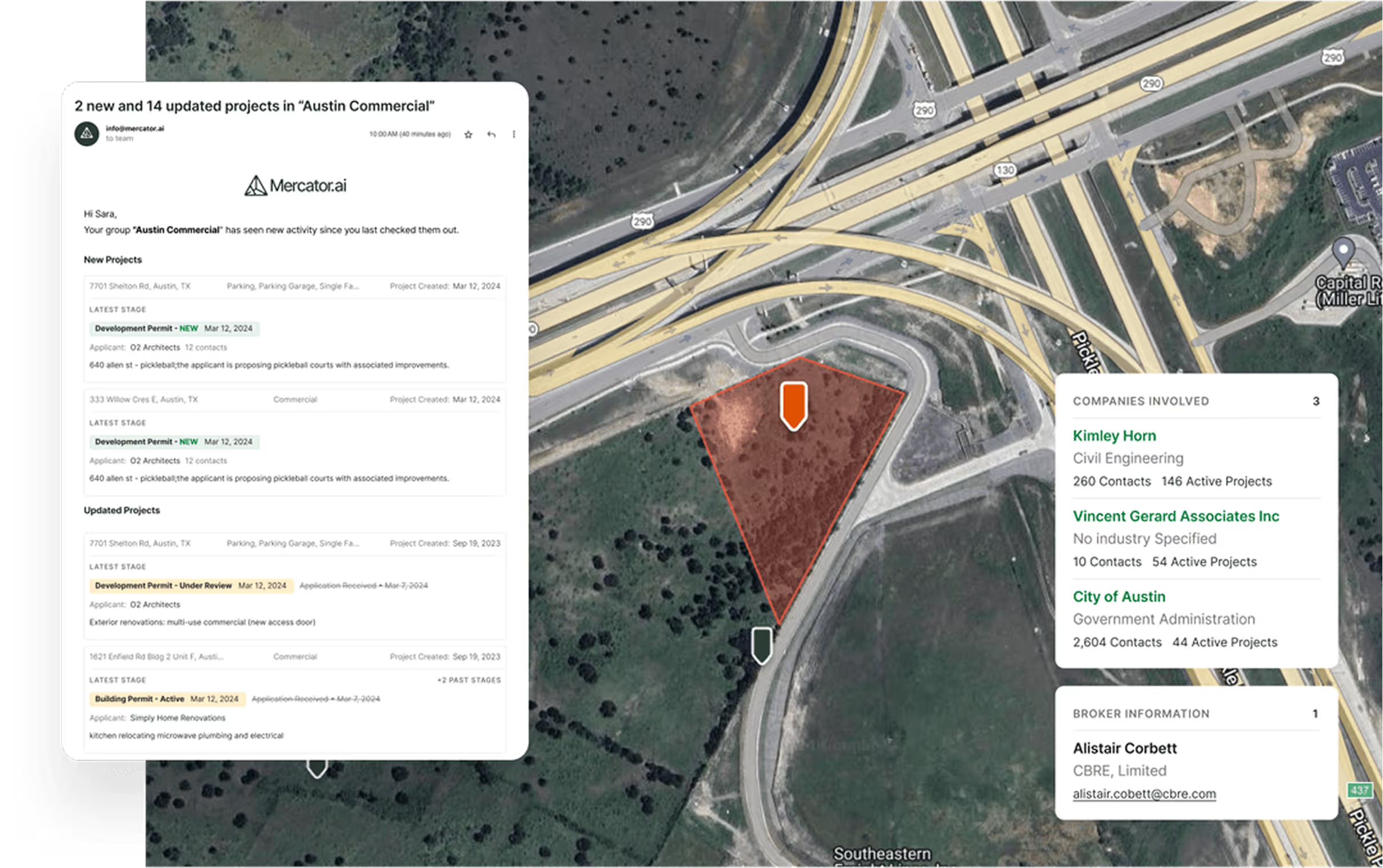
The most concrete sign of a new project is a transaction. A major land sale or the filing of an initial permit is often the first official step a developer takes. While a building permit signals that construction is imminent, earlier permits for things like demolition, soil testing, or site grading can give you a heads-up long before designs are finalized. The City of Fort Worth has a steady stream of capital projects planned, and tracking the associated permit activity is a direct way to see what’s moving forward. Manually sifting through these records can be time-consuming, but using a tool like Mercator’s free permits app can help you spot relevant activity as it happens.
Track Rezoning Applications
Before a developer can build a 20-story mixed-use tower on a lot zoned for single-family homes, they have to apply for rezoning. This process is public, lengthy, and a goldmine of information for proactive contractors. A rezoning application tells you exactly what a developer intends to build and who the key players are. With so many new downtown developments in the works, keeping an eye on the City’s zoning commission agendas can reveal major projects while they’re still in the conceptual phase. This is your chance to identify the project owner, architect, and engineer and begin building a relationship before your competitors even know the project exists.
Analyze Market Trends
Understanding the big picture helps you anticipate where the next wave of opportunities will come from. Fort Worth is experiencing a period of historic growth, with a multi-billion dollar development pipeline planned for the downtown area alone. Following economic development news and city reports allows you to see which sectors are getting the most investment, whether it’s commercial, educational, or public infrastructure. This high-level view helps you align your business strategy with the city’s growth, so you can focus your networking and marketing efforts on the sectors most likely to produce a steady stream of work in the coming years.
Win More Work in Fort Worth's Booming Market
Fort Worth is experiencing a construction surge, with major projects transforming the city's skyline and infrastructure. For general contractors, subcontractors, and suppliers, this growth presents a massive opportunity. However, it also means more competition. The firms that succeed will be the ones that get in on the ground floor of new projects, long before they hit the public bid stage.
Getting ahead requires a proactive strategy. Instead of waiting for opportunities to come to you, you need to uncover them early and build the right connections. By focusing on early project intelligence and strategic relationship-building, you can position your company to win a larger share of the work in this dynamic market. It’s about shifting from a reactive bidding process to a proactive business development approach that gives you a distinct competitive advantage.
Use Early Project Intelligence
With an estimated $2.5 billion in development planned for downtown alone, the Fort Worth market is incredibly active. Projects like the Convention Center expansion are on multi-year timelines, creating a long runway of opportunities. If you’re waiting for these projects to be publicly announced, you’re already late to the game. The key is to identify opportunities at their earliest stages—when land is sold, permits are filed, or rezoning applications are submitted. This upstream visibility allows you to get your services or materials specified from the start. Tracking these early signals gives you the time you need to prepare a thoughtful, well-researched proposal instead of rushing to meet a tight bid deadline.
Build Relationships with Key Stakeholders
In construction, who you know is just as important as what you do. Major Fort Worth developments, like the new Texas A&M-Fort Worth campus, involve a complex web of stakeholders, including developers, architects, engineers, and city officials. Identifying these key players and understanding their roles early on is crucial. The City of Fort Worth is actively leading catalytic projects designed to spark further growth, making city leaders and planning departments essential contacts. By building these relationships before a project is even common knowledge, you can establish trust, understand the project’s specific needs, and position your company as the ideal partner. This network becomes your most valuable asset for securing future work.
Related Articles
- Guide to Commercial Construction Projects in Fort Worth
- Dallas's Top Construction Projects Shaping the City
Frequently Asked Questions
You've highlighted some massive projects. Are there still opportunities for smaller contractors or specialized trades? Absolutely. Think of these mega-projects as ecosystems. While a large general contractor will win the main contract, that firm will rely on a network of subcontractors for everything from electrical and plumbing to drywall and landscaping. Every new tower, campus, or road creates a ripple effect of opportunities for specialized trades. The key is to identify the general contractors who are winning these bids and build relationships with them directly to get on their radar for subcontracting work.
Tracking permits and rezoning applications sounds like a lot of work. How can I do this efficiently? You're right, manually sifting through city records can be incredibly time-consuming. Instead of trying to watch everything, focus your efforts. You can start by regularly checking the agendas for the city's zoning commission, as these often provide the earliest public notice of a developer's intent. For a more streamlined approach, consider using a service that aggregates this data for you, sending alerts when a new permit or application that matches your business profile appears. This frees you up to focus on building relationships instead of digging through databases.
Which construction sector seems to have the most long-term potential in Fort Worth? While the downtown mixed-use boom is getting a lot of attention right now, the transportation and public infrastructure sector offers the most reliable, long-term pipeline of work. Fort Worth's population is growing rapidly, and the city must invest in roads, bridges, and utilities to support that growth. These are often multi-year, multi-phase projects that provide a steady stream of contracts for civil engineers, excavation crews, and material suppliers for years to come.
What's the best way to start building relationships with the key players on these projects? The best approach is to offer value before you ask for anything. When you identify a project in its early stages through a rezoning application, you also identify the owner, architect, and engineer. Instead of a cold call, reach out with a relevant insight or a helpful introduction. Attending city planning meetings or local industry events also puts you in the same room as these decision-makers. The goal is to become a familiar, trusted resource long before they start looking for bids.
How far in advance should I be looking for new projects to really get a competitive edge? To truly get ahead, you should be tracking projects 12 to 18 months before they are scheduled to break ground. The earliest signs often appear when a property is sold or a developer files for rezoning. This is the "conceptual phase" where key decisions are being made and the project team is being formed. Getting involved at this stage gives you the best chance to influence specifications and position your company as an essential partner, not just another bidder.
AI-powered business development for the construction industry
Schedule a time to discuss your use case and walk through a custom demo of the platform.