Case Studies


Construction lead generation pricing Florida runs on three clear models: subscription, pay‑per‑lead, and hybrid. Subscription plans cost $400–$1,200/month, Florida unit prices run 20%–50% above national averages, and pay‑per‑lead fees scale with project value and exclusivity.
Subscription plans suit steady pipelines and CRM integrations. Pay‑per‑lead fits low-volume teams that buy qualified opportunities. Hybrid plans combine a low subscription with higher exclusive-lead fees.
Benchmarks you can use immediately:
Use a 30–90 day pilot to test vendor quality. Prioritize feed freshness, CRM connectors, and county permit coverage. Mercator.ai provides county‑level permit intelligence and early private signals across Florida and Texas; see our vendor comparisons and pricing for Texas and Florida and state-specific permit-intelligence guides.
Construction lead generation pricing in Florida mixes monthly feed subscriptions with optional per-lead fees. Florida commonly runs 20%–50% higher unit prices than national averages, matching or exceeding Texas in competitive trades.
Vendors sell three models: subscription, pay‑per‑lead, and hybrid. Subscription tiers offer automated permit feeds, CRM connectors, and alerts for $400–$1,200/month. Pay‑per‑lead pricing scales by project value and exclusivity.
Regional drivers push Florida pricing up: coastal remodel demand, hurricane-repair surges, and dense metro permit volume. Counties such as Miami‑Dade, Broward, and Hillsborough report higher private-project activity, increasing competition for leads.
Feed quality matters more than price. Fresh permit feeds delivered within 24 hours improve close rates. Native CRM connectors cut lead-to-bid time by days versus manual imports.
Benchmark your vendor by running a 30–90 day pilot and comparing cost-per-won-job. Use our Construction lead generation companies in Texas comparison to set pricing expectations across markets.
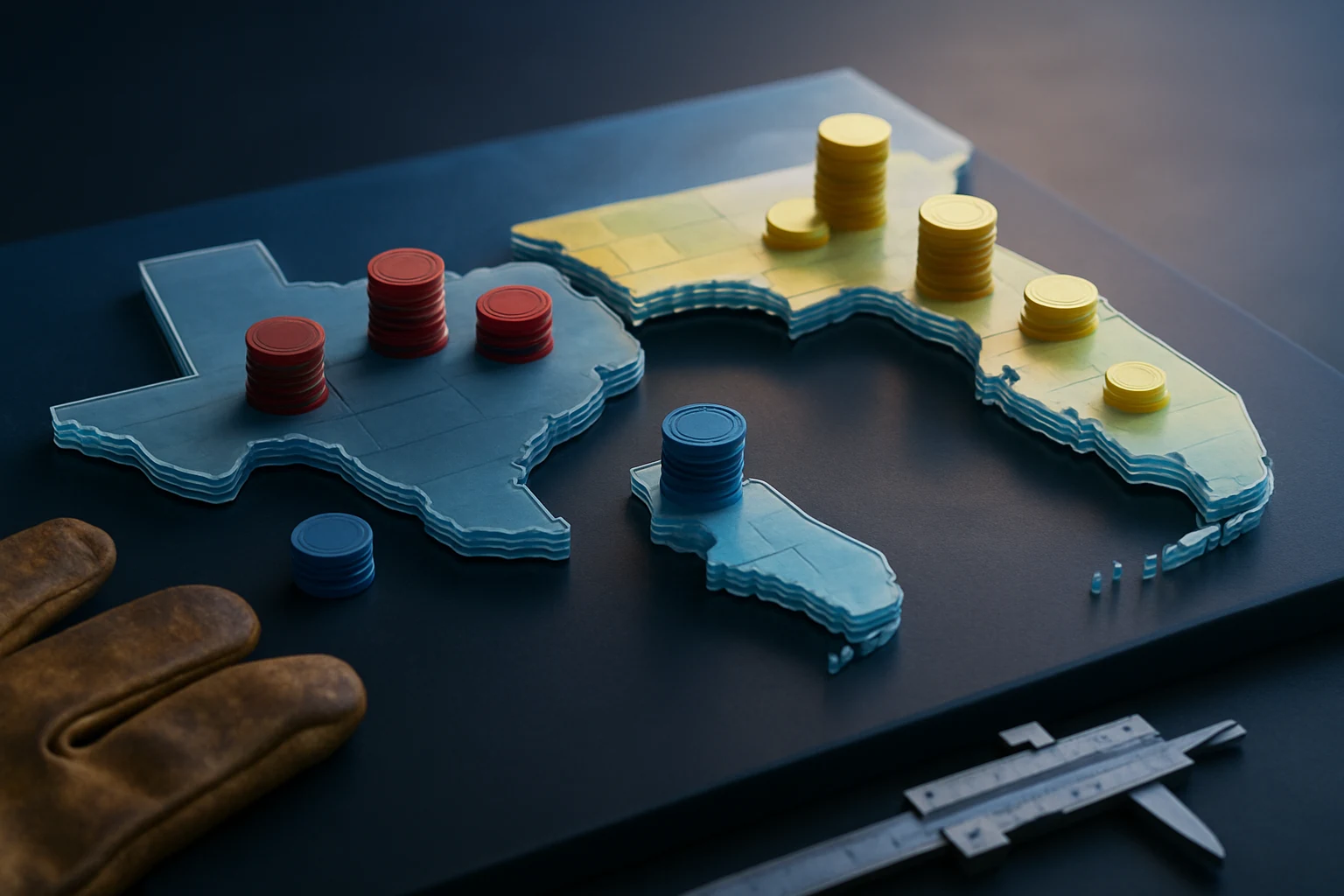
A Florida lead costs between $30–$1,200, with most home‑improvement leads landing between $50–$400. Exclusive, large-project leads sit at the high end; shared small-job leads sit at the low end.
Common ranges by trade and project value:
Exclusivity multiplies price. Expect 2x–5x the shared price for exclusive leads that limit competition. Fully vetted, owner-verified private projects cost more than leads scraped from public portals.
Example calculation with concrete numbers:
Test pricing in target Florida cities — Miami, Tampa, Orlando, and Jacksonville — to get realistic CPLs for your trade. Use county permit intelligence to validate lead age and project value.
Negotiate contract terms that force vendors to deliver measurable, timestamped leads. Require a 30–90 day pilot, timestamped delivery, lead replacements, and clear CRM integration guarantees.
Key contract items to demand:
Measure success by cost-per-won-job, not cost-per-lead. Insist vendors provide raw lead data and tracking fields: permit ID, permit date, owner contact, estimated value, and lead source. These fields let you tie leads to closed jobs in your CRM.
Use these terms to drive accountability. Florida prices run 20%–50% above national norms, so enforce replacements and SLA credits to protect margin.
Match vendor type to company size and your volume needs. Small contractors prefer pay‑per‑lead; mid-size teams pick hybrids with CRM connectors; large firms buy full permit feeds and exclusives.
Company-size mapping:
Vendor comparison checklist:

Run the same pilot across two vendors for 30–90 days and compare cost-per-won-job. Use our vendor comparisons and pricing for Texas and Florida to benchmark performance and pricing.
A high-converting workflow starts with immediate response and strict qualification. Implement a geo-optimized landing page, immediate SMS/email, and a five‑minute live outreach SLA.
Step-by-step setup:
Use these metrics to tweak pricing and vendor selection. Expect 3x–10x ROI within six months when feed quality and follow-up match benchmarks.
Q: What are fair per-lead prices for exclusive remodeling leads in Miami?
A: Expect exclusive remodeling leads in Miami to cost $80–$250 per lead. Projects over $50,000 push prices toward $200–$250 per lead.
Q: How do I verify a Florida construction lead within 48 hours?
A: Verify leads by confirming permit, owner, and budget using county portals and phone verification. Request permit IDs and site photos for faster validation.
Q: How much extra does lead exclusivity cost compared to shared leads in Florida?
A: Exclusivity increases price by 30%–200% over shared leads. Shared leads can cost $20–$60, while exclusive leads often reach $80–$300.
Q: Can I integrate permit feeds into Procore or Salesforce within one day?
A: Yes. Prepare API keys, field mappings, and a sample CSV to accelerate setup. Mercator.ai provides connectors and sample mappings to reduce engineering time.
Q: What cancellation and refund terms should I require?
A: Require a 30‑day cancellation clause and pro‑rated refunds for unused subscriptions. Insist on lead rollovers, a 30‑day lead age cap, and documented SLA credits.
Q: How do I calculate break-even cost per lead for a $150,000 average project?
A: Break-even cost per lead equals average project gross margin times close rate. For a 10% close rate and 30% gross margin, break-even is $4,500 per lead.
Q: What follow-up cadence converts warm Florida construction leads?
A: Use five touches across ten days: immediate call, same-day text, two-day email, five-day follow-up, ten-day final call. Make three call attempts and vary message types.
Subscription pricing for lead-generation feeds typically runs $400–$1,200 per month; ROI commonly reported is roughly 3x–10x within six months.
Home-improvement lead costs in states including Florida and Texas can be ~20%–50% above national norms.


.png)