
Case Studies


For general contractors, subcontractors, and suppliers, the healthcare sector is a source of high-value, resilient work. But breaking in, or even just expanding your footprint, can feel tough. These aren't your typical commercial builds; healthcare construction projects are governed by a complex web of regulations and require a level of precision that leaves no room for mistakes. The key to success isn't just about what you know, but when you know it. Getting visibility into projects during the early planning stages is the single biggest advantage you can have. This article will walk you through the entire project lifecycle, helping you understand the unique demands of this field so you can identify opportunities earlier and build the relationships that lead to winning bids.
At its core, healthcare construction is the process of planning, designing, and building or renovating medical facilities. But it’s so much more than that. The main goal is to create a space that is safe for patients, highly functional for medical staff, and compliant with a long list of strict health regulations. This specialized field covers everything from a brand-new hospital campus to a small-town clinic renovation. Unlike a standard commercial build, every decision in healthcare construction, from the HVAC system to the choice of flooring, directly impacts patient care and health outcomes.
This high-stakes environment means construction teams must work in close collaboration with architects, engineers, and the medical professionals who will use the space every day. The planning phase is incredibly thorough, focusing on critical details like operational workflow, infection control, and how to integrate advanced medical technology. For general contractors and subcontractors, success in this sector depends on understanding these unique demands. Many of our customers find that getting early project data allows them to build key relationships and understand a facility’s specific needs long before the project is widely known.
The term "healthcare facility" covers a wide range of buildings, each with its own set of construction challenges. You might be working on large-scale hospitals, which are like small cities with emergency rooms, intensive care units (ICUs), and complex operating theaters. On the other end of the spectrum are smaller clinics and medical offices designed for general or specialized care. Other common healthcare construction projects include mental health centers, where the design prioritizes safety and a calming atmosphere, and aged care homes focused on accessibility and comfort. You'll also find highly technical projects like diagnostic labs and imaging centers, which house sensitive equipment like MRI and CT scanners and require very specific structural and electrical planning.
Healthcare construction projects are in a league of their own when it comes to complexity. The primary reason is the sheer volume of standards and regulations that must be met to keep patients and staff safe. These aren't just suggestions; they are strict local, state, and federal rules covering everything from ADA accessibility to airflow and infection control protocols. This adds layers of oversight and requires meticulous documentation. You can start tracking some of this activity with our free permits app. Beyond regulations, the projects themselves are intricate. You’re often integrating sophisticated medical equipment, coordinating with numerous stakeholders (from hospital administrators to clinical staff), and building systems that support life-saving procedures.
Building a hospital or clinic isn't like building an office tower or a retail center. Healthcare construction is a highly specialized field with a unique set of challenges that demand precision, expertise, and a deep understanding of the end-user's needs. These projects are about more than just meeting a deadline and a budget; they're about creating safe, sterile, and efficient environments where lives are on the line. From working through a maze of regulations to building around active patient care, every phase requires a higher level of planning and execution.
In healthcare construction, the rulebook is thick. Every project must comply with a complex web of local, state, and federal standards. These aren't just suggestions; they are strict requirements that dictate everything from where a facility can be built to the specific materials used in an operating room. You'll be working with local zoning laws, standard building codes, and a host of healthcare-specific regulations designed to ensure patient safety and accessibility. Getting ahead of these requirements during the pre-planning phase is critical to keeping your project on track and avoiding costly delays down the road.
Nowhere is safety more important than in a healthcare setting. The well-being of patients and staff is the top priority, and construction activities introduce risks like dust, noise, and potential contaminants. A robust infection control strategy is non-negotiable. This often involves setting up containment barriers, using HEPA filters, and creating negative air pressure zones to keep construction dust from entering patient care areas. Every team member on site needs to be trained on these protocols, because in a hospital, a bit of dust isn't just a nuisance; it can be a serious health hazard.
Many healthcare projects are renovations or expansions of existing, fully operational facilities. This means your team will likely be working right next door to active patient rooms, busy emergency departments, and sensitive operating theaters. The logistical challenge is immense. You have to meticulously plan every step to minimize disruption. This includes taking special measures to control dust and noise, scheduling loud work for off-hours, and coordinating closely with hospital staff to manage utility shutdowns or reroute foot traffic. It requires a level of communication and collaboration that goes far beyond a typical construction site.
Healthcare projects involve a wide range of stakeholders, each with their own set of priorities. You have facility owners focused on the budget, administrators concerned with operational efficiency, and clinicians who need the space to support complex medical workflows. Your job is to balance these often-competing demands while delivering the project on a tight timeline. Because these projects are so costly and critical to community health, the pressure is always on. Successfully managing the expectations of all relevant stakeholders is key to ensuring the final build is not only compliant but also perfectly suited for the doctors, nurses, and patients who will use it every day.
Every healthcare construction project follows a structured path, moving from a simple idea to a fully operational facility ready to serve patients. While the specifics can vary based on scale and complexity, the journey almost always breaks down into four distinct phases. For general contractors, subcontractors, and suppliers, understanding these stages is the key to effective business development. Knowing what happens in each phase helps you identify where your services fit in and, more importantly, when to engage with a project.
Getting involved early, especially during the pre-planning and design phases, allows you to build crucial relationships and position your team as an essential partner long before the project goes to public bid. This upstream visibility is where the real competitive advantage lies. It gives you the chance to understand the client’s needs, influence specifications, and become a trusted advisor rather than just another bidder. Each phase presents different opportunities, from consulting on feasibility to supplying specialized materials or executing the build itself. Let's walk through what each phase entails so you can spot these opportunities earlier and prepare to meet the unique demands of these complex and rewarding projects.
This is the "is this even possible?" stage. Before any blueprints are drawn, the project owner, whether it's a hospital system or a private developer, needs to confirm the project's viability. This initial phase involves a deep dive into the community's needs to determine what services are required and who the facility will serve. The team conducts a thorough feasibility study to analyze potential locations, create initial budget estimates, and outline the project's overall scope. It’s a critical first step where the foundation for the entire project is laid. For you, this is the earliest signal of a potential project, often appearing as land sales or rezoning applications months or even years before it becomes public knowledge.
Once the project is deemed feasible, the design phase kicks off. This is where specialized architects and engineers translate the owner's vision into detailed plans. But it’s not just about creating a functional and aesthetically pleasing space. This phase is dominated by the need to secure approvals from a long list of agencies, including local governments, health departments, and building inspectors. Working through the web of healthcare-specific regulations and building codes is a massive undertaking that can significantly impact the project timeline. This is where having a team experienced in healthcare construction becomes invaluable, as they can anticipate challenges and keep the project moving forward.
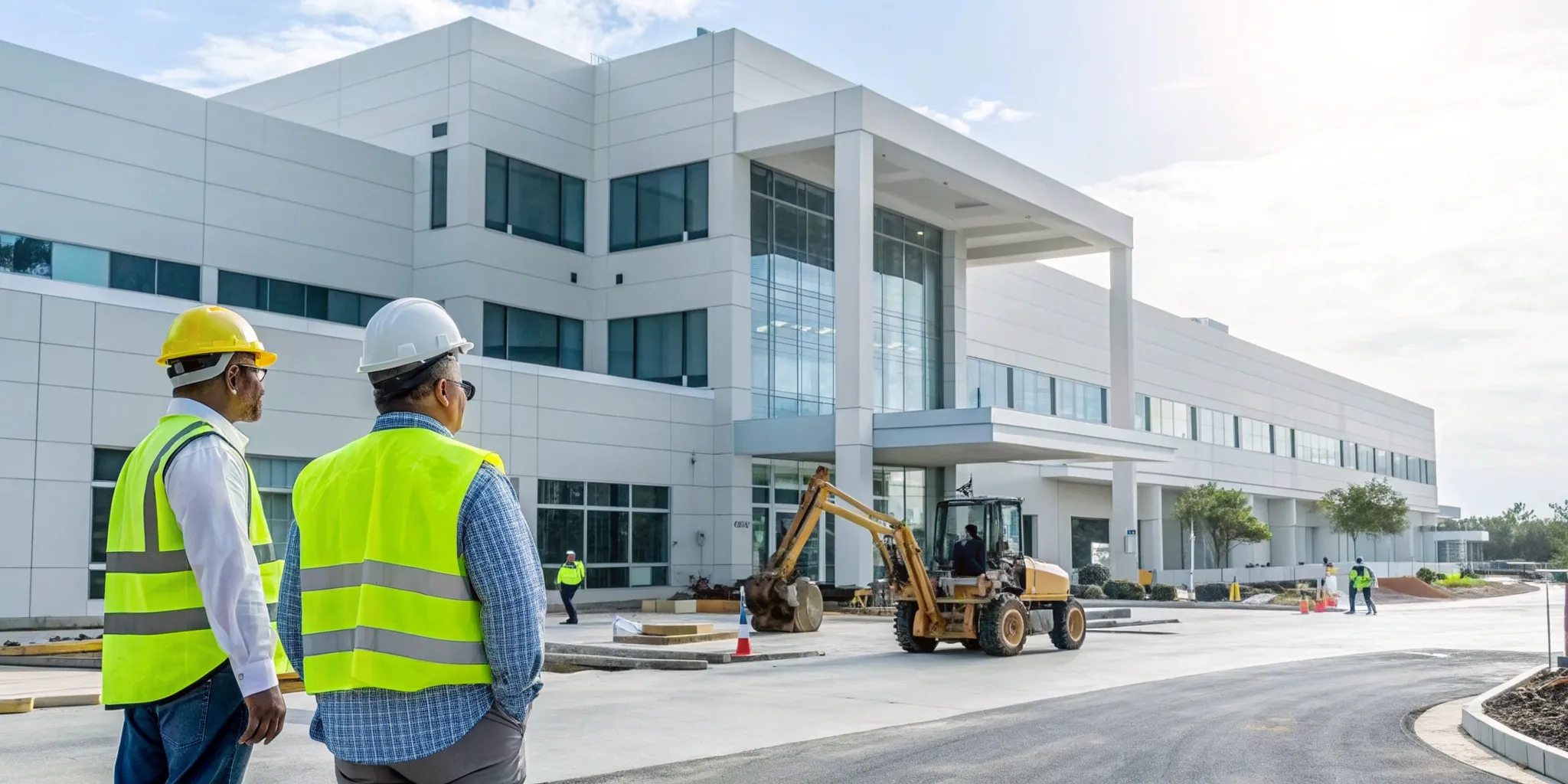
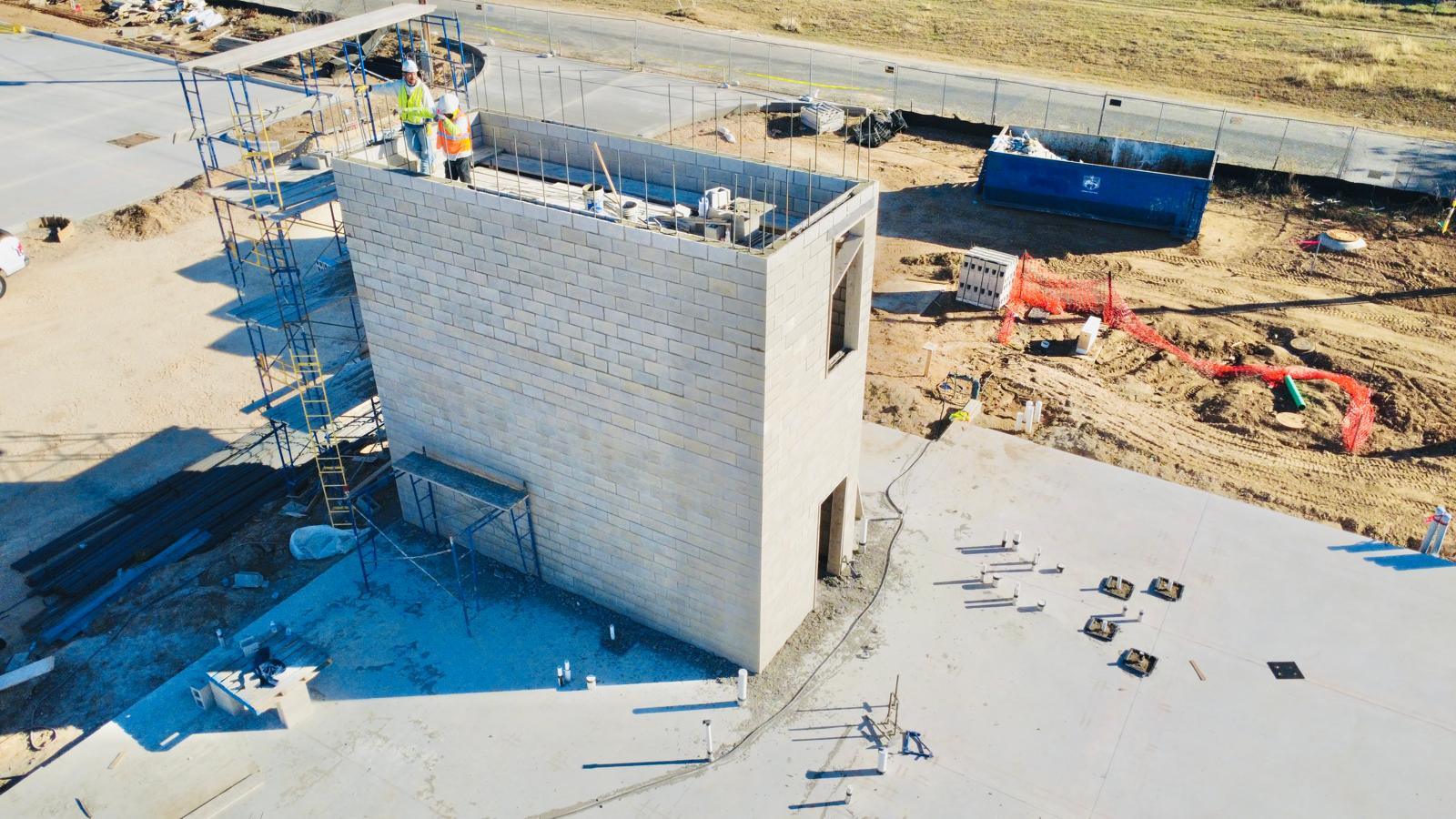
With approved plans in hand, it’s finally time to build. This phase is where the general contractor and their team of subcontractors bring the project to life. If the construction is happening near or within an active hospital, the team must implement strict protocols for infection, dust, and noise control to ensure patient safety is never compromised. Throughout the build, quality control is constant. All critical systems, from the HVAC and electrical to the specialized medical gas lines, are rigorously tested to ensure they meet the highest standards. This meticulous attention to detail ensures the facility is safe, efficient, and ready for its demanding role in the community.
The final phase is all about a smooth transition from a construction site to a patient-ready facility. During the commissioning process, every piece of equipment and all building systems are checked one last time to ensure they operate exactly as designed. The building is then officially handed over to the hospital or clinic staff. This isn't just a key drop-off; it involves comprehensive training for the medical team on how to use the new building and its integrated systems. The ultimate goal is to make sure the facility is 100% ready to serve patients from the moment the doors open for the first time.
A successful healthcare build depends on seamless collaboration between a diverse group of stakeholders. Each player brings a unique perspective and set of priorities to the table. For general contractors, understanding who these key players are and what they care about is fundamental to building strong relationships and delivering a project that meets everyone’s needs. From the initial vision to the final walkthrough, these are the people who shape the project.
The client is where it all begins. Facility owners and hospital administrators are responsible for the big picture. They play a crucial role in defining the project's scope, securing the funding, and setting the overall timeline. Their primary goal is to create a facility that effectively serves the community's health needs while operating efficiently and sustainably. As a contractor, your first job is to listen closely to their vision. Understanding their operational goals and patient care philosophy will help you align your construction strategy with their mission, building trust and a strong partnership from day one.
Healthcare facilities are incredibly complex, requiring specialized knowledge of medical workflows, infection control, and stringent building codes. This is where the design team comes in. Specialized architects and engineers are essential for creating plans that are both functional and compliant with healthcare regulations. They design spaces that support the intricate work of medical professionals while meeting all regulatory standards. For GCs, early and frequent communication with the design team is critical to identifying potential construction challenges and finding practical solutions before breaking ground. This collaboration ensures the final build is safe, efficient, and built to last.
This is you. As the general contractor or subcontractor, you’re tasked with turning the design into a physical reality. Healthcare construction isn’t like other commercial projects; it comes with a unique set of standards and requirements to keep patients and staff safe, especially during renovations in active facilities. You and your subcontractors must be well-versed in these specific needs to ensure a successful build. Your team’s expertise in areas like infection control, medical gas systems, and shielding for imaging equipment is what makes you a valuable partner. Demonstrating this specialized knowledge helps you win bids and is crucial for executing the project successfully, as many of our customer stories show.
While they may not sign the checks, the end-users are arguably the most important stakeholders. Doctors, nurses, technicians, and other medical staff are the ones who will use the space every single day. They provide valuable insights into the design and functionality of the space, ensuring it meets the practical needs of healthcare delivery. Involving them in the design and construction process helps ensure the finished facility is not just compliant, but truly functional. Their feedback can highlight potential issues with room layouts, equipment placement, or patient flow that might otherwise be overlooked, leading to a better, more effective healthcare environment for everyone.
The healthcare industry is constantly evolving, and construction practices are changing right along with it. Staying ahead of these shifts is key to winning bids and building facilities that meet modern demands. For general contractors and subcontractors, understanding these trends helps you anticipate client needs and position your team as forward-thinking partners. From building faster and smarter to focusing on sustainability and community access, here’s a look at what’s shaping the future of healthcare construction.
Speed and efficiency are always top priorities, but even more so in healthcare where a new facility can directly impact community well-being. This is where modular construction is making a huge impact. This approach involves building standardized components or entire rooms in a factory setting and then transporting them to the construction site for assembly. This method significantly cuts down the project timeline, reduces on-site disruption (a massive plus when building near active hospitals), and often leads to higher-quality, more consistent results since the components are built in a controlled environment.
Modern healthcare facilities are becoming as much tech hubs as they are places for healing. New builds are being designed from the ground up to support a massive network of smart devices and systems. This includes everything from the Internet of Medical Things (IoMT), where medical devices communicate with each other, to AI-powered analytics that streamline hospital operations. As a contractor, this means you’ll be working closely with IT infrastructure specialists to install robust networks, backup power systems, and dedicated spaces for telehealth services. It’s a shift that requires more collaboration and a deeper understanding of the technology that powers modern patient care.
Sustainability isn't just a buzzword in healthcare construction; it's a core principle. Hospitals are massive operations that consume a lot of energy, so clients are increasingly focused on reducing their environmental footprint and long-term operational costs. This trend translates into projects that feature renewable energy sources like solar panels, smart heating and cooling systems that adapt to occupancy, and the use of sustainable building materials. For GCs and suppliers, this means sourcing eco-friendly products and having subcontractors who are experts in green building practices. A facility that’s both healthy for patients and the planet is a major win for everyone involved.
The traditional model of a single, massive hospital serving an entire region is changing. We're seeing a significant move toward decentralized care, with a focus on building smaller clinics, outpatient centers, and specialized medical offices closer to where people live. This trend makes healthcare more accessible and convenient, especially in growing suburban and rural areas. For construction professionals, this means a pipeline of smaller, more frequent projects is emerging. These community-based facilities present a huge opportunity to build lasting relationships with healthcare networks that are expanding their local footprint, and spotting these private construction projects early is key to getting in on the ground floor.
What's the single biggest difference between a healthcare build and other commercial projects? The biggest difference is that patient safety dictates every decision. In a typical commercial build, your main concerns are budget, timeline, and design. In healthcare, you have all of that plus a critical layer of infection control and life safety regulations. Simple things, like managing dust or scheduling a utility shutdown, become complex logistical challenges because they can directly impact patient health in an active facility.
Why is it so important to get involved in a healthcare project early? Getting involved during the pre-planning or design phase gives you a major competitive advantage. It allows you to build a relationship with the facility owner and design team before the project is widely known. This early engagement lets you understand their specific needs, offer solutions, and position your company as a trusted partner, not just another name on a bid list.
If my company wants to start working on healthcare projects, what's the first step? Start by understanding the specific safety protocols, particularly for infection control. Many projects, especially renovations, require a deep knowledge of how to build containment barriers and manage airflow to protect patients. You can also begin by pursuing smaller projects, like clinic renovations or outpatient centers, to build your team's experience and prove your ability to handle the strict requirements of this specialized field.
Are smaller projects like local clinics and medical offices as complex as building a huge hospital? While a small clinic doesn't have the same scale as a hospital, it is still held to very high standards. The core requirements for patient safety, accessibility, and compliance with health codes are just as strict. The design must still support specific medical workflows and equipment, so even smaller projects demand a level of precision and expertise that you wouldn't find in a standard commercial build.
How do you balance the needs of hospital administrators with the needs of the doctors and nurses? Success comes down to constant communication. Administrators are typically focused on the budget, long-term operational costs, and the project timeline. Doctors and nurses, on the other hand, provide essential feedback on workflow, room layouts, and equipment placement. Your role as the builder is to facilitate conversations between these groups, helping them find practical solutions that meet both the financial goals and the day-to-day clinical needs of the staff.


.png)