
Case Studies


Healthcare construction projects in Jacksonville can enter a contractor's field of view long before a bid invitation appears. For general contractors, specialty contractors, suppliers, and developers, the useful question is not only what is being built. It is whether a healthcare opportunity is real, what stage it has reached, who is shaping it, and when a relationship can still influence the work.
This guide focuses on that early business development window. It does not attempt to list unverified Jacksonville projects, repeat a general healthcare construction lifecycle, or replace formal permit and procurement sources. Instead, it lays out a repeatable way to turn local development signals into a qualified opportunity and then hand it to the right bid channel when the project is ready.
In short: Combine local land-use and permitting signals with healthcare-specific project-stage research, stakeholder mapping, and relationship timing. A permit alone is not a qualified lead. The strongest opportunity record connects the site, sponsor, facility type, design stage, likely delivery path, next decision, and evidence that supports each conclusion.
Healthcare opportunities often develop through several overlapping tracks. A property may show a change in use, a site plan, a zoning question, a permit application, or an ownership event before the construction team is publicly visible. A healthcare institution, developer, architect, civil engineer, or specialist consultant may also signal direction before a formal bid is released.
That means Jacksonville business development teams need a healthcare-specific research sequence:
This approach is intentionally narrower than a generic list of Jacksonville commercial bids. It is designed for teams that want to participate while scope, specifications, and delivery decisions are still forming.
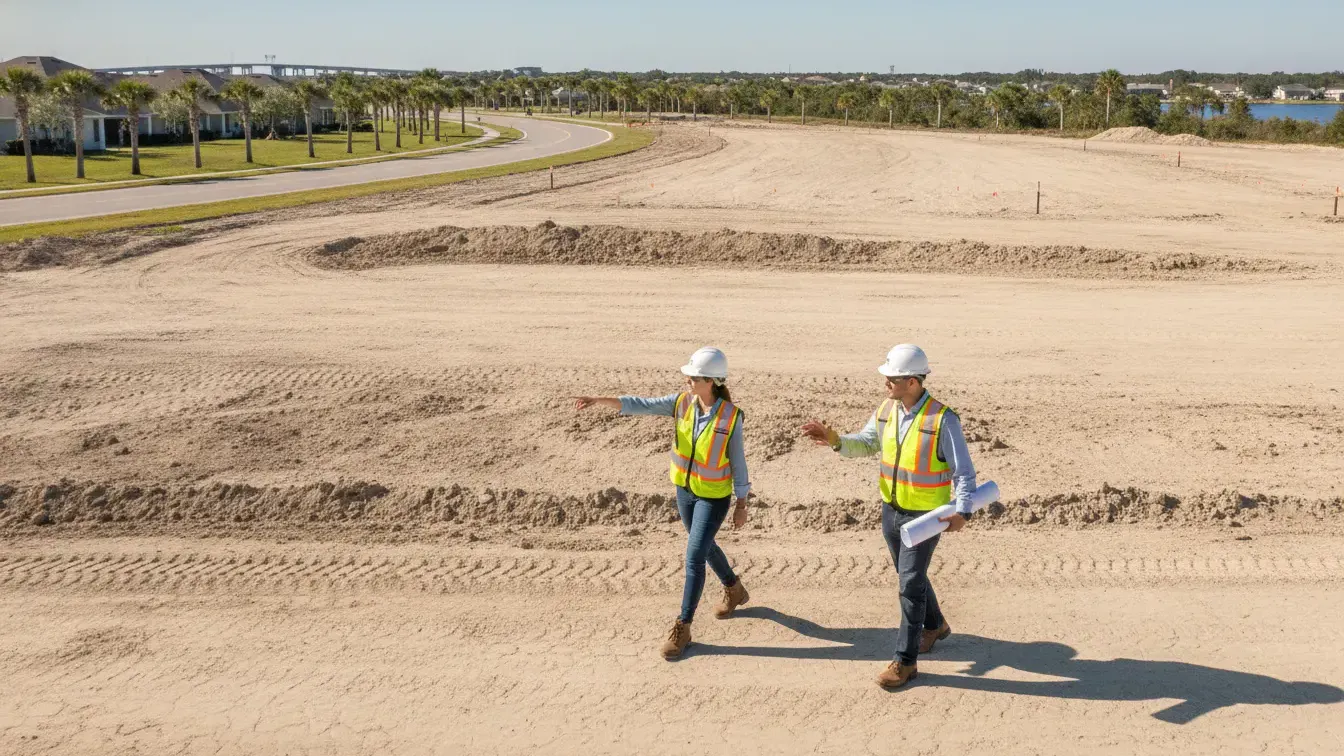
In short: A healthcare build usually requires coordinated decisions about land use, site development, facility type, design, approvals, and delivery. Those decisions create records and relationship signals before contractors receive bid documents. Tracking the sequence helps a team distinguish a possible project from a near-term, qualified opportunity.
Jacksonville's Development Services Division describes work across addressing, site-development review, zoning, plats, right-of-way permits, floodplain management, and certificates of use. Not every record is a construction lead, but each can add context when it is connected to a healthcare use and a known site.
Healthcare also creates a higher-value qualification question than simply asking whether a building permit exists. A project could be a new hospital, an ambulatory or outpatient facility, a medical office, a renovation, a specialty clinic, a senior-care facility, or an expansion of an existing campus. Each type can involve a different sponsor, design timeline, approval path, and set of specialty trades.
For facilities subject to Florida Agency for Health Care Administration plan review, the official Stage I schematic-plan guidance, Stage II preliminary-plan guidance, and Stage III construction-document guidance show why design-stage information matters. These documents are not a substitute for project-specific advice, but they illustrate that healthcare work can progress through meaningful design milestones before a conventional bid package is visible.
The practical takeaway is to treat early records as a chain, not a single lead. A zoning or site-development event becomes more useful when it aligns with a healthcare sponsor, a plausible facility type, a design professional, and a timeline that supports a relationship conversation.

In short: Monitor signals that reveal site control, intended use, design progress, approvals, or stakeholder commitment. Use the City of Jacksonville's records and permit guidance as local reference points, then connect those records to healthcare-specific evidence. No single signal proves that a project will bid, so confidence should rise only as independent clues align.
Start with signals that can be checked without pretending they are final project announcements:
| Signal family | What it may indicate | How to qualify it |
|---|---|---|
| Zoning and land use | A proposed use, exception, variance, rezoning, or site constraint | Confirm the address or parcel, proposed use, hearing status, and whether the use fits a healthcare facility type. |
| Site development | Site planning, access, utilities, drainage, platting, or roadway work | Connect the site record to an owner, developer, civil engineer, and a plausible building program. |
| Commercial permits | Movement from planning toward authorized building or trade work | Read the permit type, applicant, scope, status, and related permits instead of treating the record as a complete opportunity. |
| Healthcare design review | Design work for a regulated facility or a significant renovation | Confirm the facility category and review path with the project team or relevant authority. |
| Ownership and sponsor activity | Site control, acquisition, expansion, or a development partnership | Match the parcel and entities to a credible sponsor, health system, developer, or real estate group. |
| Professional network activity | An architect, engineer, program manager, or consultant is shaping the project | Record the person's role and the evidence for the connection. Do not assume selection from a directory mention. |
The City's commercial permit guidance notes that commercial work can involve zoning verification and additional reviews, with site-clearing, building, electrical, mechanical, and plumbing permits appearing at different points. The Jacksonville zoning FAQs also point users to address and tax-ID-based mapping, public notices, and pre-application conversations. These are useful research inputs, not permission to describe an unverified project as active.
Keep a dated evidence trail for every signal. Record the source, the date checked, the address, the entity named, the specific event, and the question that remains unanswered. That discipline prevents a stale permit or unrelated medical-office record from becoming an inflated sales forecast.

In short: Qualify the opportunity across six dimensions: site, sponsor, facility, stage, stakeholders, and next decision. The goal is not to force a bid estimate too early. It is to decide whether the project merits relationship investment, what information is missing, and which team member should own the next action.
Use the following qualification checklist before adding an opportunity to a serious pipeline:
Do not treat every healthcare-related signal as a fit. A project can be too early, outside the team's geography, already committed to a delivery partner, or unrelated to the scope a supplier or specialty contractor sells. Qualification protects the BD team from spending relationship capital on a lead that cannot become a useful conversation.
For general contractors, the right early action may be learning the sponsor's priorities and assembling a relevant relationship path. For specialty contractors and suppliers, it may be identifying the design team and understanding when specifications can still be influenced. For developers, the focus may be validating the market signal and finding the right delivery partners.

In short: Start relationship development when the project has enough verified identity to make the conversation relevant, but before the delivery team and specifications are fully locked. Early does not mean aggressive. It means using the stage to offer a useful connection, capability, or question instead of waiting until every competitor sees the same bid invitation.
The best timing depends on what you provide:
A useful outreach sequence is simple:
This is where relationship mapping matters. A strong opportunity record can show not only who is connected to the project, but also which path is credible for the next conversation. That is more useful than collecting a long list of names with no stage or reason to contact them.

In short: An early signal becomes bid-ready only after the project identity, stage, scope, stakeholders, and procurement path are sufficiently clear. Keep the early-intelligence record separate from the formal bid record, then connect the two when a plan room, procurement portal, invitation, or owner-directed process becomes the authoritative next step.
Jacksonville already has resources for later-stage opportunity discovery. Mercator.ai's guides to commercial bid opportunities in Jacksonville and the Jacksonville construction plan-room landscape address formal bid sources. The city's commercial building permit guide and commercial permits database guide provide additional local research context.
Use those resources as the handoff, not as a replacement for early qualification. A practical transition looks like this:
| Pipeline state | Primary question | Recommended action |
|---|---|---|
| Signal | Is there a credible healthcare-related event? | Capture the source, site, date, and open questions. |
| Qualified lead | Who is advancing what, and at which stage? | Map stakeholders, scope, timing, and relationship path. |
| Pre-bid relationship | What useful conversation can happen before procurement? | Engage around capability, design support, delivery fit, or local context. |
| Bid readiness | Which process controls access to the opportunity? | Confirm the owner's invitation, plan room, procurement portal, or GC process. |
| Pursuit | Is this worth estimating and staffing? | Apply the team's fit, margin, schedule, and relationship criteria. |
When teams skip the handoff, they can confuse a public record with an open bid, approach the wrong stakeholder, or miss the moment when a relationship becomes a formal opportunity. Separating discovery from pursuit makes the pipeline more honest and gives business development, preconstruction, estimating, and sales leaders a shared view of what happens next.
For a broader Jacksonville lead-generation perspective, see Mercator.ai's guide to general contractor leads in Jacksonville. For teams using permit research as one input, the free Florida permits app can be a starting point, but it should be combined with stage, sponsor, and relationship evidence rather than used as a complete project database.
In short: The most reliable way to evaluate Jacksonville healthcare construction opportunities is to combine local records, healthcare-specific stage context, and relationship intelligence. The answers below clarify how to use those inputs without presenting unverified projects or treating an early signal as an open bid.
Monitor new hospitals and campus expansions, ambulatory and outpatient facilities, medical offices, specialty clinics, senior-care facilities, healthcare renovations, and related site or infrastructure work. Qualify the facility type and sponsor before assigning an opportunity to a pipeline owner.
No. A permit record can be an important signal, but it does not by itself prove the project is open for bids, available to a particular contractor, or still aligned with the original scope. Confirm the address, applicant, permit type, status, related records, sponsor, and delivery path.
Contact the team once the project identity and stage are credible, then tailor the conversation to design, specification, constructability, schedule, or delivery needs. Waiting until a public bid can leave less room to influence a relevant specification. Contacting too early without useful context can create noise.
Check the site, sponsor, facility type, stage, known stakeholders, likely delivery model, schedule evidence, and next decision. Then compare the lead with your geographic, project-size, relationship, staffing, and margin criteria. A qualified lead should have a clear next action and a reason that action is timely.
Early project intelligence helps a team identify and qualify an opportunity while the project is still forming. A plan room or procurement portal generally supports a later-stage process with documents, invitations, or bid instructions. The two workflows are complementary, but they answer different questions.
Start with Jacksonville zoning, development-services, commercial-permit, and site-review resources, then connect those records to healthcare sponsors, design professionals, developers, and project-stage evidence. For relevant regulated facilities, review the Florida AHCA plan-review materials and confirm project-specific requirements with the responsible professionals.


.png)