
A stronger preconstruction pipeline Orlando contractors can rely on starts before a project reaches bid day. The goal is not to collect every permit, plan, or rumor. It is to identify promising work early, test what is known, understand who is involved, and give each opportunity a clear next action and owner.
For general contractors and business development leaders, that requires an operating process—not simply another list of project names. Early signals can be incomplete, project schedules can shift, and relationships take time to build. A useful pipeline makes uncertainty visible while helping the team decide where to spend its attention.
What Should a Preconstruction Pipeline Do?
A preconstruction pipeline is a shared view of potential work from first signal through a defined pursuit decision. It connects project intelligence to the people and actions needed to develop a relationship before procurement becomes a formal race. It does not replace estimating, proposal production, or field management. Those teams do different work at different stages.
At minimum, the pipeline should answer five questions for every active opportunity:
- What is the project? Record the working name, location, type, and the source of the signal.
- How certain are the facts? Separate verified details from assumptions and unconfirmed reports.
- Why does it fit? Note the project characteristics that align with your firm's market, delivery capabilities, and current priorities.
- Who matters? Track known owners, developers, designers, brokers, consultants, and potential construction partners.
- What happens next? Assign one owner, one specific action, and a due date.
Without those fields, a pipeline tends to become a backlog of names. The team cannot easily distinguish a credible opportunity from an interesting lead, or tell whether anyone is advancing the relationship.
It also helps to set a shared definition of an active opportunity. A record should not stay active just because it once looked promising. Require a current reason to keep it in view: a confirmed milestone, a relevant contact path, a question that someone is working to answer, or a scheduled recheck. This simple rule reduces the chance that old leads crowd out timely work. Keep the rule lightweight enough that a BD lead can update a record during a normal workday.
How Can Orlando Teams Capture Early Signals?
Start by defining what counts as a signal for your organization. Depending on the project and what information is publicly available, early indicators may include land transactions, rezoning or land-use activity, planning filings, building permits, owner announcements, or conversations with trusted market contacts. Each source has limits. A filing can indicate intent without confirming budget, timing, delivery method, or a final decision to build.
For projects inside Orlando city limits, use the City of Orlando's official website to locate municipal planning and permitting information, and confirm which jurisdiction oversees an address before treating a record as complete.
Use a consistent intake template rather than relying on scattered emails and personal notes. Capture the original source and date, not just a summary copied into a spreadsheet. Add a link or reference to the underlying record when your team can retain it. If a colleague later challenges a detail, the record should make it possible to retrace where it came from.
A useful intake note can be short but specific. For example: a planning agenda mentions a proposed mixed-use site; the parcel location and applicant are recorded; the source date is saved; and project funding, design status, and construction timing remain unverified. That note is more valuable than a vague entry such as new development coming soon because it tells the next person what was actually seen and what needs validation.
Then combine signals carefully. One early record may create a lead to investigate. Two or more independent indicators may raise confidence, but they do not automatically confirm a project. Use a short evidence note such as, Planning filing located; owner and construction schedule not verified. This is more useful than labeling the project confirmed when important details remain unknown.
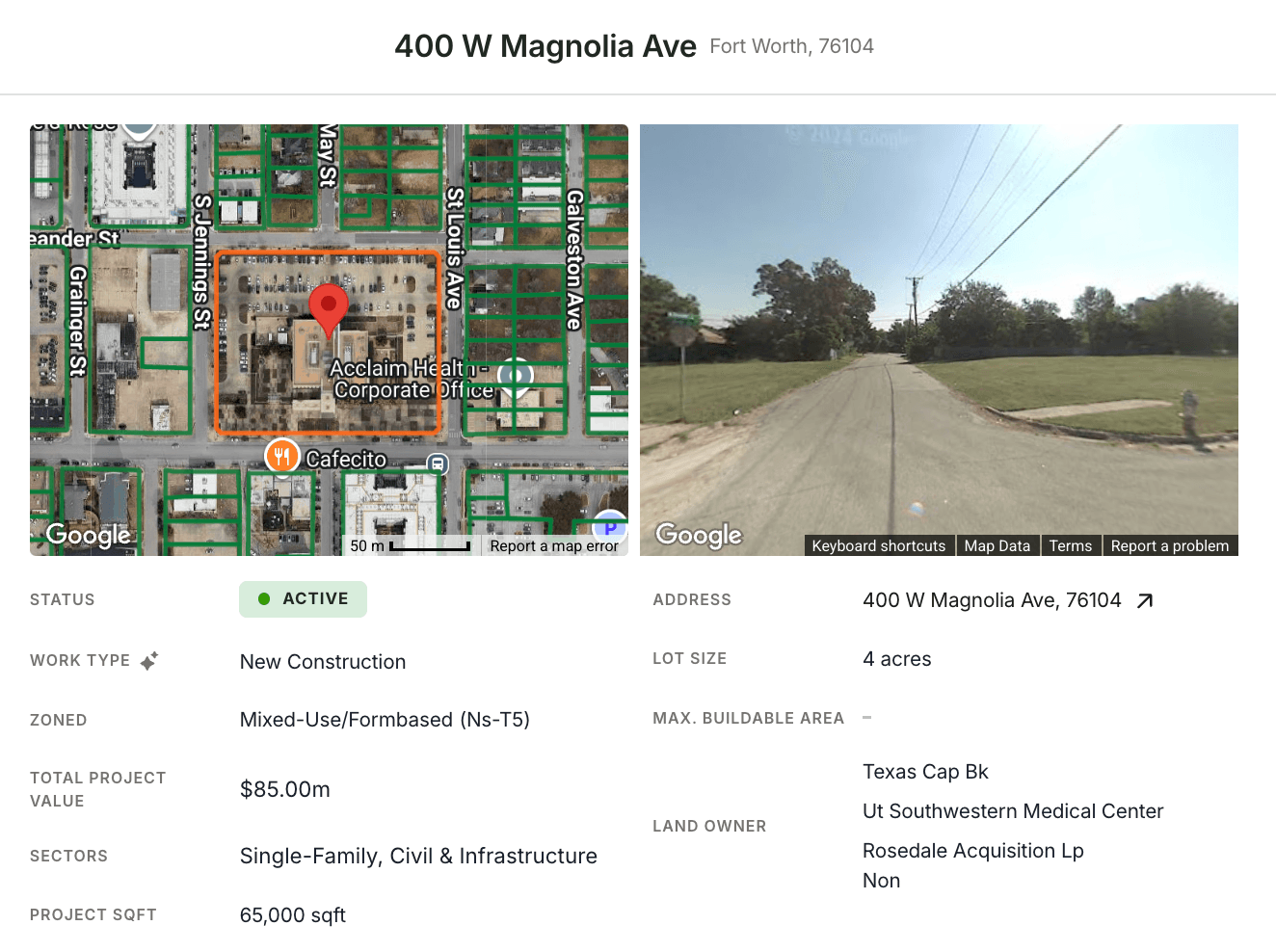
For teams working across multiple information sources, a repeatable capture process matters more than the specific tool used. Mercator.ai describes its platform as focused on early private-project intelligence in Texas; do not assume that a Texas-focused service provides Orlando project coverage. Orlando teams should validate that any data product they evaluate covers their geography and intended sources. For more on organizing records, see this guide to real-time construction data and the practical considerations in tracking permits by owner.

Which Qualification Stages Make the Pipeline Useful?
Keep the stage model short enough that the whole team will use it. Each move forward should reflect a meaningful change in evidence or engagement, not simply the passage of time. The following example can be adapted to a contractor's project types and sales process.
| Stage | What it means | Evidence or action to advance |
|---|---|---|
| Signal captured | A possible project has surfaced, but core details may be missing. | Log the source, date, location, and a responsible owner. |
| Initial validation | The team is checking whether the signal points to a real and relevant development. | Confirm basic project context from reliable records or direct market conversations; mark unknowns. |
| Qualified opportunity | The project appears to fit the firm's pursuit priorities and merits focused relationship work. | Document fit, likely timing range if known, confidence, key contacts, and the reason to pursue. |
| Relationship development | The team is building appropriate contact and learning how the project may be delivered. | Record introductions, conversations, stakeholder roles, and a dated next step. |
| Pursuit decision | The team decides whether to invest in a formal pursuit as more information becomes available. | Review strategic fit, access, capacity, competition context, and the known procurement path. |
| Closed or nurture | The opportunity is no longer active, or it remains relevant but has no immediate action. | Record the reason and, for nurture items, a specific trigger or review date. |
A stage label should communicate current evidence, not optimism. For instance, qualified should mean that a team member has checked the project against agreed criteria. It should not mean that the owner is known, that the project will be built, or that your firm has been invited to compete.
To keep the stages operational, define a simple entry and exit test for each one. Signal captured might require only a source, location, and assigned reviewer. Initial validation could require checking the project identity and jurisdiction, with unknowns written down. Qualified might require both a documented fit rationale and a plausible next relationship step. These are examples, not fixed industry standards; choose tests that match the firm's market and how much evidence it needs before committing staff time.
Imagine a public planning reference identifies a development but names no construction manager. The team records it as a signal, checks the parcel and applicant, and finds that the work type fits its stated priorities. A BD lead then identifies a relevant professional contact and asks an appropriate question about the project's current phase. Only after those checks does the team move from validation to qualified. If the lead cannot verify core context, it remains in validation rather than advancing on enthusiasm alone.
How Should You Qualify Projects Before Pursuing Them?
Agree on a few criteria before a promising lead arrives. A practical scorecard can use a small number of categories, each rated with a simple explanation rather than a false impression of precision:
- Market fit: Does the project type, scale, location, and likely delivery approach match the work your firm wants and can perform?
- Evidence quality: Are the core facts supported by a source, or are they still assumptions?
- Timing: Is there a known milestone that makes action timely? If the schedule is unknown, say so rather than inventing a date.
- Relationship access: Do you have a credible path to learn more or make a relevant introduction?
- Capacity and priority: Can the team give this lead proper attention alongside existing pursuits?
One weak category does not always mean stop. It may mean research, nurture, or ask a specific question. Set thresholds that fit your organization. For example, your team might require verified project identity and an identified reason for strategic fit before calling an opportunity qualified. The exact threshold is a management choice, not a universal industry rule.
Make the scorecard useful by writing down the reason behind each rating. A simple high, medium, or low rating without an explanation can hide disagreement. Instead, note that fit is strong because the project type and delivery model align, while timing is unknown because no current milestone has been verified. This gives the reviewer something concrete to revisit when new information arrives. Avoid turning a rough score into a forecast that looks more certain than its inputs.
Also define disqualifiers. A project may fall outside the firm's geography, capabilities, preferred risk profile, or available capacity. Closing it promptly keeps the pipeline honest. Keep a brief reason code so leaders can see whether leads are being removed because of poor fit, stale information, a changed schedule, or a decision not to pursue.
How Do You Map Stakeholders and Build Context?
Early relationship work requires more than a single contact field. Projects can involve an owner or developer, an architect, engineers, land-use professionals, brokers, consultants, prospective construction managers, and other parties. Their roles can change as planning and procurement progress. Avoid treating a name in a record as proof that the person controls the decision.
Build a small stakeholder map with four pieces of context: the person's organization, apparent project role, how that role was verified, and the best next way to learn more. Keep a distinction between a confirmed relationship and a possible connection. If a warm introduction is available, note who can make it and why it would be useful to the recipient—not just to your sales team.
Keep contact notes factual and professional. Record when a conversation took place, what the person said about their own role or public project context, and any follow-up they agreed to. Separate that from internal interpretation. For example, a contact may say that a design team is still evaluating options; the note should not convert that into a claim that the project has selected a delivery method. This discipline protects the team's credibility and makes notes easier for colleagues to use.
Good outreach is informed but restrained. Refer to a public signal only when you can describe it accurately. Ask an open question about the project or the person's priorities instead of implying you know confidential details. If the project is early, a helpful conversation may be about the owner's goals, schedule, or team—not an immediate request for a bid invitation.

For further perspective on how teams approach business development tools, compare your process needs with this overview of construction BD platforms. The tool should support accurate context and follow-through; it cannot substitute for judgment or a relationship.
What Should the Next-Action Handoff Include?
Every active project needs a named owner and a next action that is observable. Follow up is not specific enough. Ask our architect contact whether the owner has selected a delivery approach by Friday gives the team a question, a route, and a time. If the answer is not available, the owner records that and chooses the next appropriate step.
Use a simple handoff note when an opportunity moves from early research to relationship development or a formal pursuit team. Include:
- A short project summary and current stage.
- Source references, dates, and confidence level for key details.
- Known stakeholders, their apparent roles, and relationship paths.
- Open questions and any constraints on outreach.
- The reason the opportunity fits the firm's priorities.
- The next action, its owner, due date, and the trigger for another review.
This keeps the context with the opportunity when staffing changes or a pursuit begins. It also prevents a common breakdown: a BD lead is passed to estimating with a project name but no verified scope, stakeholder history, or explanation of why the team is considering it.
Make the handoff a two-way conversation when the project warrants it. The receiving pursuit or estimating lead can confirm which details are useful, point out missing information, and clarify what must be learned before committing to a bid. The BD owner can then capture those questions and agree who will handle each one. This avoids two people contacting the same stakeholder with conflicting assumptions, and it gives the relationship owner a clear role after the pursuit team becomes involved.
When a lead moves toward a bid, make the transition explicit. Confirm the current project status and procurement information, capture what the BD team has learned, and agree who owns the next communication. Estimating should receive usable context, not be expected to reconstruct the relationship history from old messages. A practical resource on creating bids in less time can complement this earlier pipeline process, but bid preparation is a distinct step.
How Can Leaders Keep the Pipeline Predictable?
Predictability does not mean pretending that early project information is certain. It means making the knowns, unknowns, and next decisions visible. Review the pipeline on a regular cadence that suits your team's volume. For each active opportunity, ask whether the stage is still supported by evidence, whether a next action happened, and whether a changed fact requires a different plan.
Track process indicators that your team can verify directly. Examples include the number of leads with a named owner, the share with a dated next step, opportunities awaiting validation, and records that have gone past their review date. These measures help identify execution gaps. Do not treat them as guaranteed measures of revenue or win rate.
Set a simple aging rule. If there has been no meaningful update by a chosen interval, the owner must refresh the information, set a future trigger, or move the opportunity to nurture or closed. A dormant record should not remain in an active stage merely because someone once thought it looked promising.
Look at the pipeline by source and stage during reviews. If many signals stall at validation, perhaps the intake lacks enough context or the team needs a clearer research owner. If qualified opportunities repeatedly lack stakeholder access, identify where relationship-building can start earlier. The objective is to improve the process, not to inflate stage counts.
How Can You Run a Useful Pipeline Review?
A pipeline review should resolve decisions, not become a recital of every field on every record. A predictable agenda helps a team use its time well. Begin with changes since the prior review: new signals worth examining, projects that advanced, important facts that were corrected, and pursuits that have stalled or closed. This keeps attention on movement and exceptions rather than reading the whole list aloud.
For each opportunity that needs discussion, use the same short sequence:
- Restate the evidence. What is verified, when was it confirmed, and where did it come from?
- Name the uncertainty. What important detail remains unknown, and does it affect fit or timing?
- Check the stage. Does the current evidence meet the team's definition for that stage?
- Choose the next action. What specific question, review, or introduction would improve the team's understanding?
- Assign ownership. Who will do it, by when, and when will the team review the result?
Consider a lead that has had no update for several weeks. Rather than carrying it forward without comment, the reviewer can ask whether the original signal is still current, whether a source can be checked again, or whether the right move is to set a future trigger. If no action can reasonably be taken and there is no timely reason to monitor it, move it to nurture or close it. Documenting the choice prevents the same stale lead from returning to the active list without new evidence.
Use the review to spot process patterns as well as individual opportunities. If records often lack source dates, revise the intake template and remind the team why the date matters. If qualified projects regularly have no owner for outreach, clarify responsibility at the point of qualification. If many records remain in validation, decide whether the team needs a better research step or a lower volume of incoming signals. Small process changes are more actionable than asking everyone to simply work harder.
Keep the review focused on controllable indicators. Teams can inspect whether records have owners, whether due dates are current, and whether stage changes have supporting evidence. Outcomes such as a project being funded or a procurement schedule changing may be outside the team's control. Separating process health from market outcomes makes the review more useful and avoids rewarding optimistic labels over sound work.
Frequently Asked Questions
Is a preconstruction pipeline the same as a bid calendar?
No. A bid calendar helps track known solicitations and deadlines. A preconstruction pipeline also organizes earlier signals, validation, relationship context, and decisions about whether and when to pursue a project.
Should every early project signal become an opportunity?
No. Capture signals consistently, then qualify them. Some will be incomplete, outside your target work, or too uncertain to pursue. Labeling them honestly keeps active opportunities useful.
Can a project record confirm that a job will be built?
Not by itself. Planning activity, permits, or other records can provide evidence of activity, but they do not necessarily confirm final scope, financing, schedule, procurement, or construction. Record what a source supports and what remains unknown.
Can Mercator.ai provide Orlando project coverage?
The company information available for this article describes Mercator.ai's current coverage as Texas-focused. Orlando teams should confirm geographic coverage and data fit directly before relying on any platform for local opportunities.
Talk with Mercator.ai about your pipeline needs
A disciplined pipeline helps Orlando construction teams act on credible early signals without confusing a lead with a commitment, a bid, or a guaranteed project. Make evidence, relationships, ownership, and the next decision visible, and the team can build a more deliberate path from first signal to pursuit.