

By the time a project hits the public bid sites, the race has often already been run. The real opportunity lies upstream, in the early signals that a development is taking shape—think title transfers, rezoning applications, and the first whispers of a major land deal. This is where the most strategic contractors and suppliers focus their efforts. They get in the door early, build relationships with owners, and help shape the project's direction. We’ve compiled a list of the most significant Houston construction projects to watch, but we’re also showing you the upstream indicators that point to where the next big builds will emerge.
Key Takeaways
- Houston's construction pipeline is both massive and diverse: The city is undergoing a transformation with huge, multi-year projects in infrastructure, transportation, and commercial development, offering a wide range of opportunities for every type of contractor.
- The best opportunities follow the big headlines: Major public works like the I-45 redevelopment and incentive programs like Opportunity Zones act as catalysts for private construction. Tracking these secondary projects is where you'll find a competitive edge.
- Win more work by getting there first: Instead of waiting for public bids, use early project data like permits, rezoning applications, and title transfers to identify opportunities months in advance. This gives you time to build relationships with key decision-makers and position your business as the go-to solution.
Houston's Next Big Builds: Key Construction Projects to Watch
Houston is buzzing with activity, and if you’re in the construction business, you’re in the right place at the right time. The city is undergoing a massive transformation with multi-billion dollar projects that are reshaping its infrastructure, skyline, and communities. From sprawling mixed-use developments to critical transportation upgrades, the opportunities for general contractors, subcontractors, and suppliers are immense. Keeping an eye on these major builds is the first step to getting your foot in the door. Let’s look at some of the key projects that are defining the future of Houston and creating a pipeline of work for years to come.
The I-45 Redevelopment Project
This isn't just a road-widening job; it's a complete overhaul of a major artery through downtown Houston. The $13 billion I-45 Redevelopment is a massive undertaking designed to reduce congestion, improve safety, and upgrade drainage systems. The project involves rebuilding the freeway and adding lanes, but it also includes creating new parkways from old highway sections. For contractors, this means long-term opportunities in heavy civil construction, drainage solutions, and even landscaping and urban development as the project transforms the surrounding areas. It’s one of the most significant infrastructure initiatives in the region.
George Bush Intercontinental Airport's Terminal B Project
As Houston’s global connectivity grows, so does its main airport. The Terminal B Airside project at George Bush Intercontinental Airport (IAH) is a critical expansion aimed at boosting the airport's capacity and efficiency. With major construction milestones already being hit, the project is well underway. This development offers prime opportunities for firms specializing in airport construction, including structural steel, MEP systems, interior finishing, and specialized airport equipment installation. Keeping track of the project’s progress is key for subcontractors looking to bid on upcoming phases.
The Main Street Promenade
With the FIFA World Cup on the horizon, Houston is getting ready for its close-up. The Main Street Promenade project is a direct result of this, focused on making the downtown core more walkable, comfortable, and inviting for both residents and the influx of international visitors. The goal is to create a more pleasant pedestrian experience, especially during the hot Texas summers. This project opens the door for contractors in landscape architecture, hardscaping, urban furniture installation, and smart city technology. It’s a chance to contribute to a more vibrant downtown Houston that will leave a lasting legacy.
Grand Parkway (SH-99) Expansion
The Grand Parkway is the ever-expanding loop that is redefining Houston’s regional connectivity. This circumferential highway project is in a state of continuous construction and planning, with new segments being added to improve traffic flow across multiple counties. For contractors in the heavy highway and infrastructure sectors, the SH-99 expansion represents a steady stream of potential work. From earthmoving and paving to bridge construction and signage, the scale of this project ensures that opportunities will be available for years as Houston continues to grow outward and requires a robust transportation network to support it.
The East River Development
Get ready for a new neighborhood on Houston’s waterfront. The East River project is a transformative 150-acre mixed-use development that will completely reshape the area. The plans are staggering: 9 million square feet of office space, 500,000 square feet of retail, hundreds of single-family homes, over a thousand apartments, and 12 acres of green space. This is a city-within-a-city, creating a massive pipeline of work for virtually every type of contractor, from commercial and residential builders to civil engineers and landscape artists. The project’s vast scope is detailed in community funding requests, highlighting its significance.
The Ion Innovation Hub
Houston is solidifying its reputation as a tech hub, and The Ion is at the heart of it. Located in the new Innovation District, this 266,000-square-foot building is a center for offices, learning, dining, and events, all designed to foster collaboration. The entire district spans over 16 acres, creating a campus-like environment for startups and established tech companies. This project signals a demand for modern, high-tech construction, including smart building systems, collaborative workspaces, and state-of-the-art labs. For contractors who specialize in cutting-edge commercial builds, The Ion and its surrounding district are projects to watch closely as part of Houston's economic development strategy.
Why the I-45 Redevelopment is a Game-Changer
The North Houston Highway Improvement Project (NHHIP), better known as the I-45 redevelopment, is more than just a massive infrastructure overhaul—it's a catalyst for a decade of new opportunities across the city. With a budget north of $13 billion, this project is set to reshape Houston's core, creating a domino effect of commercial and private development that will extend for years. For general contractors, subcontractors, and suppliers, understanding the scope of this project is key to positioning your business for the work that will follow in its wake.
It’s not just about the direct contracts for the highway itself; it’s about the new office buildings, retail centers, and residential communities that will spring up along the improved corridor. This isn't just about concrete and steel; it's about creating a more connected, resilient, and economically vibrant city. From improved logistics to new community hubs, the I-45 redevelopment is laying the groundwork for Houston’s future. The smartest firms are already planning how to capitalize on the secondary and tertiary projects that will emerge. Getting ahead of these opportunities means tracking the early signs of development—like rezoning applications and title transfers—long before the projects go to bid. This upstream visibility is what separates the firms that react to the market from those that shape it.
Easing Traffic and Improving Mobility
Anyone who drives in Houston knows that traffic congestion is a constant headache. The I-45 project directly addresses this by adding lanes and redesigning interchanges to smooth out flow. The plan involves rerouting the freeway around the central business district and creating parkways from old highway sections. The primary goal is to reduce the daily bottlenecks that slow down commuters and commercial transport. For construction businesses, this means more efficient logistics for moving crews and materials across the city, ultimately saving time and money on every project. This massive investment is focused on enhancing mobility for everyone.
Upgrading Safety and Drainage
Houston's susceptibility to flooding is a major concern, and this redevelopment tackles it head-on. A critical component of the project involves significant upgrades to drainage systems along the corridor. By implementing modern solutions designed to handle heavy rainfall, the project aims to make the highway and surrounding areas safer for everyone. These safety and infrastructure upgrades are designed to prevent the dangerous road conditions that have historically plagued the area during storms. This focus on resilience creates specific opportunities for firms specializing in civil engineering, earthwork, and drainage solutions.
The Economic Ripple Effect on Local Areas
Major infrastructure projects always create an economic ripple effect, and the I-45 redevelopment is no exception. By improving access to downtown and nearby neighborhoods, the project is expected to stimulate economic growth and attract new investment. As transportation becomes more reliable, property values are likely to increase, encouraging private developers to launch new residential, retail, and mixed-use projects along the improved corridor. For forward-thinking firms, the real opportunity lies in tracking the secondary projects that will pop up as a result of this public investment.
Connecting Houston's Transportation Grid
This project isn't happening in a vacuum. It’s a strategic move to better connect Houston's entire transportation grid, linking neighborhoods and making it easier to move goods and people across the sprawling metro area. By modernizing this central artery, the project strengthens the entire network, from local streets to other major highways. This improved connectivity is essential for supporting the city’s ongoing growth and ensuring residents can access jobs and services. For the construction industry, a more dynamic grid means a more dynamic market, with new infrastructure projects constantly emerging to support a growing population.
Connecting the City: Houston's Airport and Transit Upgrades
As Houston continues to grow, so does the strain on its infrastructure. To keep the city moving and maintain its status as a global hub, major investments are being poured into its airports and transit systems. These aren't just isolated repairs; they represent a coordinated effort to build a more connected and efficient Houston. For general contractors, subcontractors, and suppliers, this wave of upgrades creates a massive pipeline of opportunities.
From the runways at George Bush Intercontinental to the highways that circle the city, these projects are complex and long-term. They require a wide range of skills and materials, opening doors for specialists in everything from concrete and steel to advanced electrical and communication systems. Understanding the scope of these interconnected projects is the first step to positioning your business to win the work. This city-wide modernization effort is about more than just easing traffic; it’s about laying the groundwork for Houston’s future economic expansion, and there’s a role for everyone to play in building it.
Expanding George Bush Intercontinental Airport
Houston’s primary international gateway, George Bush Intercontinental Airport (IAH), is in the middle of a significant expansion. The centerpiece is the Terminal B Airside project, a $1.3 billion upgrade designed to dramatically increase the airport's capacity. With major construction milestones already being met, this project is a hub of activity for contractors specializing in large-scale commercial and structural work. The sheer size of the investment signals a long-term commitment to growth, creating a steady stream of opportunities for subcontractors and suppliers who can meet the demands of a high-profile aviation project.
Improving Passenger Experience and Capacity
The driving force behind the IAH expansion is the need to accommodate a growing number of travelers. The upgrades are specifically designed to handle an anticipated 33 million international passengers, a goal that requires more than just extra space. The project focuses on improving the entire passenger experience and streamlining operational efficiency. For construction firms, this means a focus on modern finishes, advanced security and baggage systems, and intuitive layouts. It’s an opportunity for companies that can deliver high-quality work under tight security protocols and contribute to building a world-class travel facility.
Upgrading Key Roadways
A modern airport is only as effective as the road network that serves it. In tandem with the IAH expansion, key roadways throughout the Houston area are receiving much-needed upgrades. Major projects are underway on I-10, SH-288, and Beltway 8, along with state and county roads like FM 2920 and Hempstead Rd. The work involves widening lanes and creating new connectors to ease congestion and improve traffic flow. These projects offer significant opportunities for civil contractors, paving companies, and suppliers of road materials and traffic control systems who are essential to keeping Houston moving.
Modernizing Public Transportation
The airport and roadway improvements are part of a larger, city-wide initiative to modernize public transportation. The ultimate goal of these Houston projects is to create a more seamless and efficient network for moving people and goods across the region. By investing in everything from highways to airport terminals, the city is building a more resilient and interconnected infrastructure. For the construction industry, this signals a sustained period of public works investment. Businesses that can align their services with this long-term vision will find themselves well-positioned for consistent work for years to come.
How Opportunity Zones Are Shaping Houston's Growth
If you’ve noticed a surge in development in certain Houston neighborhoods, there’s a good chance you’re seeing an Opportunity Zone in action. These are economically-distressed communities where new investments, under certain conditions, are eligible for preferential tax treatment. For general contractors and suppliers, this federal initiative translates into a powerful engine for new construction projects. The program is designed to funnel long-term capital into areas that need it most, creating a predictable pipeline of work that ranges from multifamily housing to large-scale commercial developments.
The core idea is to create a win-win scenario: investors get significant tax benefits, and communities get revitalized with new jobs, housing, and infrastructure. By understanding where these designated zones are located, you can anticipate where the next wave of construction will hit. This isn't just about random growth; it's a strategic, incentive-driven push that is actively reshaping the city's landscape. For firms looking to secure work, tracking activity in these zones is key to getting in on the ground floor of Houston’s next big builds.
Attracting Developers with Investment Incentives
The primary driver behind Opportunity Zone development is the financial incentive. Investors can defer or even reduce capital gains taxes by reinvesting in funds dedicated to these areas. This makes projects that might have once been considered too risky or marginally profitable suddenly very attractive. Developers are drawn to these zones because they can secure funding more easily and offer better returns to their partners. For contractors and suppliers, this means a steady stream of well-funded projects hitting the market. It’s a clear signal of where private investment is heading, allowing you to focus your business development efforts on areas with a high probability of new construction.
Building Community with Mixed-Use Developments
Much of the construction happening in Houston's Opportunity Zones isn't just about putting up a single building; it's about creating entire neighborhoods. We're seeing a major focus on mixed-use developments that blend residential, commercial, and community spaces. Think apartment buildings with ground-floor retail, office spaces next to public parks, and new restaurants that serve the local community. This approach aims to build vibrant, walkable areas where people can live, work, and play. These complex projects require a wide range of expertise, opening up opportunities for GCs who can manage multifaceted builds and subcontractors specializing in everything from residential finishing to commercial build-outs.
Developing New Housing Options
With Houston’s population steadily growing, the demand for housing is constant. Opportunity Zones are helping to meet this need by spurring the development of diverse housing options. The projects range from luxury apartments and townhomes to much-needed affordable housing complexes. This variety is crucial for creating balanced communities that can accommodate residents at different income levels. For construction firms, this means a broad spectrum of residential projects are up for grabs. Whether your specialty is high-end multifamily construction or cost-effective affordable housing, there are opportunities to be found within these designated growth areas.
Driving Job Creation and Economic Growth
Ultimately, all this construction activity has a powerful ripple effect on the local economy. Every new project creates a significant number of jobs, not just for the construction crews on-site but also for the architects, engineers, and suppliers who support them. As these new developments are completed, they create permanent jobs in the retail, office, and service sectors. This sustained activity provides a stable foundation for economic growth within the community. For construction professionals, this means that Opportunity Zones aren't just a source of one-off projects; they represent a long-term investment in the city's future and a reliable pipeline of work for years to come.
How to Win More Work in Houston's Building Boom
Houston's construction market is buzzing with opportunity, but that also means competition is stiff. Winning the next big project isn't just about submitting the lowest bid; it's about being the first to know, the first to connect, and the first to offer a solution. The most successful contractors and suppliers don't wait for opportunities to come to them—they create them. By shifting your focus upstream, you can move from being a reactive bidder to a proactive partner.
This means getting ahead of the public bid process and identifying projects long before they hit the market. It’s about knowing which parcels of land are about to be developed, which developers are making moves, and what the project needs before anyone else. This early insight gives you the time to build genuine relationships with key decision-makers and position your company as the obvious choice. As you’ll see from the strategies below, companies that adopt this forward-thinking approach are the ones who consistently fill their pipelines. You can see how firms like yours are already putting these ideas into practice in our customer stories.
Find Projects Early by Tracking Permits
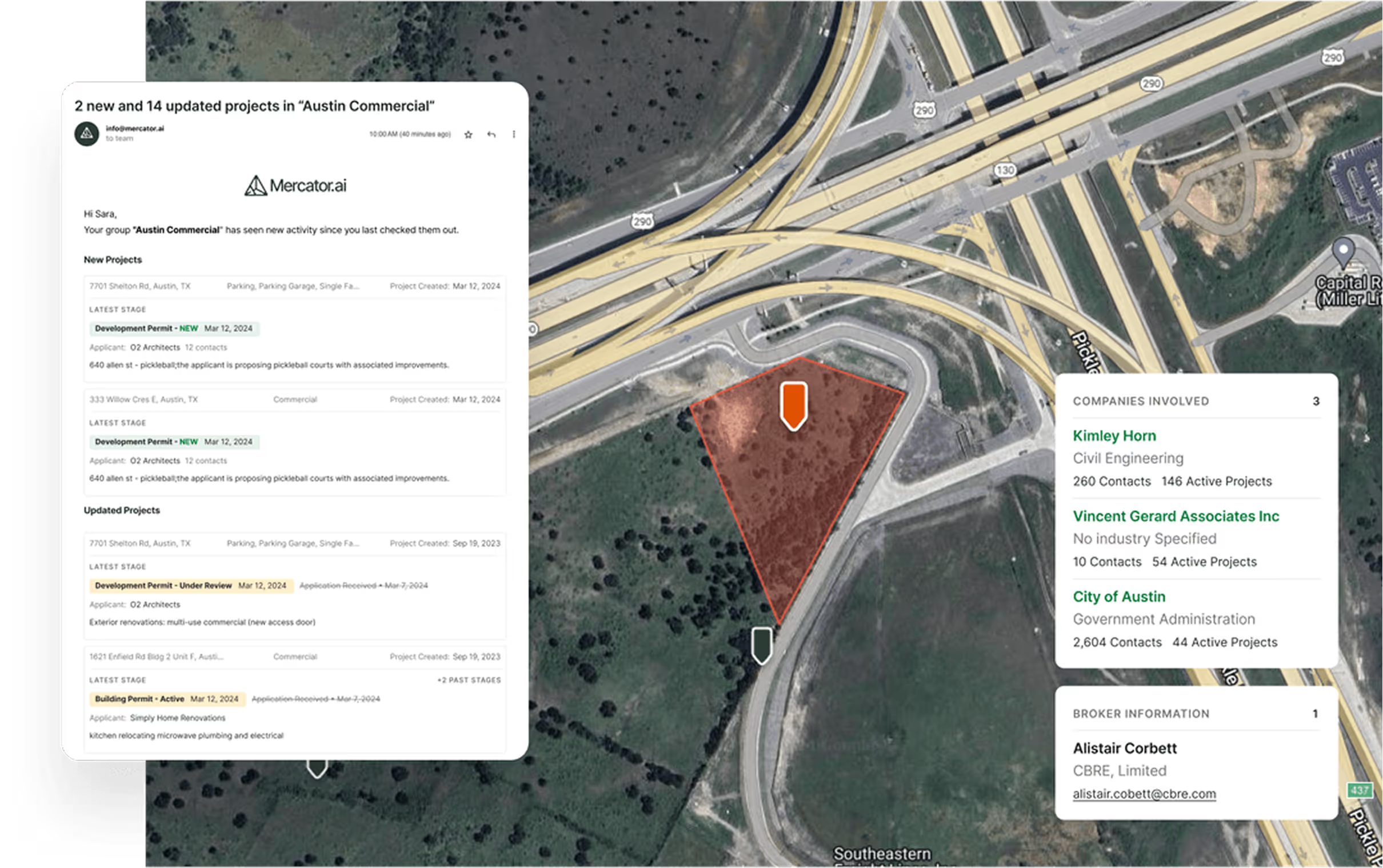
Building permits are your first official clue that a project is moving from an idea to a reality. Tracking permits allows you to spot upcoming projects before they’re widely publicized, giving you a critical head start. With Houston’s rapid growth, new permits are filed every day for everything from commercial high-rises to residential communities. By monitoring this activity, you can identify the project owner, architect, and other key players early on. This gives you a chance to introduce your services and start a conversation while they are still finalizing plans and partners. You can start exploring local opportunities right away with Mercator's Free Permits App.
Get Ahead with Rezoning and Title Transfer Data
If permits are an early signal, then rezoning applications and title transfers are the smoke before the fire. These activities often happen months or even years before a permit is ever pulled. A developer buying a large tract of land or an owner applying to rezone a property for commercial use are strong indicators of future construction. This is the kind of upstream information that lets you get in on the ground floor. By tracking these changes in land use and ownership, you can anticipate major developments and position your products or services during the crucial early planning stages, long before your competitors even know a project exists.
Build Relationships with Key Project Owners
Data gets you in the door, but relationships are what close deals. Construction has always been and will always be a people-first industry. Once you’ve used early project data to identify the key stakeholders, the real work begins. Reach out, introduce yourself, and learn about their goals and challenges for the project. Understanding the owner’s vision and even community concerns can help you tailor your approach and build trust. Listen to what industry leaders are focused on by tuning into The Future of Construction Podcast. Building a strong network with developers, architects, and engineers across Houston will pay dividends for years to come.
Use Project Intelligence for a Competitive Edge
Combining early project signals with stakeholder information gives you powerful project intelligence. It’s about connecting the dots between a title transfer, the developer behind it, their past projects, and the architects they prefer to work with. Using a dedicated platform to manage this information helps you organize your outreach and act on opportunities systematically. This strategic approach provides a massive competitive advantage over firms that are still relying on public bid sites and waiting for invitations. When you have all the project data at your fingertips, you can focus your time and resources on the opportunities you are most likely to win.
Related Articles
Frequently Asked Questions
How can my smaller company get involved in massive projects like the I-45 redevelopment? Think about the ripple effect. While a giant firm will likely win the primary contract, they will need a huge network of reliable subcontractors for specialized work. The real opportunity for many is in the secondary projects that pop up because of the main one. Improved infrastructure will attract private developers to build new retail, office, and residential spaces along the corridor, creating a wave of new, more accessible projects.
You mention tracking permits and land deals. Isn't that incredibly time-consuming? It can be if you're trying to do it all manually by digging through various city and county websites. That approach is inefficient and you'll always be a step behind. The smart move is to use a service that gathers and analyzes this data for you. A dedicated platform can provide real-time alerts on title transfers, rezoning applications, and new permits, freeing you up to focus on strategy and outreach.
What's the best way to approach a project owner once I've identified an early opportunity? Your goal is to be seen as a problem-solver, not just another vendor. Since you're getting in early, you have the time to research the developer and understand their portfolio. When you reach out, lead with value. Instead of a generic sales pitch, reference their past work and explain how your specific expertise can help them achieve their goals for this new project. It shows you've done your homework and are genuinely invested in their success.
Are the big public infrastructure projects the only major opportunities in Houston? Absolutely not. While public projects get a lot of headlines, a massive amount of construction is driven by private investment. Developments within Opportunity Zones, for example, are creating entire new neighborhoods with mixed-use and residential buildings. These private projects are often less publicized, which is why tracking early indicators like land sales and zoning changes is so critical to finding them.
Why is finding a project early so much better than just responding to a public bid? When you respond to a public bid, you're often just a number in a stack of papers, competing almost entirely on price. Getting in early transforms the entire dynamic. It gives you the chance to build a real relationship with the decision-makers, understand their vision, and demonstrate your value long before the project specifications are set in stone. You become a trusted partner instead of just another name on a bid sheet.
AI-powered business development for the construction industry
Schedule a time to discuss your use case and walk through a custom demo of the platform.