

Case Studies


In Orlando construction, the best sales conversations often begin before a project appears on a bid board. A title transfer, rezoning action, permit filing, or change in project timing can create an opening, but the signal alone is not an opportunity. It becomes useful when a team connects it to project fit, decision-makers, relationship history, and a clear next action.
Book a live demo to see projects and learn how construction intelligence can support earlier discovery and better-timed outreach.
Construction sales intelligence orlando teams can use is a practical workflow for finding early project signals, understanding who influences the work, qualifying whether pursuit makes sense, and timing outreach around the project's stage. It supports relationship-led selling rather than replacing the judgment of GCs, subcontractors, suppliers, and preconstruction teams.
That distinction matters because a list of companies, a CRM, and a bid board each serve a different purpose. Sales intelligence brings those inputs together so the team can decide where to spend attention and what to verify next. Start by defining what the workflow should reveal before outreach begins.
In short: Construction sales intelligence in Orlando is a repeatable workflow for finding relevant projects early, understanding who influences them, and deciding when and how to build a relationship. It is more useful than a static list of company names because it connects project context to a specific next action.
For a general contractor, that context may help the team decide whether a developing opportunity fits its work and pursuit criteria. For a subcontractor, it can clarify which relationships to develop before a bid is released. For a manufacturer or supplier, it can point to the stage when design and specification conversations may matter. The workflow is not about contacting everyone. It is about identifying the opportunities where informed, timely outreach is worth the team's attention.
A practical process usually combines four activities:
This is the distinction between intelligence and a lead list. A lead list says who exists. Intelligence helps explain why a project may matter now, who should be involved, and what your team should verify before investing time. It also supports human judgment rather than replacing it. Mercator.ai describes construction intelligence as helping businesses discover projects early, understand stakeholders, and build stronger business relationships. Its guidance likewise frames technology as support for relationship-led selling, not a substitute for it. Learn more about construction market intelligence before designing an Orlando workflow around your team's market, capabilities, and relationships.

In short: The strongest early workflow layers ownership, land-use, permit, and lifecycle signals, then verifies what each signal means before a team commits outreach time.
The value is not any one signal. It is the sequence: detect a meaningful change, test it against project timing, add stakeholder context, and give a person clear ownership of the next step. That keeps an Orlando team focused on useful discovery without confusing early evidence with a bid-ready opportunity.
Orlando's public permitting data shows why that filtering step matters. The City of Orlando's FY 2025 Permit Utilization Report lists 32,641 building permit applications processed and 31,022 permits issued. Those figures describe municipal activity, not sales opportunities, but they illustrate the volume a team would need to filter by project fit, stage, and stakeholder context before deciding where to focus outreach.
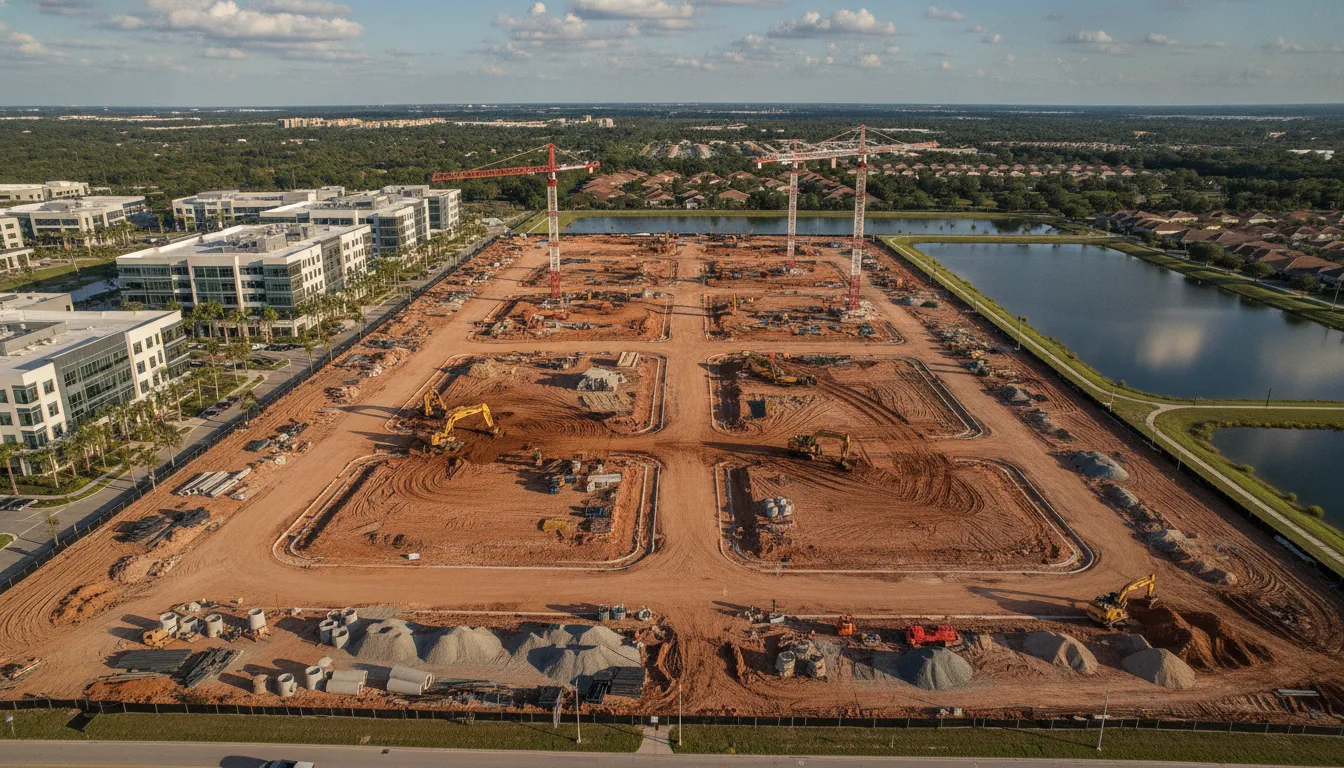
In short: Qualify the project, timing, stakeholders, access, and next action before asking a relationship to move forward.
A signal is not yet a sales opportunity. For an Orlando construction team, qualification should create a clear reason to pursue one project and defer another. That discipline helps GCs and business-development leaders focus on selective, potentially winnable work rather than treating every new project record as a priority. Mercator.ai's documented GC use cases include finding projects before GC selection and qualifying leads, but this workflow is useful with any reliable research process.
Start with the work itself. Does the project match your geography, building type, delivery method, size range, trade scope, or customer profile? Record the specific fit criteria and the disqualifiers. If the opportunity cannot plausibly use your capabilities, stop before spending time on outreach.
Next, place the project on a practical timeline. Is it still being conceived, moving through design, approaching procurement, or already in an active bid? Early visibility is valuable only when it changes what your team can do. A GC may seek access before selection. A specialty contractor may need time to build a relationship before bid stage. An estimator may need enough detail to decide whether a bid is realistic.
Identify the owner, developer, architect, engineer, prospective GC, and relevant internal contact. Then note how each person connects to the decision and whether your team has a credible introduction. Do not confuse a name with access. A useful qualification record states who should be contacted, why the conversation is relevant, and who owns the next step.
Give the opportunity a review date and one concrete action, such as verifying scope, requesting an introduction, or sharing a relevant capability. BD, preconstruction, and estimating teams use project intelligence to prioritize outreach and prepare bids. Make the handoff explicit, then revisit the record when the project or stakeholder context changes.
For more ideas on finding opportunities before public bid announcements, see how to find private projects early. The goal is not more names in a database. It is a defensible pursuit decision and a timely, relevant conversation.

In short: The same project intelligence should lead to different decisions: GCs qualify and prioritize pursuits, subcontractors build upstream relationships before bid stage, and suppliers influence specifications early.
A shared view of project timing and stakeholders is useful because every construction audience is looking at a different point in the commercial relationship. The goal is not to replace field knowledge or relationship-led selling. It is to help each team decide who to contact, when to engage, and what value to bring to the conversation. That distinction matters when building an early-lead process for the Orlando market.
How each construction audience applies project intelligence| Audience | Priority question | Useful signal | Relationship action |
|---|---|---|---|
| General contractors | Is this project a fit, and can we pursue it before the GC decision is made? | Early project visibility, stage, owner, and known stakeholders | Qualify the opportunity, map the decision-makers, and plan a selective pursuit |
| Specialty subcontractors | Which GC or upstream partner should know our capabilities before bid invitations? | Pre-bid timing, GC involvement, and upstream project context | Start a relevant conversation and build credibility before the bid stage |
| Suppliers and manufacturers | Where can our product contribute to the design or specification? | Design phase, project requirements, and architect or engineer relationships | Offer technical support, connect with specifiers, and stay engaged through construction |
For a GC, intelligence supports earlier visibility, lead qualification, and a more selective pursuit list. The team can compare project fit with available capacity, delivery strengths, and stakeholder access before committing estimating resources. This aligns with documented GC use cases such as finding projects before GC selection and focusing resources on winnable work.
For a specialty subcontractor, the same information is less about owning the project and more about earning consideration. Upstream visibility can reveal which relationships to develop before a bid package is released. A focused introduction to the right GC or project participant is more useful than a generic capability email.
Suppliers and manufacturers operate earlier still. Their opportunity may be to help shape a specification, answer a technical question, or support an architect and engineer before procurement is finalized. Project intelligence therefore guides technical, consultative outreach rather than a broad product blast. The strongest workflow gives every audience a clear owner for follow-up and a reason for the next conversation.

In short: Use project intelligence to decide who to contact, what matters to them, and when a conversation can be useful, then let a person build the relationship.
Start with a stakeholder map, not a generic contact list. Identify the owner, architect, engineer, consultant, general contractor, and other firms connected to the project. The goal is to understand who influences the next decision and where your team may have a credible reason to enter the conversation. Mapping owners, architects, and consultants is one documented use of construction intelligence, but the map still needs human review and context.
Next, match the message to the stakeholder's role and the project's stage. A subcontractor may want to introduce its capabilities to a prospective GC before bid stage, when relationship-building and upstream visibility matter. A supplier or manufacturer may be more useful to an architect or engineer through an early design conversation about specifications, application requirements, or product fit. These are different conversations, even when they concern the same project.
Make the first contact relevant and modest. Reference the project signal or known stage, explain why your team may be useful, and ask a focused question. Do not force a bid request or send a broad capability statement before you understand the recipient's priorities. A useful first exchange can clarify ownership, timing, decision criteria, or the next person to meet.
Assign one owner for every outreach action. Record the last contact, the agreed next step, and the date for follow-up. Monitor clients and prospects for project-plan changes, then adjust the message when the scope, schedule, or stakeholder group moves. This keeps follow-up responsive rather than repetitive.
For more guidance, see this project intelligence workflow. Technology should surface context and timing; your team supplies judgment, credibility, and the relationship.

In short: A sustainable workflow turns project intelligence into a shared operating habit: review new signals, record qualification decisions, monitor meaningful changes, assign the next action, and learn from the outcome.
Start with a defined review cadence. A weekly review can surface new projects and changes, while a shorter team check-in keeps urgent follow-up from waiting for the next planning cycle. The exact schedule should match the team's sales cycle, but the standard should remain consistent: every reviewed opportunity receives a clear status, owner, and next step.
Keep monitoring connected to the original project context. Construction activity can develop from conception through completion, and timeline or stakeholder information can change as the work advances. A team should revisit stage, decision-makers, fit, and timing rather than treating the first research pass as permanent. Alerts about changed project plans are useful only when someone evaluates the change and decides whether it affects pursuit strategy.
Shared qualification notes make that judgment transferable. Record why an opportunity fits or fails, which stakeholder has been verified, what the team still needs to learn, and when the next review is due. This gives BD, preconstruction, and estimating teams a common basis for prioritizing outreach and preparing bids, instead of forcing each person to repeat the same research.
Handoffs also need an explicit owner. When a project moves from discovery to relationship-building, identify who makes contact, who supports the conversation, and who updates the record. After each meaningful outcome, note what happened: a project advanced, stalled, changed direction, or was not a fit. Those observations improve future qualification without turning the workflow into a rigid script.
Talk through your project-intelligence workflow with the Mercator.ai team and confirm the coverage and fit for your market before taking the next step.
For related guidance, see these practical permit alerts for construction leads, while remembering that alerts are inputs for human verification and judgment. Mercator.ai's documented coverage is Austin, Dallas-Fort Worth, Houston, and San Antonio. Orlando coverage is not established, so Orlando teams should confirm any local product availability before relying on it.
It connects a possible project with timing, stakeholders, qualification criteria, and a next action. A lead list may identify companies or contacts. Sales intelligence adds project lifecycle, stakeholder, and timing context so the team can decide whether the opportunity deserves attention now. Human judgment and relationship building still drive the sale.
Start with signals that indicate a project is moving or changing, such as title transfers, rezoning, and permit activity. Then confirm the project stage, likely scope, decision-makers, and fit with your capabilities. Treat each signal as a research prompt, not proof that a project is ready to buy or bid.
A CRM records your company's contacts, conversations, opportunities, and follow-up activity. Sales intelligence supplies additional project and market context, such as lifecycle timing, stakeholder relationships, and changes that may create a reason to reach out. The two work together: intelligence informs the pursuit, while the CRM coordinates execution and accountability.
Mercator.ai's documented established coverage is Austin, Dallas-Fort Worth, Houston, and San Antonio. Its knowledge base does not establish Orlando or Florida coverage, so Orlando teams should not assume the platform provides local project data. The workflow in this article remains useful as general guidance for evaluating signals, relationships, and pursuit decisions.
A live demo can help you evaluate how a construction intelligence workflow supports earlier discovery, stakeholder context, and focused follow-up. Mercator.ai's documented coverage is in Texas, and Orlando coverage is not established, so use the conversation to clarify whether the platform fits your market and priorities. Book a live demo to see projects and learn how Mercator.ai may support your team's workflow.


.png)