
Case Studies


Healthcare work in Indianapolis is not limited to a new hospital tower. The opportunity set includes clinics, medical office buildings, senior care facilities, outpatient spaces, and renovations inside operating campuses. The challenge is finding credible projects early enough to qualify the work, identify stakeholders, and build relationships before procurement is public. Book a Live Demo To See Projects to see how earlier project intelligence can support that process.
Healthcare construction projects Indianapolis teams can pursue often first appear as signals, not bid invitations. These may include zoning changes, title activity, permits, Certificate of Need filings, planning records, or procurement notices. The signals require validation, but they can help contractors, subcontractors, and suppliers focus relationship-based business development before bid day.
That early view matters in a market with projects ranging from the major IU Health downtown campus. Which is scheduled to open in late 2027, to smaller additions and complex renovations. Start by defining which healthcare opportunities fit your capabilities and pursuit strategy. For the state-level context, review Mercator.ai's Indiana construction coverage alongside local records.
Healthcare construction projects in Indianapolis include far more than ground-up hospitals. The opportunity set spans major medical campuses, ambulatory and outpatient facilities, medical office buildings, community clinics, senior-care developments, and renovations inside operating healthcare environments. Each category creates different scopes, stakeholders, schedules, and qualification requirements. Define the vertical broadly before deciding which opportunities fit your capabilities.
Large hospital projects can generate years of work across multiple trades, phases, and procurement packages. A prominent local example is IU Health's new downtown Indianapolis medical campus. Gilbane describes it as currently the largest healthcare construction project underway in the United States. IU Health says the campus is scheduled to open in late 2027 and includes 864 inpatient rooms, 50 operating rooms, and 110 emergency-department care spaces. Those details signal a substantial, multi-layered opportunity, but they do not mean every contractor should pursue every package. Teams still need to identify the right delivery method, scope, timing, and decision-makers.
Healthcare delivery increasingly takes place outside a traditional inpatient tower. Ambulatory surgery centers, imaging locations, specialty clinics, urgent-care sites, and medical office buildings can support smaller or more specialized pursuits. These projects may involve new construction, tenant improvements, interior build-outs, or additions to an existing campus. A community facility can also be a meaningful opportunity. Indiana procurement materials identify a Shalom Health Care Center multi-use facility addition, illustrating how medical-facility work extends beyond the region's largest hospital systems.
Senior-care construction includes nursing homes, residential care facilities, and other long-term-care settings. In Indiana, developers and their partners should monitor the state's Certificate of Need program, which covers long-term-care and nursing-home development. That process can be an early development signal, but it is not confirmation that a project is ready to bid. Teams should validate the facility type, approvals, site status, and likely procurement path before investing heavily in pursuit activity.
Renovation work deserves its own category because the project constraints can be as demanding as the construction scope. An Indiana procurement example describes work in an existing 24-hour surgical unit, including renovation of hybrid operating-room and equipment-room space. Projects like this require careful phasing, infection-control planning, shutdown coordination, and communication with clinical stakeholders. For contractors and suppliers, recognizing these opportunities early creates time to assess the operational requirements and build a credible approach before bid day.
For a broader view of upcoming healthcare construction projects in Indianapolis, classify each lead by facility type, project phase, and access requirements. That simple structure helps business development teams compare a major campus pursuit with a clinic addition or active-facility renovation without treating them as the same sale.

Short answer: Track a sequence of public and private-market signals, then validate each one with the owner, design team, procurement notice, or project documents. A title transfer or zoning change can indicate movement, but it is not a confirmed bid opportunity. The strongest pursuits combine early evidence with human follow-up. Teams can also use Indianapolis commercial construction leads as a related prospecting reference.
Start with ownership and land-use activity. A title transfer, new ownership entity, or recorded development filing can reveal that a healthcare organization, developer, or investment group has control of a site. In Indianapolis, planning data includes hospital-district zoning information, giving teams a way to check whether a proposed use aligns with local land-use rules. The Indianapolis hospital-district zoning data is a useful starting point, but it does not confirm that construction will proceed.
Next, watch for permitting and regulatory movement. Permit activity can signal that a concept has advanced beyond casual planning. Healthcare teams should also review Indiana Department of Health engineering requirements, which apply specific standards to new hospital and ambulatory surgical center work. IDOH guidance references the 2018 hospital design and construction guidelines, along with applicable life-safety and healthcare-facility codes. Those requirements can help a contractor or supplier qualify the project type and anticipate technical participants, but regulatory activity alone is still not a bid invitation.
For long-term care and nursing-home development, add Certificate of Need monitoring to the workflow. Indiana maintains a Certificate of Need program for these facilities, so a CON filing or related state action may provide an important early signal. Treat it as an indicator of project intent and timing, then confirm scope, ownership, financing, and delivery method before allocating estimating or pursuit resources.
Finally, look for design and procurement confirmation. Architecture activity, project announcements, construction-manager advertisements, and formal bid documents carry more weight than an isolated record. Indiana public procurement materials show construction-manager-as-constructor bidding under Indiana Code 5-32, a reminder that the delivery method affects when and how firms should engage. Industry reporting can add context around major developments, such as continuing work on the IU Health Indy Health District. But reporting is not a substitute for an owner or procurement confirmation.
Use a simple status model: signal for title, zoning, permit, CON, or design activity. Qualified opportunity means ownership, scope, timing, and likely delivery method are corroborated. Confirmed pursuit means an authorized stakeholder or formal procurement source verifies the path to bid. This discipline helps teams avoid treating every record as revenue while still acting early. For broader context on upcoming healthcare construction projects in Indianapolis, connect the signal stack to owner research and relationship mapping. Record the next human conversation rather than waiting passively for bid day. A relationship-led construction lead workflow keeps the signal connected to a real next step.
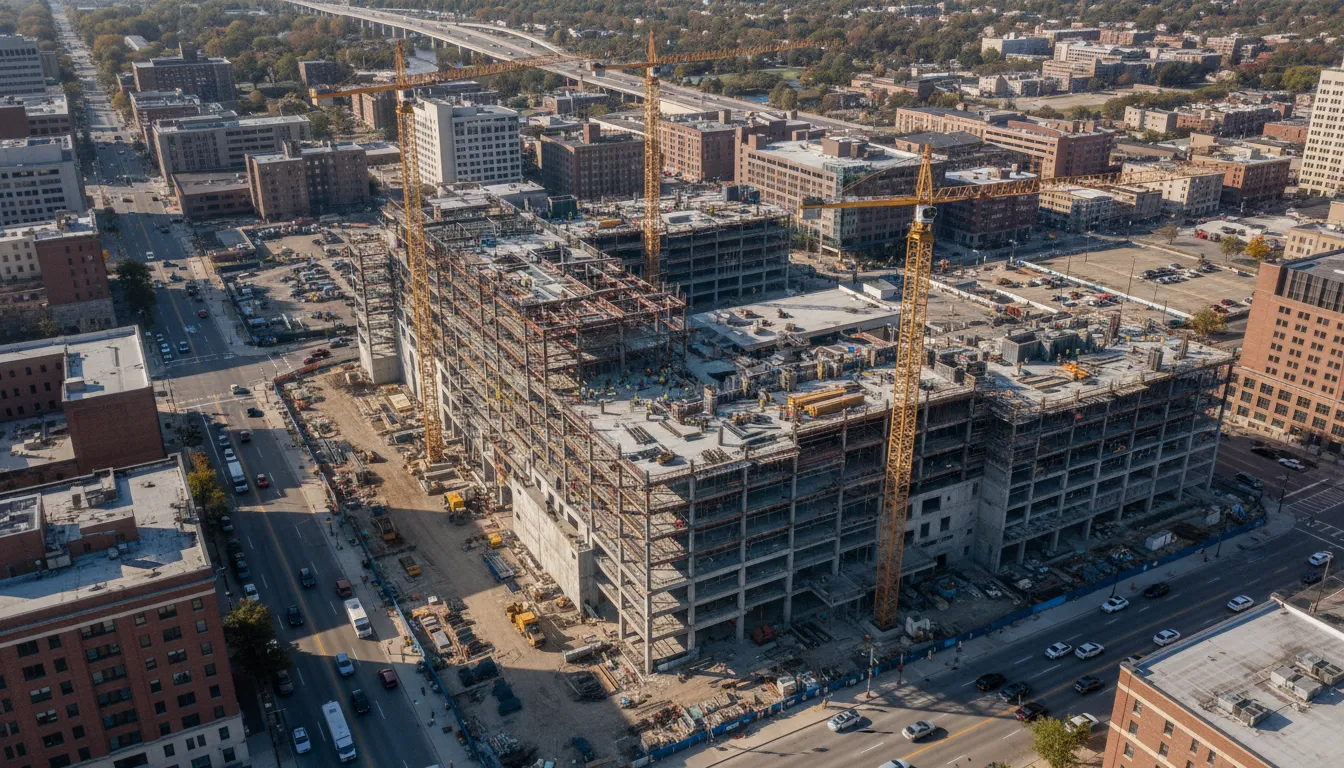
Public records can reveal healthcare development in stages, but no single Indianapolis database confirms every project. The useful approach is to stack local planning data, property records, permits, healthcare approvals, and procurement notices. Then validate each signal with the project owner, design team, or contracting channel. A zoning entry may indicate capacity or intent. It does not guarantee that a build will proceed, receive funding, or reach bid.
Review Indianapolis planning records for parcels, proposed uses, rezonings, variances, and hospital-district designations. The city's open-data resources include hospital-district zoning information, which can help you identify where healthcare-related development may fit within the local land-use framework. Use the record to establish a location and development context, then look for corroborating activity rather than treating the zoning layer as a project announcement.
For each parcel, capture the address, owner, applicant, filing date, requested use, and status. This creates a clean starting point for research and makes later title, permit, and procurement checks easier.
Title transfers can reveal a change in control, an acquisition, or a land position that precedes development. Compare the buyer, seller, property type, and transaction timing with zoning activity. A transfer alone is not proof of a healthcare build, since property can be acquired for investment, leasing, expansion, or uses unrelated to construction.
Permit records add another layer. Search for new construction, additions, interior build-outs, mechanical work, and renovations. Healthcare work may appear as an alteration to an existing facility rather than as a new hospital. Confirm the applicant, contractor, scope, valuation if available, and permit status. Treat estimated values and early filings as directional until the scope and delivery team are verified.
For senior care and nursing-home development, Indiana's Certificate of Need program is an important state-level signal. It covers long-term care and nursing-home development, so a CON filing can help identify regulated capacity expansion before procurement is visible. It is not a universal approval for every healthcare project. And it should not be used to infer that an acute-care hospital or medical-office project requires the same process.
Engineering records also matter when evaluating timing and complexity. Indiana Department of Health guidance identifies the 2018 hospital design and construction guidelines for applicable new projects. The guidance also references NFPA 101 Life Safety Code and NFPA 99 Health Care Facilities Code editions adopted by CMS. These requirements can affect design review, sequencing, and the qualifications needed for work in clinical environments.
Finally, monitor public procurement notices for requests for qualifications, invitations to bid, construction-manager selections, and renovation packages. Indiana materials show construction-manager-as-constructor bidding under Indiana Code 5-32. They also illustrate that public healthcare work can range from a major hospital program to focused renovations inside an operating facility. Procurement is usually a later-stage signal, but it can provide the clearest evidence of delivery method, scope, deadlines, and participation requirements.
Organize these sources in a database for tracking healthcare construction, with a confidence level and next verification step for each record. That turns scattered public information into a working prospect list without confusing early activity with a confirmed opportunity.

Healthcare construction opportunities in Indianapolis extend beyond new hospitals to ambulatory centers, medical offices, clinics, senior care facilities, and renovations inside active campuses. Each category produces different signals, stakeholders, schedules, and pursuit requirements. Business development teams should avoid treating the market as one project type.
| Project type | Early signal to watch | Qualification question |
|---|---|---|
| Hospital campus | Planning, design, or procurement activity | Which packages and delivery method are active? |
| Clinic or medical office | Site, permit, or addition records | Who controls the scope and schedule? |
| Senior care | Certificate of Need or facility filings | What approvals and standards apply? |
| Active-facility renovation | Alteration or renovation permit | How will work coexist with patient care? |
Major hospital programs can create opportunities across construction management, specialty trades, equipment, interiors, infrastructure, and follow-on campus work. The new IU Health downtown Indianapolis hospital is described by Gilbane as currently the largest healthcare construction project underway in the United States. IU Health says the medical campus is scheduled to open in late 2027. Those milestones indicate a long development horizon, with potential packages and supplier relationships emerging at different stages rather than one single bid-day event. Project details from Gilbane and IU Health's project information provide useful context, but teams should validate current procurement status before acting.
Healthcare delivery increasingly requires locations closer to patients, creating pursuit paths outside inpatient towers. Ambulatory surgery centers, diagnostic facilities, specialty clinics, and medical office buildings may be smaller than hospitals but still require specialized planning, infection-control considerations, and coordinated building systems. They can also move through different ownership and procurement structures, making early visibility valuable for contractors and suppliers that want to build relationships before specifications are finalized.
Community health centers and clinic expansions can combine exam rooms, administrative space, education areas, and other uses within a constrained footprint. An Indiana procurement document identifies a Shalom Health Care Center multi-use facility addition, illustrating that Indianapolis-area healthcare opportunities include targeted additions as well as large institutional developments. These projects may reward teams that understand phasing, space efficiency, and the practical needs of an operating care provider.
Senior care includes residential care and comprehensive care facilities, each subject to applicable state requirements. Indiana materials identify physical plant standards for residential care facilities and environmental and physical standards for comprehensive care facilities. The state's Certificate of Need program also covers long-term care and nursing-home development. These regulatory milestones can help teams identify a project early, but they are signals to investigate, not confirmation that a construction contract is available.
Renovation work can be especially demanding because construction must coexist with patient care and strict operational controls. An Indiana procurement example describes renovation in an existing 24-hour surgical unit, including approximately 1,262 square feet of hybrid operating-room and equipment-room space. Active-facility projects can create opportunities for teams with strong phasing, logistics, infection-control, and communication capabilities, even when the physical scope is modest.
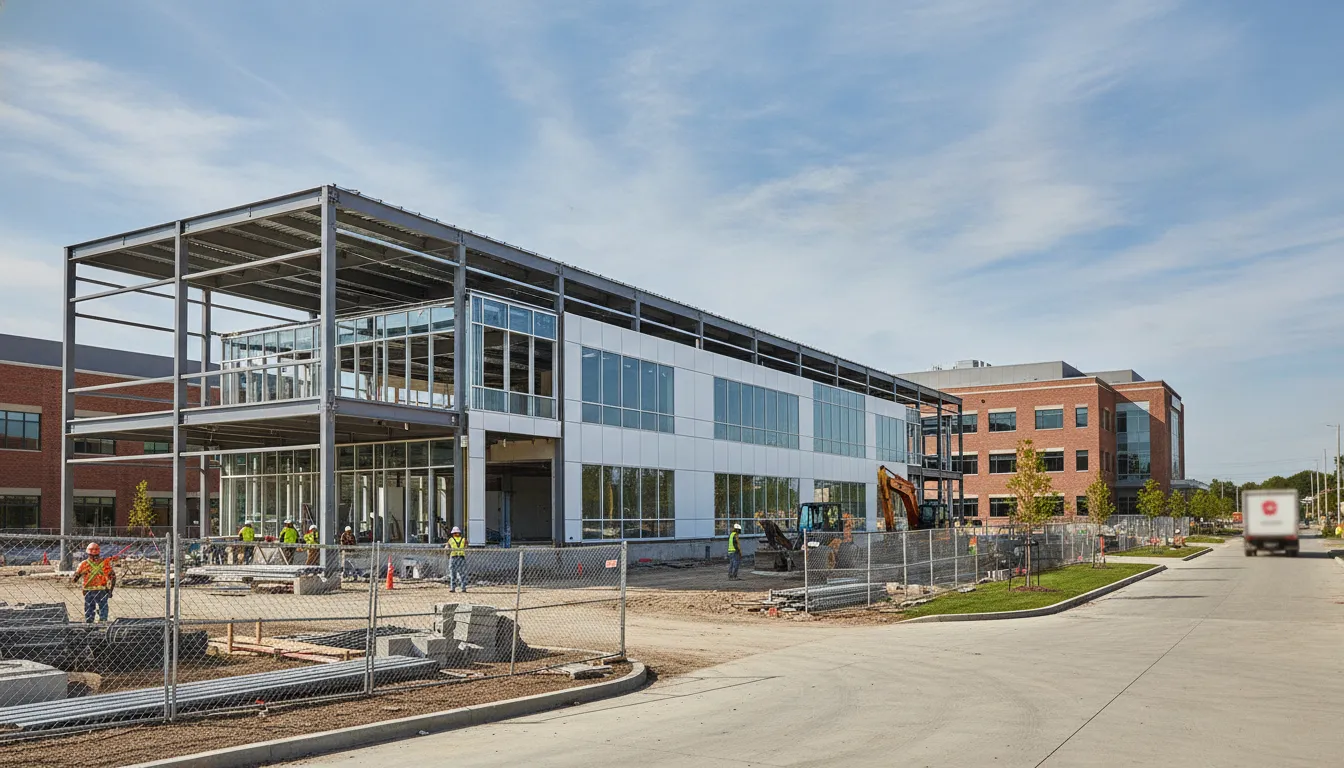
Procurement and compliance shape healthcare pursuits by determining who can compete, which delivery method governs the bid, and what technical controls must be planned before work begins. For teams pursuing healthcare construction projects in Indianapolis, the opportunity is not confirmed simply because a project appears in a planning record. It becomes actionable when the owner, delivery method, qualification requirements, schedule, and facility constraints can be validated.
Vendor registration and prequalification are often the first practical gates. Owners, public agencies, construction managers, and major healthcare systems may require firms to maintain current licenses. Insurance, safety documentation, financial information, relevant project experience, and supplier or trade classifications. Requirements vary by owner and project, so treat each registration portal and solicitation as its own set of instructions rather than assuming one approval transfers everywhere.
Early research should also identify the likely procurement route. Indiana public procurement materials show construction-manager-as-constructor bidding under Indiana Code 5-32, including an Eskenazi project. That signal can tell a contractor or supplier to watch for qualification notices. Bid packages, and scope releases tied to the construction manager, not just a conventional general-contractor bid. The healthcare construction bid opportunities guide can help organize that monitoring process.
Healthcare work carries technical requirements that affect design coordination, estimating, sequencing, and closeout. Indiana Department of Health engineering guidance identifies the 2018 edition of the Guidelines for Design and Construction of Hospitals for applicable acute-care projects. The same guidance references NFPA 101, the Life Safety Code, and NFPA 99, the Health Care Facilities Code, using editions adopted by CMS. Those standards can influence fire protection, power, medical systems, infection-control measures, egress, and commissioning responsibilities.
This is not a reason to make a legal or code determination from a public record. It is a reason to bring the right estimator, compliance lead, engineer, and trade partners into qualification early. Their review can distinguish a credible pursuit from a project that falls outside the firm's capabilities or required certifications.
Renovation opportunities require a different pursuit plan from ground-up construction. Indiana procurement materials describe work in an existing 24-hour surgical unit, including renovation of approximately 1,262 square feet. In an active facility, access, shutdowns, infection prevention, noise, dust, material movement, patient safety, and phased turnover can matter as much as price. Ask how the owner will protect ongoing care, where staging is possible, and which work windows are available before committing resources.
Use procurement notices, hospital-district planning data, and owner validation together. The goal is not to predict a bid from one signal. It is to qualify timing and fit, complete the required registration, and approach the decision-makers with a credible plan for compliance and continuity of operations.

Early project intelligence creates a better starting point for human outreach, not a substitute for it. When a healthcare signal appears, business development teams should qualify the evidence, map the stakeholders. Understand the facility's constraints, and approach the right person with a relevant reason to talk. This matters in healthcare, where trust, continuity of operations, and technical credibility influence decisions over a long project lifecycle.
Mercator.ai describes this kind of workflow as a combination of early project detection and relationship mapping. Its coverage includes Texas, Florida, and the Midwest, including Indiana. For teams pursuing healthcare construction projects in Indianapolis, use the platform's project intelligence alongside owner conversations, public-record validation, and the relationship work that moves a pursuit forward.
Book a Live Demo To See Projects to evaluate how earlier project intelligence can support your Indianapolis pursuit process.
They combine planning and zoning records, property and title activity, permits, Certificate of Need filings, design announcements, and procurement notices. Each source reveals project intent at a different stage and should be validated before outreach.
Opportunities include ambulatory centers, medical office buildings, neighborhood clinics, senior-care facilities, multi-use additions, and renovations within existing campuses. Indiana procurement records describe a multi-use addition for Shalom Health Care Center. State materials also address construction standards for comprehensive-care and residential-care facilities.
Start by confirming the facility type, applicable Indiana Department of Health engineering requirements, life-safety standards, and the owner's procurement rules. IDOH guidance references the 2018 hospital design and construction guidelines and NFPA codes adopted for CMS compliance. Requirements vary by project, so treat this as a qualification step, not a substitute for project-specific professional or legal advice. Review the IDOH engineering guidance.
Qualify the signal, map owners and influencers, learn the project's actual constraints, and lead with a useful introduction or relevant capability. Then coordinate outreach with the expected design and procurement milestones, record next steps, and monitor the project for changes. Intelligence should help teams start better-timed conversations, not replace the human relationships that win healthcare work.
Healthcare construction opportunities often emerge through public records before a formal bid appears. A clearer view of those signals can help your team focus research, prepare relevant outreach, and build relationships with the right stakeholders.
Book a Live Demo To See Projects and learn how Mercator.ai can support a human-led business development process.


.png)