Case Studies


Healthcare pursuits are often visible before they become bid opportunities, but early visibility is not the same as confirmed scope, schedule, funding, or procurement. For commercial construction BD teams, the advantage comes from treating each public trace as a lead to validate rather than a project to announce.
Request a Mercator.ai demo to see how early project intelligence can support relationship-led research.
Finding healthcare construction projects orlando starts with connecting signals such as title transfers, rezoning, permits, planning records, owner announcements, and stakeholder relationships, then checking the evidence before choosing an outreach path.
A reported Orlando example shows why that discipline matters. Coverage of the Orlando Health Children's Pavilion described a six-story outpatient facility with more than 30 pediatric specialties and a project team including HOK, Haskell, and TLC Engineering Solutions (Medical Construction & Design). The useful question is not merely whether a signal exists, but what it can and cannot prove. That distinction begins with a practical definition of an early signal.
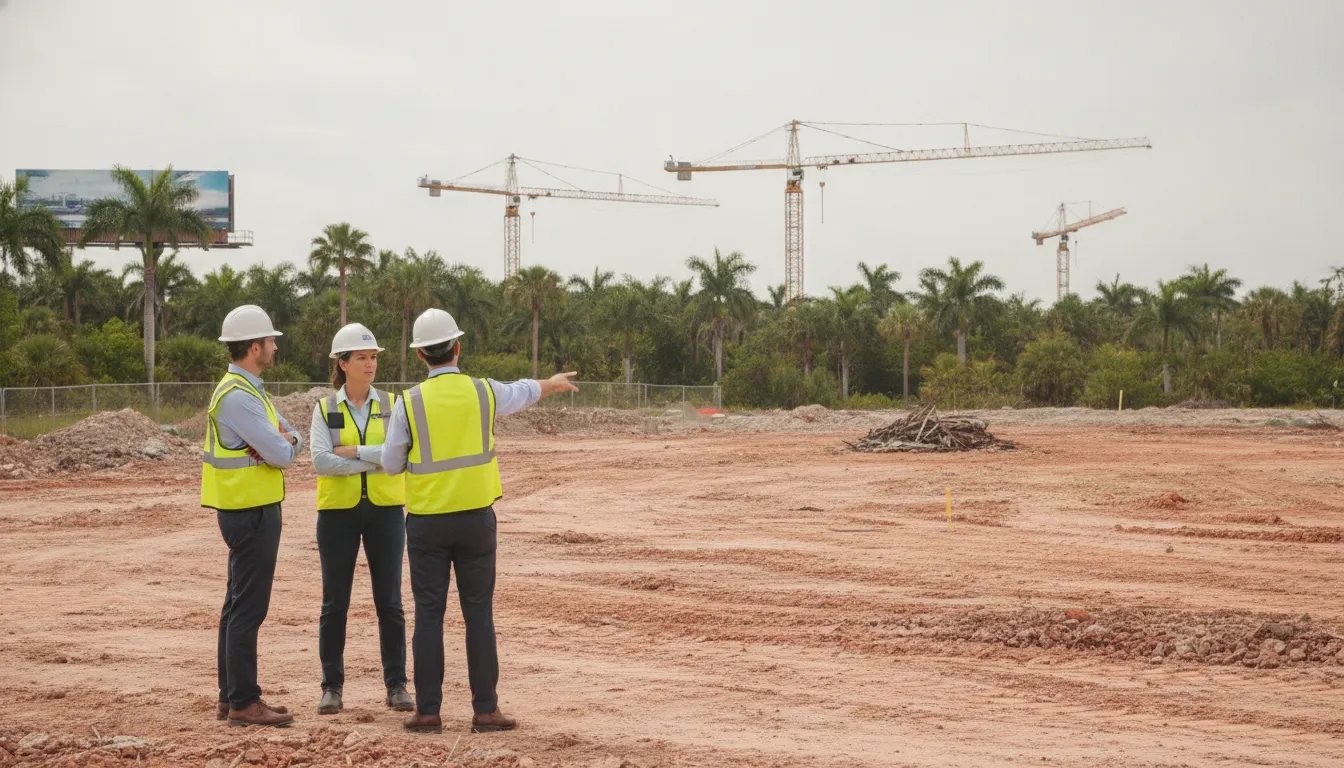
An early signal is evidence that a healthcare development may be forming, not proof that the project is funded, permitted, scheduled, or accepting bids. For Orlando construction teams, useful signals can include a property or title transfer, rezoning activity, a permit record, a planning submission, an owner or health-system announcement, or a relationship clue involving a developer, designer, or construction manager. Each signal should be logged as a lead for validation rather than presented as a confirmed opportunity.
A title transfer may identify a change in ownership without revealing the intended use. Rezoning can indicate that a site may support a new use, but it does not establish that healthcare construction will begin. A permit may show that an application exists, while leaving scope, funding, schedule, and procurement status unresolved. The same discipline applies to an announcement: naming a facility or expansion does not mean a trade partner can pursue an open bid.
Planning materials can still provide valuable context. NIH guidance describes its Design Requirements Manual as a resource for planning, programming, and designing healthcare facilities, illustrating why early documentation may reveal needs before procurement is visible: NIH Design Requirements Manual. Federal HHS guidance likewise connects pre-project planning with scope and cost before budget submission, which supports treating early records as inputs to qualification, not as final project facts: HHS facility design and construction guidance.
Orlando examples show why details matter. A trade report describes the Orlando Health Children's Pavilion as a six-story outpatient facility with more than 30 pediatric specialties and notes that the facility is adjacent to Orlando Health Arnold Palmer Hospital for Children. It also names HOK, Haskell, and TLC Engineering Solutions on the project team. Those details can help a BD team map scope and stakeholders, but they do not imply a current bid invitation or a comparable active project: project report.
Use the broader healthcare construction project signals guide for category background. This Orlando article goes further by focusing on local signal qualification, stage validation, and relationship mapping. One final caveat is essential: Mercator.ai's knowledge base establishes Texas-focused coverage, not an Orlando project inventory. Orlando leads require independent verification before outreach or pursuit.

For healthcare construction projects in Orlando, the strongest discovery stack combines public records, planning documents, owner communications, trade coverage, and relationship intelligence. Each source reveals a different part of the picture, but none alone proves that scope, funding, schedule, ownership, or bid status is confirmed.
Start with public planning and property activity. Title transfers, rezoning actions, land-use filings, and commercial permits can indicate that a site or use is changing. They are useful for finding an address and an emerging development story, but they may not identify the final owner, design team, delivery method, or procurement timeline. Use Orlando construction project alerts as a related resource for organizing that early scan.
Next, review planning and design materials where they are available. Healthcare work often leaves a document trail that describes the site, facility type, additions, renovations, life-safety considerations, and building systems. NIH describes its Design Requirements Manual as a resource for planning, programming, and designing facilities, while HHS guidance connects pre-project planning with scope and cost. Those references provide useful validation principles, not proof that a specific Orlando project is approved.
Then check owner and health-system announcements, developer updates, professional-network posts, and trade publications. These sources can reveal intended use, project partners, approximate scale, and visible milestones. For example, a trade report on Orlando Health Children's Pavilion identified a six-story outpatient facility, more than 30 pediatric specialties, an 800-space parking structure, and project team members. Treat those details as reported project information, and confirm whether they remain current before acting.
Finally, connect the signal to people: owner representatives, developers, designers, health-system contacts, and potential delivery partners. Cross-checking against Orlando commercial permit data can help separate a promising lead from an unverified market rumor. The goal is disciplined discovery, not a larger list of unqualified names.
| Signal source | What it may show | What it does not prove |
|---|---|---|
| Title transfer or rezoning | Site change, ownership activity, or a possible use change | Healthcare scope, funding, or construction start |
| Permit or planning record | Application activity, site details, or design maturity | Final approval, open procurement, or a bid date |
| Owner or trade announcement | Intended use, named partners, or a visible milestone | Current status, available scope, or invitation to pursue |

Validate the stage by matching the signal to evidence of scope, schedule, budget, design progress, approvals, and procurement. A permit, site activity, or owner announcement can justify research. But it does not prove that a healthcare construction project in Orlando is funded, fully designed, accepting bids, or currently active. Public records can also lag behind private decisions, or remain visible after a project changes direction.
HHS ties pre-project planning to connecting scope and cost before budget submission and to delivering the full scope within the submitted budget. Its design guidance also calls for scope, schedule, and budget certification against an approved project agreement at each design submission. Cost estimates progress from schematic design to design development and contract documents. See the HHS facilities design and construction guidance for the reference framework.
For healthcare construction projects in Orlando, keep a dated evidence trail and assign a confidence level to each signal. Note the record source, the responsible jurisdiction or owner, and the last date it was confirmed. A second independent source is especially useful when a project page, permit entry, or announcement has not been updated recently.
That discipline lets BD teams choose a useful, relationship-first next step without claiming more certainty than the record supports. Early-stage evidence may call for a research question or introduction; later evidence may justify a precise procurement question. The outreach should match the confidence level.
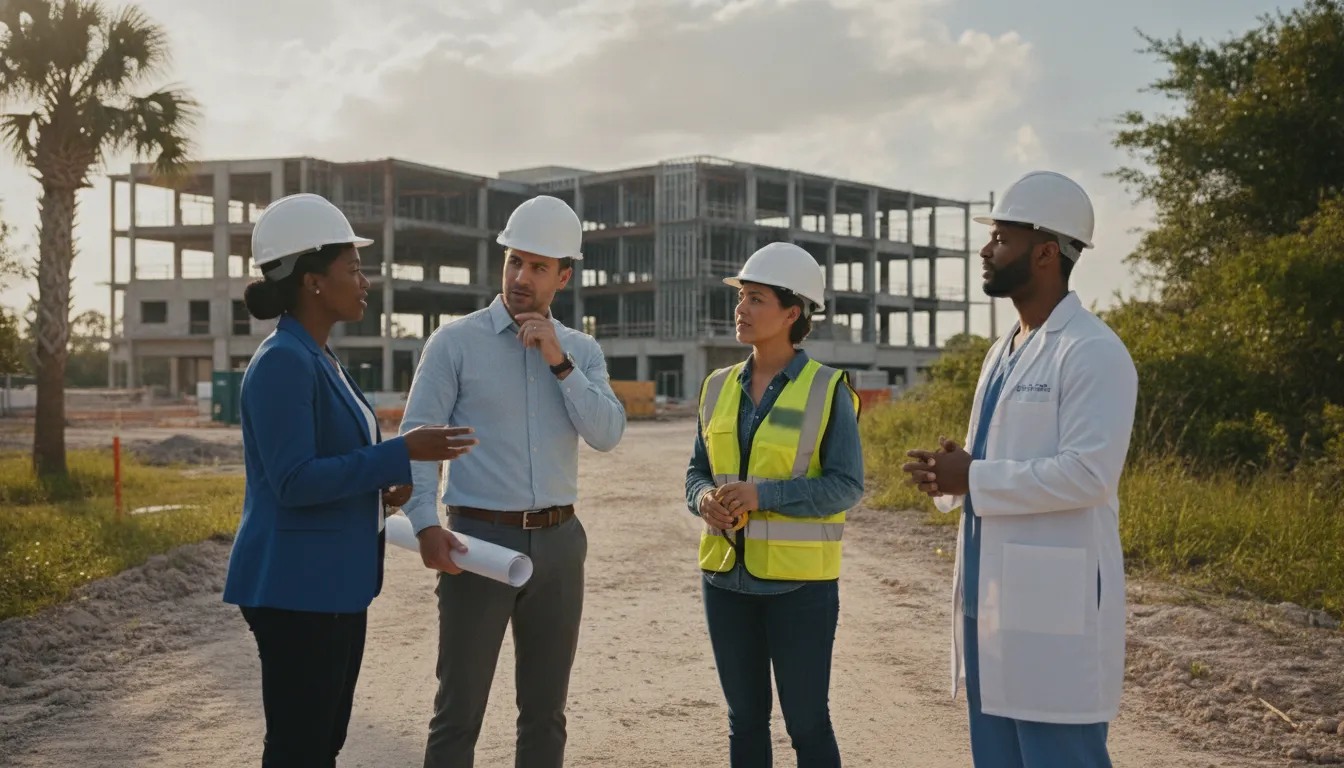
A useful stakeholder map identifies who owns the need, who controls the project, who designs it, who approves it, who uses the facility, and who may deliver the work. A named company or project team is evidence of a relationship, not proof that an open bid invitation exists.
Start with the owner or health system and any developer involved in the real estate or financing. Then identify the governing body or decision-making delegate, the designers of record, the authority having jurisdiction (AHJ), facility users, the construction manager or general contractor, and specialty partners such as medical equipment, mechanical, electrical, plumbing, and technology firms. Each participant can reveal a different part of the project, but none should be treated as interchangeable.
Healthcare planning makes this distinction especially important. New York health-facility guidance states that the governing body or its delegate develops the functional program to inform the designers, AHJ, and facility users. Although this is not an Orlando rule, it is a useful model for understanding how operational requirements move through a healthcare project. Read the functional program as a clue to who defines the need, who translates it into design, and who must approve or operate the result: New York functional-program guidance.
Public examples show why the map should go beyond the owner. A trade report on the Orlando Health Children's Pavilion describes a six-story outpatient facility with more than 30 pediatric specialties and notes that the facility is adjacent to Orlando Health Arnold Palmer Hospital for Children. It identifies HOK, Haskell, and TLC Engineering Solutions on the project team, giving researchers several relationship paths to validate, not just one health-system name: Children's Pavilion project report.
A separate Berglund Construction announcement identifies Orlando Health and Acadia Healthcare as joint-venture partners on a 144-bed behavioral-health hospital in Apopka. That example illustrates how a developer, operating health system, and builder can share ownership or delivery roles: Berglund's project announcement.
Before outreach, label each relationship as confirmed, reported, inferred, or still unknown. Then verify procurement route, current stage, and contact authority independently. A complete map improves the quality of a pre-bid conversation; it does not convert an early signal into an invitation.

Answer: Start with a qualified signal, identify the right relationship path, offer useful expertise, and ask permission to stay involved. Pre-bid engagement should create relevance before it creates a sales conversation.
An early signal is not an invitation to send a generic capabilities deck. A title transfer, rezoning action, permit, owner announcement, or planning update can indicate movement, but it does not confirm scope, funding, schedule, procurement method, or bid status. Treat the signal as a reason to investigate, not a reason to assume access.
1. Qualify the opportunity. Confirm the asset type, location, apparent project stage, likely delivery model, and whether the work fits your team's capabilities. Separate what the public record establishes from what still needs confirmation. This keeps BD resources focused on pursuits that match your market and capacity.
2. Find a warm introduction. Map existing relationships across the owner or health system, developer, architect, engineer, consultant, lender, facility user, and relevant trade partners. A trusted introduction is usually more useful than adding another cold message to a crowded inbox. If no warm path exists, choose a relevant contact and make the first note specific to the project's apparent need.
3. Lead with a useful question. Ask where the project sits in planning, what decisions are still open, and which technical or operational constraints matter most. For healthcare work, questions about phasing, occupied-facility coordination, procurement timing, or specialty requirements can demonstrate preparation without pretending to know the full brief.
4. Offer relevant expertise. Share a concise observation, planning consideration, trade perspective, or resource that helps the contact think through the next decision. Do not disguise a pitch as research, and do not overstate what you know. The goal is to become useful before the team is comparing bids.
5. Set permission-based follow-up. Ask whether a later check-in would be helpful and agree on a reasonable timing cue, such as a planning milestone or design progression. Record the source, confidence level, contact path, and next action. Later, when teams are actively reviewing Orlando commercial bid opportunities, that disciplined history helps distinguish a genuine continuation from a brand-new cold pursuit.
Mercator.ai positions construction intelligence around earlier project visibility and warm introduction paths, not high-volume outreach or guaranteed access. Use that type of intelligence to prioritize thoughtful conversations, then rely on local judgment and direct confirmation before treating any Orlando healthcare construction opportunity as actionable.
Mercator.ai can help construction teams think earlier about project activity and relationship paths, but the available company information does not confirm Orlando coverage or an Orlando project inventory. That distinction matters when evaluating any source of construction intelligence.
Mercator.ai is positioned around relationship-centered intelligence. Its stated value is helping teams spot projects before general contractors are selected and identify possible warm introduction paths. In practice, that means looking beyond a bid board mindset. Signals such as title transfers, rezoning, and permits can point to activity that deserves research. Relationship context can then help a BD team decide who to contact and why.
Those signals still require local validation. An early activity signal does not confirm project scope, funding, schedule, stakeholder ownership, procurement method, or an open bid. A demo can clarify how the platform identifies activity, what relationship information it surfaces, which project stages it is designed to support, and whether its current geographic coverage fits your pursuit area. Ask specifically how Orlando or Central Florida data would be sourced and verified before treating a result as actionable.
The knowledge base establishes Mercator.ai coverage as Texas-focused, including Austin, Dallas-Fort Worth, Houston, and San Antonio. It does not establish Orlando coverage or confirm healthcare construction projects in Orlando. Teams researching this market should therefore verify coverage directly and continue checking local records, owner announcements, planning materials, and stakeholder sources independently.
If Florida is part of your territory, ask Mercator.ai whether any Florida construction coverage is available and confirm its current scope before relying on it. The right role for any platform is to sharpen research and relationship planning, while local judgment and direct verification remain essential.
Request a Mercator.ai demo to discuss how to validate early signals and plan relationship-led outreach.
Build a discovery stack rather than relying on one project list. Monitor title transfers, rezoning activity, permits, planning materials, owner announcements, trade coverage, and relationship channels. Treat each item as an early signal, not proof that a project is funded, actively bidding, or open to your company.
Compare the evidence against scope, schedule, budget, and document maturity. Planning language, site activity, or an owner announcement may indicate intent. Design submissions and progressively detailed estimates provide stronger stage evidence. HHS guidance describes cost estimates at schematic, design-development, and contract-document stages, so ask which deliverables exist before assuming procurement is near.
Start with the health system or owner, developer, governing body, designers of record, authority having jurisdiction, and facility users. Then identify the construction manager or general contractor and relevant specialty partners. A named architect, owner, or joint-venture participant confirms a relationship to the project, but it does not establish an open bid or specialty-trade opportunity.
Ask what is confirmed, what remains subject to approval, who owns the next decision, and which stage documents can be shared. Lead with a useful qualification question or relevant capability, then request the appropriate introduction. Respect the project timeline and follow up with new information, rather than sending repeated generic capability messages.
A clearer view of early signals can help your team organize research, validate what is known, and decide which relationships merit attention before a bid invitation. To learn more about Mercator.ai, request a demo, and confirm whether the platform covers the Orlando market needs you have identified, contact us through Mercator.ai.


.png)