
Case Studies


One application or permit entry can reveal movement around a property, but it does not prove an office project is funded, active, or open for bids. In Jacksonville, treat public records as leads to verify, not awarded work. Teams comparing construction-intelligence tools can review Mercator.ai's pricing; its documented product markets are in Texas, not Florida.
A search for office construction projects jacksonville is most useful when it leads to a verifiable signal: Jacksonville's Planning Application site lets users search approved public land-use cases by application number, street name, or status. Submitted cases may not appear until fees are received, so a missing entry is not proof that nothing is planned.
Before deciding whether to pursue an address, separate a preliminary land-use signal from evidence of a defined scope, responsible stakeholders, and a project stage that fits your business. That distinction keeps early research useful without mistaking possibility for a bid opportunity.
An early office-project signal is a public or business announcement that suggests a site, property, or tenant may be moving toward office development, renovation, or reuse. It is a lead to investigate, not proof that a funded project will proceed or that construction is ready to bid.
Start with the property and its land-use context. A parcel sale, ownership change, zoning request, or planning application can indicate that someone is evaluating a new use or a change to an existing building. Jacksonville's Planning Application site allows searches of approved public land-use cases by application number, street name, or status. The City notes that a submitted case may not appear publicly until required fees are received, so a missing record does not establish that no planning activity exists.
A zoning or land-use case is meaningful when its location and proposed use plausibly support an office project. Check the parcel, application status, applicant, and stated request rather than treating a nearby case as an office lead. The City's Planning Department oversees zoning, comprehensive planning, land use, building codes, and inspections, making its records useful context for understanding which public process may apply. See the Jacksonville Planning and Development department information.
Other signals can include a developer or property-owner announcement, a tenant commitment, a request for proposals, or commercial permit activity. Each points to a different stage: an owner exploring options is not the same as a tenant with a defined requirement. And a permit filing does not by itself confirm a start date or an available contract. Jacksonville advises applicants to investigate zoning before applying for a building permit, which underscores why land-use context matters when interpreting permit activity. For a practical record-search walkthrough, use this guide to track Jacksonville commercial permits.
For each possible lead, record the address, source, date, proposed use, and current status, then seek a second reliable confirmation before investing pursuit time. Treat unverified announcements and incomplete applications as low-confidence signals. The goal is to notice a possible office opportunity early, then establish what is actually planned, who is involved, and whether the scope fits your team. Public signals help shape that research; they do not confirm project funding, schedule, procurement, or Jacksonville coverage by any particular platform.

Build an opportunity list from several sources rather than treating one portal as a complete pipeline. Public records can surface a site or proposed use; a permit, status listing, or owner announcement adds context. But none alone confirms that a project is funded, actively procuring, or a fit for your team.
| Signal source | What it may reveal | Limitation |
|---|---|---|
| City of Jacksonville Land Use and Zoning Portal | Applications, scheduled hearings, and alerts that can indicate land-use or zoning activity before a building permit is the focus. | A land-use application is an early signal, not proof of an office project or a construction award. The City notes that submitted cases may not appear publicly until fees are received; verify the record and its status. |
| City commercial permit information | Permit activity and application requirements can help identify a project moving toward construction and the kinds of disciplines involved. | Permit records may reflect a later stage than early development signals. Jacksonville advises investigating zoning before applying, and commercial projects may require multiple permit types; a permit does not establish procurement timing. |
| Downtown Investment Authority project listing | Downtown projects grouped by status, including proposed, approved, and under-construction listings, can help focus follow-up research. | Confirm the live listing and project details before outreach. Status categories are not a bid calendar, and a project listing does not confirm that office work is open to outside bidders. |
| DIA and developer announcements or RFPs | Announcements may describe intended use, redevelopment scope, selection criteria, or a public request for proposals. A DIA update from late 2024 and early 2025 described project progress and a former JEA headquarters campus RFP. | That update is historical context, not a current project inventory. Recheck the source for present status, scope, deadlines, and the appropriate contact before pursuing an opportunity. |
For an office-focused search, compare a parcel or address across these sources and note what each one actually confirms. Some opportunities may involve adaptive reuse or mixed-use work rather than a new office tower, so qualify the scope before assigning estimating or business-development time. For a broader research workflow, see the Jacksonville project opportunity database.

Before a sales call or pursuit decision, confirm that the signal points to a real parcel, a relevant decision-maker, and a project stage that fits your role. Treat a permit entry, land-use filing, development announcement, or RFP as a lead to investigate, not proof that work is funded or ready to bid.
For a broader explanation of phases and signals, see this guide to office construction project stages. Use it as general process guidance, not as confirmation of a Jacksonville project's current status.
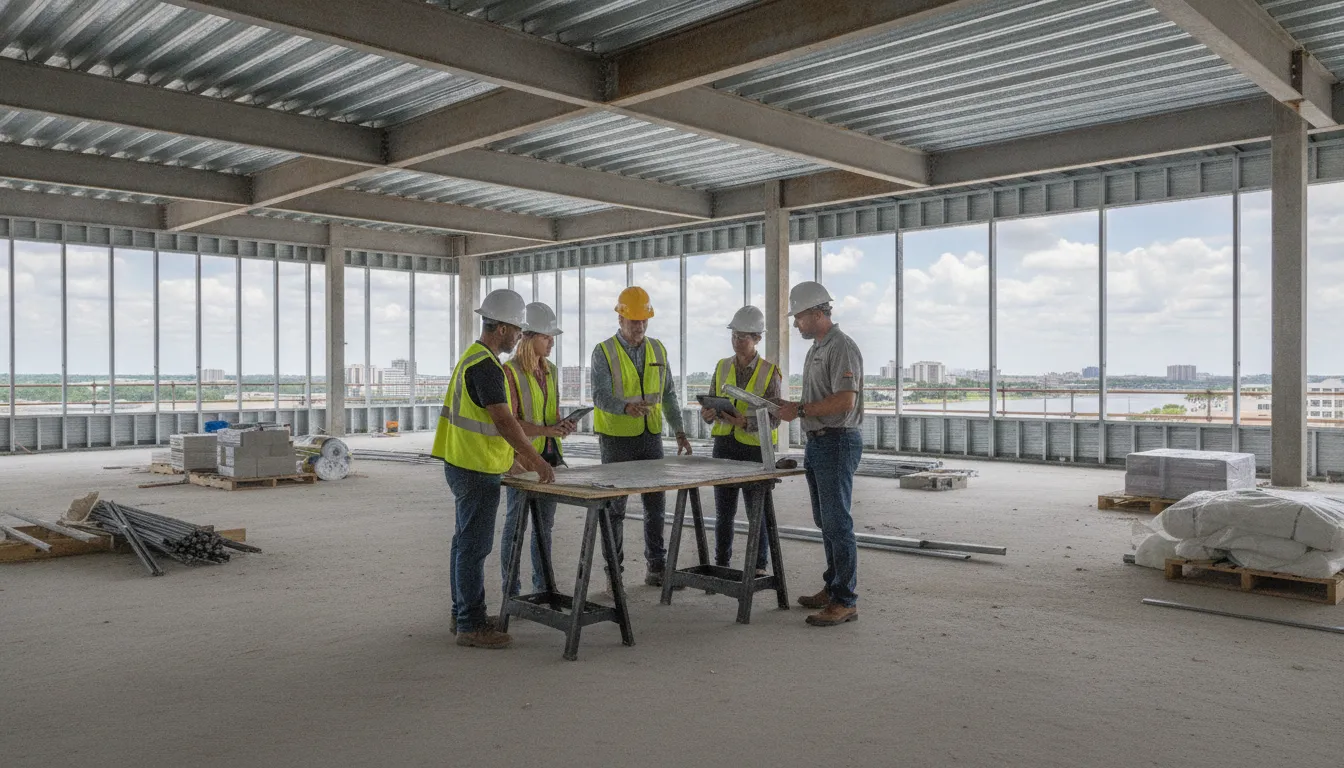
Qualify an office lead by matching the project scope and stage to your delivery capability, procurement path, timing, and access to decision-makers. Treat unverified details as open questions, not as proof that a project is ready to pursue.
A useful screen separates project activity from a real fit for your business. Before assigning a pursuit, record what is known about the intended work. Where the project sits in planning or delivery, who may shape the decision, and what evidence supports each point. Then identify the next action that would reduce uncertainty, such as confirming the owner, intended use, procurement route, or expected timing. A promising signal is a reason to investigate, not a commitment to bid or supply.
GCs should test whether the project aligns with their building type, delivery model, preconstruction strengths, and capacity for the likely scope. Look for a credible path to the owner or development team. And determine whether the project is early enough for preconstruction involvement or already moving toward a defined bid process. Clarify who controls selection and whether an RFP, negotiated pursuit, or another route is indicated. If scope, funding, schedule, or decision authority remains unclear, make those gaps explicit before committing estimating and pursuit resources.
Subs should qualify the work package, not just the project name. Check whether the anticipated trade scope fits your expertise, service area, crew availability, and ability to meet the likely sequence. Identify the GC, construction manager, or other route through which your trade may be engaged. Early contact can be useful when design or planning is still developing, but confirm whether the right next step is a capability introduction. A relationship with the project team, or a response to a defined bid request.
For suppliers, fit depends on whether the product category belongs in the project and whether there is still an opportunity to influence selection or specification. Identify the relevant design professionals, owner representatives, and contractor contacts, then verify which parties can shape requirements or purchasing. A project may be relevant even before procurement begins, but interest alone does not establish that a product will be specified or bought.
Developers should assess whether the opportunity supports their investment and development objectives, and whether site control. Intended use, approvals, delivery partners, and project timing are sufficiently clear to merit diligence. Distinguish a concept or public signal from a viable development path. Map the stakeholders whose decisions could advance or change the project, and note what must be verified before allocating capital or pursuing a partnership.
For every audience, keep a simple record of fit, stage, stakeholder access, timing, and evidence confidence. If a key item is unknown, assign a verification step and revisit the lead when a material detail changes. This keeps office construction opportunities in Jacksonville from being treated as equally actionable when their readiness and relevance may differ.

A useful pipeline separates opportunities by evidence and fit, not by an invented score. A project can be visible without being ready for a conversation, and a large opportunity is not automatically a good pursuit. Set qualitative bands that make the next action clear, then move a lead only when a reliable source confirms a meaningful change.
These are working categories, not permanent labels. A developing lead may become active after a confirmed scope or procurement update. An active pursuit can return to monitor if its schedule changes or the fit no longer holds. Log the source and date behind each status so the team can distinguish a fresh update from an old listing repeated in a new conversation.
For a new office build, qualify the site and development stage, likely delivery needs, and who can clarify the next procurement step. For an existing office being repositioned, renovated, or adapted for another use. Focus instead on the building's intended use, the likely work package, and the owner or tenant representatives involved. Do not assume a renovation follows the same path as a ground-up project. In either case, contact should reflect what is actually verified, with a useful question rather than a claim that the project is ready to bid.
Review the active and developing bands when a verified milestone changes the picture, not simply because a fixed number of days has passed. For a practical approach to qualify Jacksonville contractor leads, keep the same discipline: confirm fit, stage, and a credible relationship path before investing substantial pursuit time.
Mercator.ai's documented coverage is in Texas metros, not Jacksonville, so this framework is independent market-research guidance rather than a claim of local platform availability. Teams assessing the platform in its documented markets can review Mercator.ai's published platform information.

Monitor changes in land-use applications, zoning and hearing dates, commercial permit activity, and Downtown Investment Authority (DIA) project statuses. Treat each record as a dated signal, not proof that a project is funded, actively procuring, or still at the same stage.
Use a recurring review checklist:
Jacksonville's records can support independent local research, but availability and timing of public filings may vary. A missing or unchanged online entry does not establish that no work is planned. Mercator.ai's documented market coverage is Texas-only, so this checklist makes no claim of Florida product coverage.
The Downtown Investment Authority's project listing is a useful starting point for current status. It includes office-related projects such as One Shipyards Place, but a directory entry is a lead, not confirmation of today's schedule, procurement status, or available scope. Check the DIA project listing and confirm details with the owner, developer, or project team before pursuing any specific opportunity.
Start with the City's Planning Application site to search land-use cases by application number, street name, or status, then check the JAXEPICS portal for permit activity. A planning or permit record helps establish location, applicant, and stage, but it does not by itself confirm that a bid is open. Verify the latest record and intended use with the relevant project contacts.
No. Mercator.ai's documented product coverage is limited to Texas markets: Austin, Dallas-Fort Worth, Houston, and San Antonio. This Jacksonville guide explains how to research local opportunities through public sources; it does not indicate that Mercator.ai monitors Jacksonville or offers Florida coverage. Teams evaluating opportunities here should verify leads directly through Jacksonville records and project stakeholders.
Use the research workflow in this guide to clarify the project signals, relationships, and evidence your team needs before choosing a business-development tool. Mercator.ai's documented coverage does not include Jacksonville, so review the published platform and coverage details without assuming Florida availability. To assess whether the platform fits your workflow, review Mercator.ai's platform and coverage information.


.png)