
Case Studies


Book a Live Demo to see which Indiana projects your team can identify before the market does.
For established general contractors, lead generation is rarely about finding more names. It is about recognizing the right owner, developer, or project early enough to build a relationship before the bid list is set. That requires combining trusted networks with signals that reveal commercial activity while it is still taking shape.
In Indiana, general contractor leads indiana come from owner and developer relationships, referrals, public planning activity, and permit-driven discovery. The most predictable pipeline combines those sources with firmographic and project-size filters, so business development teams can prioritize opportunities that fit their capacity, geography, and margin goals.
Indiana's permits, zoning activity, and development filings can expose project momentum earlier than a public invitation to bid. The advantage comes from knowing which signals matter, then connecting them to the relationships and qualification criteria that determine whether a lead deserves executive attention.

In short: The strongest Indiana GC opportunities usually come from three channels: trusted owner and architect relationships. Developer networks that surface projects before a public bid, and municipal records that reveal construction activity early. Public work adds a fourth channel, but it requires the right prequalification and a disciplined approach to agency information.
| Lead channel | Lead time | Best suited to | Key caveat |
|---|---|---|---|
| Owner and architect referrals | Weeks to months | Repeat work and account growth | Depends on demonstrated reliability |
| Developer relationships | Pre-bid, often off-market | Commercial projects around Indianapolis | Requires sustained regional networking |
| Permit and planning discovery | 3 to 6 months early | Private commercial and industrial work | Signal needs research to become an opportunity |
| Public agency work | Formal bid cycle | Highway, road, and public building | Requires INDOT or IDOA prequalification |
No single channel should carry the pipeline. The strongest programs combine owner relationships for repeat work, developer access for pre-bid visibility, permit-driven discovery for timing, and a controlled method for qualified public opportunities.
For established general contractors, a lead is often the next conversation with someone who already knows the firm's work. Owners who have seen consistent quality, reliable communication. And predictable delivery are more likely to bring a GC into a future project or recommend the firm to another decision-maker. The U.S. Small Business Administration identifies referrals from architects and developers as an outcome of demonstrating that kind of reliability, not as a substitute for it. Those relationships compound over time.
That makes the past-owner database more than a CRM archive. It should show which owners have built in Indiana, what project types they pursue, who introduced the relationship, and when a useful follow-up is due. A repeat owner may be a better lead than an unfamiliar project with a larger apparent budget because the trust. Fit, and path to a pre-bid conversation are already established.
Commercial developers are another critical source of general contractor leads in Indiana, particularly around Indianapolis. Relationships with developers can provide visibility into off-market and pre-bid opportunities before a project reaches a broad solicitation. That early visibility matters because a GC can learn the owner's priorities, assess the likely delivery model. And determine whether the project matches its capabilities before estimating resources are committed.
Networking is not a volume exercise. The goal is to stay relevant to developers, architects, and owners whose project profile matches your firm's geographic reach and delivery strengths. Regional industry events, project debriefs, and useful market intelligence create more durable access than generic outreach. For teams expanding their territory, Indiana construction coverage can help organize that market view by location and opportunity type.
Permits are among the most reliable early indicators of construction activity in a specific area. Municipal planning and zoning agendas can provide an earlier signal, especially when a project is still moving through approvals. A BD team that monitors both can identify a project, research the owner and design team, and begin a relevant relationship before the bid calendar becomes crowded. See the practical context behind commercial building permits in Indiana.
Public work follows a separate qualification path. Indiana requires prime contractors to be prequalified by the Indiana Department of Transportation before bidding on covered state or local highway, street, and road projects. For other state and local public works, including building construction, the Indiana Department of Administration Certification Board handles prequalification. Those requirements do not create demand by themselves, but they determine whether a contractor can act on the opportunity once it appears.
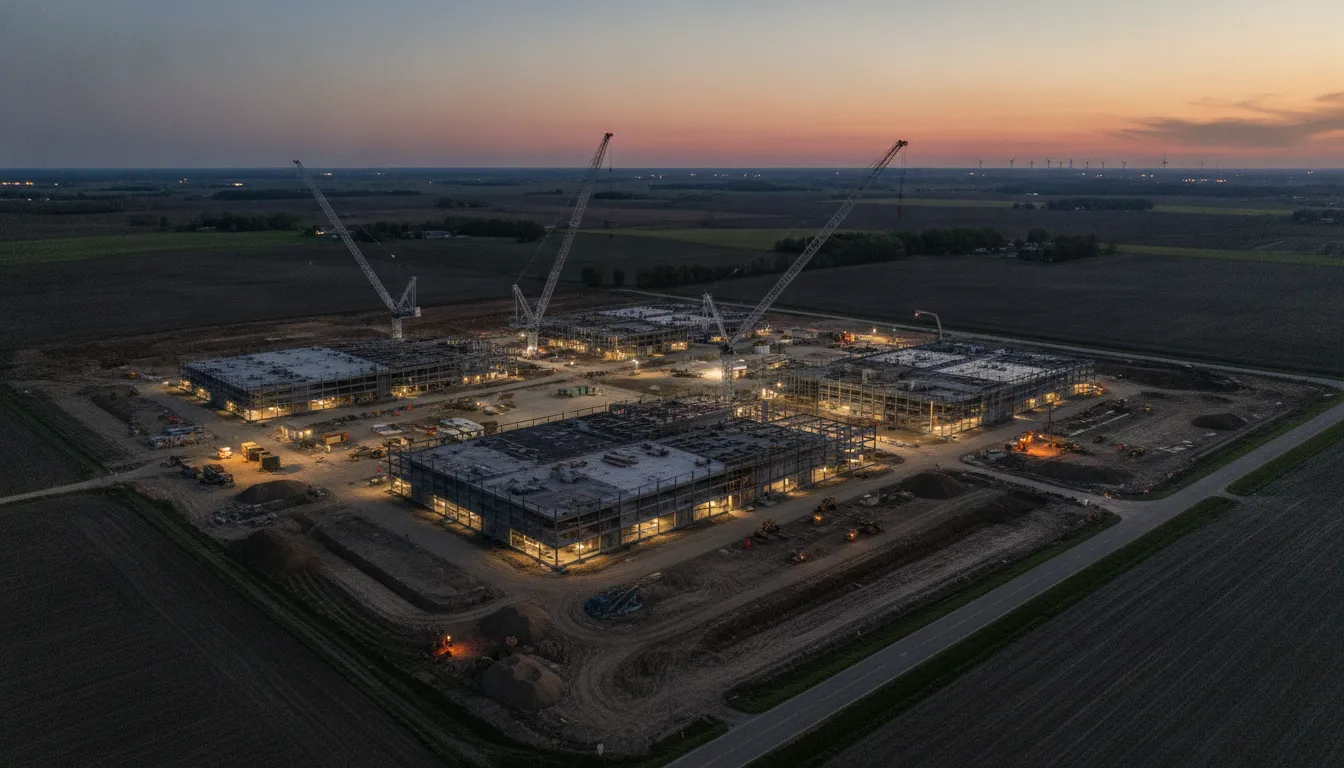
In short: Early project intelligence helps Indiana GCs identify commercial opportunities while plans are still forming, giving business development teams time to research the owner. Build the right relationship, and prepare before a project appears on a public bid board.
Public bid boards are useful, but they often represent the end of the discovery window. By the time a solicitation is posted, established firms may already understand the owner, anticipate the delivery model, and have relationships with the design and development team. A stronger approach is to monitor signals that appear earlier, then turn those signals into informed conversations.
Permits are among the most reliable sources of early project intelligence because they connect a specific construction activity to a location and jurisdiction. The Indiana business guide identifies permits as a useful signal of upcoming construction activity in a defined area. For a GC pursuing general contractor leads in Indiana, that signal can be enriched with title transfers. Rezoning cases, municipal planning agendas, site-plan activity, and changes in project ownership.
None of these indicators is a guaranteed contract. Their value is timing. A permit application may reveal the project type, address, applicant, and likely stakeholders before the work reaches a public procurement portal. A rezoning request can identify a developer's intended use before design is complete. A title transfer can point to a new owner or development partner worth researching. Together, these signals help a BD team distinguish an emerging opportunity from a project that is already saturated with bidders.
Mercator.ai's approach to early project detection in construction is built around finding those signals and organizing them into a usable pipeline. The objective is not to collect more alerts. It is to give a GC enough context to decide who to contact, when to engage, and what capabilities to lead with.
Permit-driven discovery is especially valuable for private commercial work, while infrastructure intelligence can support a steadier, longer-range pipeline. Indiana's INDOT contract resources show how tracking infrastructure projects can provide a consistent source of multi-year opportunities for larger GCs capable of managing extended programs. State budget allocations can add another layer of visibility because funding decisions often signal future project volume before individual solicitations are released.
The scale of Indiana's current development makes early visibility more consequential. In February 2026, Gov. Braun broke ground on Meta's more than $10 billion data-center campus in the LEAP District. The campus is planned for 13 buildings and is expected to create peak construction employment of more than 4,000 workers. The Indiana Economic Development Corporation also reports that the LEAP District has attracted more than $23 billion in investment since 2022. Source: Indiana Economic Development Corporation Projects of this scale create secondary opportunities across site work, utilities, civil construction, logistics, and specialized trades. But the firms positioned to respond first are the ones tracking the market before bid activity becomes obvious.
That is the practical advantage of early intelligence: more time to qualify the opportunity, map the stakeholders, and build credibility before price becomes the only visible differentiator.

In short: Qualify a GC lead by matching the prospect's company size, revenue, project history, safety record, financial health, location, and project budget to your firm's actual delivery capacity. A lead is only valuable when the buyer, project, and commercial fit line up.
Start with firmographics before investing significant time in outreach. Company size and annual revenue indicate whether a prospect has the operational scale. Bonding capacity, and procurement process to support the type of work your firm wants to win. They also help separate a credible opportunity from a project that is too small, too speculative, or too far outside your delivery model. Indiana's business guidance supports using firmographics to align leads with operational capacity, rather than treating every inquiry as equally qualified. Source: Indiana business guidance.
For established GCs, the next screen should be performance and risk. Review the prospect's project history, the types of facilities it has delivered, and whether its past work resembles your target scope. Check safety records, financial health, and evidence of reliable execution. These are not abstract profile fields. They are practical indicators of whether a buyer can fund the work, manage decisions, and support a predictable contract relationship. INDOT's prequalification framework is a useful real-world model because it evaluates whether companies are eligible and capable of performing public work. With compliance and documented qualifications playing a central role. Review INDOT contractor prequalification requirements.
Project size and budget should be explicit qualification criteria, not details discovered after a proposal team is already committed. Capture the estimated contract value, construction type, schedule, delivery method, location, and likely procurement stage. Then compare those details with your firm's backlog, trade coverage, estimating bandwidth, and minimum acceptable margin. A $2 million opportunity may be strategically useful for one contractor and a distraction for another. The same is true of a large project that exceeds available bonding, staffing, or specialty-partner capacity.
Public work offers another clear framework for sorting opportunities. Indiana requires prime contractors to be prequalified by INDOT before bidding on state or local highway, street, or road projects. For other state and local public works, including building construction, the Indiana Department of Administration Certification Board handles prequalification. Those distinctions help BD teams identify the governing agency, required work classifications, and qualification path before labeling a lead sales-ready. See Indiana's public-works prequalification framework.
Finally, add a stability and timing check. Prioritize buyers that have been active in Indiana for more than five years when stability matters to the account strategy. While flagging newer firms for deeper diligence rather than automatically excluding them. Record the qualification evidence in one shared view so estimating, operations, and leadership see the same facts. That discipline turns general contractor leads indiana into a focused pipeline instead of a list of unranked names.

Predictable growth in commercial construction does not come from sending more cold emails. It comes from knowing which owners, developers, architects, and repeat clients are shaping projects before the bid is public. Then becoming a trusted resource before competitors enter the conversation.
That approach combines early project intelligence with active networking and owner engagement. Permits and municipal activity can indicate where construction is moving. But relationships explain who is behind the project, what matters to them, and when a general contractor should engage. The U.S. Small Business Administration identifies permit-driven discovery and active networking with developers and owner networks as complementary parts of a predictable pipeline. Learn more about building a contract-winning network.
Indianapolis industry events are not simply opportunities to collect business cards. They are places to build familiarity with regional developers, owners, architects, lenders, and project advisors. Networking at industry events in Indianapolis is a proven way for business development executives to develop relationships with key regional developers. According to research from the Kelley School of Business. Read the Indiana economic outlook.
The strongest teams make each interaction useful and trackable. Before an event, identify the owners and developers most aligned with your project types, geography, and delivery capacity. During the event, ask about upcoming capital plans, site constraints, procurement timing, and the problems an owner is trying to solve. Afterward, record the conversation, the likely project window, the decision makers, and a specific next step. A relevant introduction or useful piece of information is more valuable than a generic follow-up email.
A past project should not disappear from the pipeline after closeout. Maintaining a database of past project owners can foster repeat business, a hallmark of stable general contractor firms. Keep more than contact details. Record the owner's asset types, preferred delivery method, markets, prior project outcomes, expansion plans, and the date of the last meaningful conversation.
That history makes follow-up timely rather than transactional. A quarterly check-in, a note about a relevant site or regulatory change, or an introduction to a trusted partner can keep your firm present without creating pressure. Over time, the database becomes institutional knowledge that supports repeat work even when the original relationship owner changes roles.
Early engagement changes the quality of the opportunity. When a GC connects with an owner while the project is still being defined. The team can understand operating requirements, constructability concerns, schedule priorities, and budget pressure before specifications harden. Early project engagement can help GCs influence specifications and increase the likelihood of securing the work. That is a consultative role, not a sales pitch.
For teams pursuing general contractor lead generation, the practical advantage is timing. Use market signals to identify likely projects, use networking to validate the relationship map, and use owner conversations to earn a place in the planning process. Cold outreach may create activity, but relationship-led intelligence creates better access and better qualification.
The bottom line: A relationship-led pipeline combines early project intelligence, Indianapolis networking, disciplined owner records, and engagement before specifications are finalized. GCs that build trust before the bid can influence the opportunity instead of competing only after it becomes public.
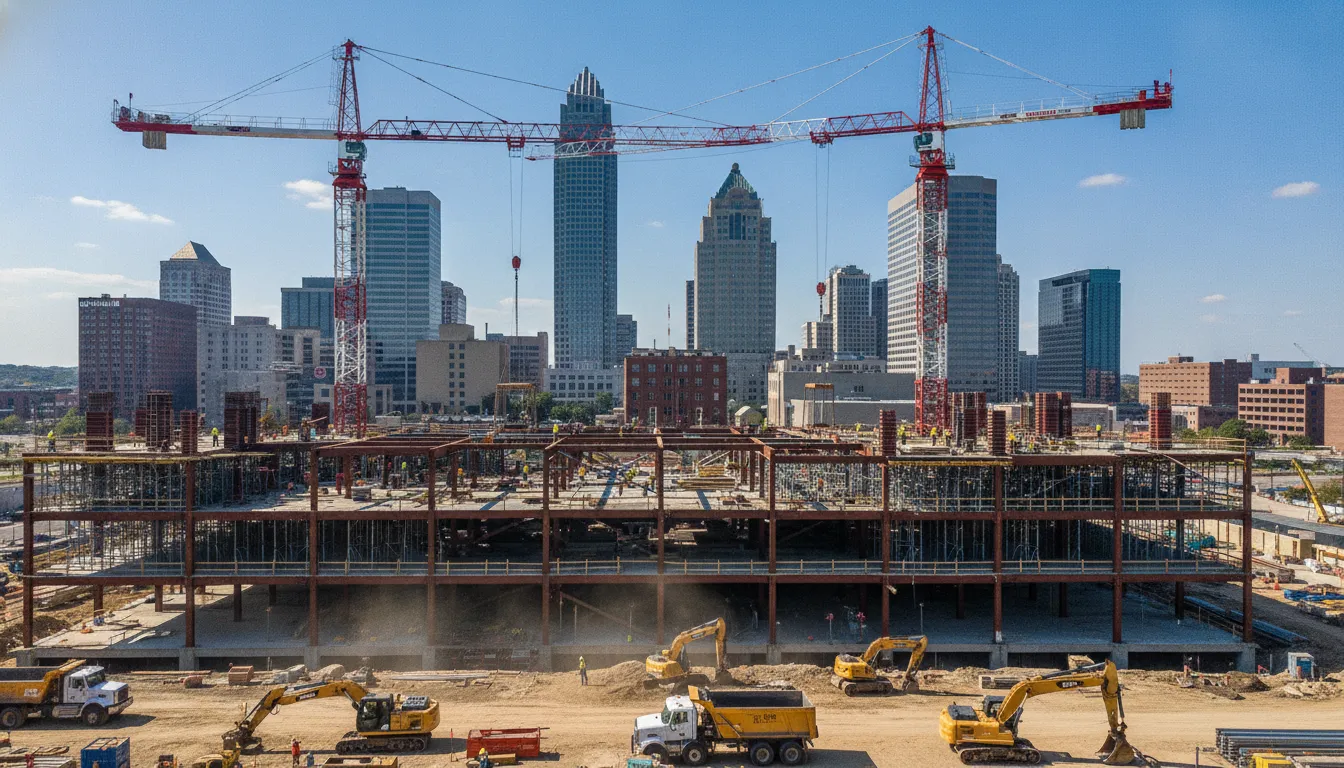
Indiana's opportunity set is expanding, but growth does not mean every project deserves pursuit. For business development leaders, the advantage comes from reading market signals early enough to align estimating capacity. Workforce, trade partners, and owner relationships before a project becomes a crowded bid.
Construction employment in Indiana was 15% higher in December 2023 than in January 2019, a clear indication of substantial sector growth. The construction industry is also playing a vital role in regional economic growth and workforce development. Those signals support continued demand, but they also raise a practical question: can your team identify the right opportunities without overwhelming estimators with low-fit leads?
Track employment and regional activity alongside the locations, building types, and project sizes your firm can execute profitably. A market that is growing statewide may still produce very different lead quality in Indianapolis, northern Indiana, and smaller regional markets. The best why general contractors use construction data is not volume for its own sake. It is the ability to connect market movement to a defined account and project strategy.
The data-center boom is one of the most consequential signals to monitor. In February 2026, Governor Braun broke ground on Meta's more than $10 billion data-center campus at the LEAP District. The Indiana Economic Development Corporation reports that the district has attracted more than $23 billion in investment since 2022. A campus of that scale can create work well beyond the primary structures, including site development, utilities, roads, electrical systems, logistics, and supporting commercial facilities.
For GCs, the signal is not simply that one large project exists. It is that major investment can reshape supplier networks, labor competition, infrastructure priorities, and adjacent development across a region. Watch planning activity, land transactions, utility expansion, and public works commitments around major investment zones. These indicators can reveal where future scopes may emerge and what capabilities will be scarce.
State budget allocations are another leading indicator. Monitoring Indiana infrastructure commitments can signal long-term project volume, particularly for firms equipped to pursue multi-year public work. Pair budget data with procurement schedules and project-level notices rather than treating an allocation as guaranteed revenue. Public opportunities still require the right qualifications, timing, and delivery capacity.
Housing forecasts provide a different but complementary signal. Indiana's 2026 housing outlook influences residential project volumes and contractor bidding strategies across the state. Housing demand can affect subcontractor availability, material competition, land development, and the pace of commercial construction that serves growing communities. Use the outlook to pressure-test assumptions about labor, schedule, and geographic expansion.
The bottom line: Watch employment growth, data-center investment, state infrastructure allocations, and housing forecasts together. The strongest general contractor leads indiana strategy turns those broad signals into specific project, owner, location, and timing intelligence before the bid list is set.

A dependable pipeline is not the result of finding more names. It comes from combining early project intelligence with disciplined relationship management, then giving business development leaders a clear way to decide which opportunities deserve attention. For Indiana general contractors, that means seeing projects while they are still taking shape. Connecting them to the right owner or developer, and preserving the relationship after the work is won.
The foundation is a repeatable intelligence process. Permit-driven discovery and active networking with developers and owner networks are established components of a predictable contracting pipeline, not competing tactics. The U.S. Small Business Administration's contracting guidance similarly emphasizes the value of early opportunity identification and relationship development. Municipal filings can reveal movement before a formal bid exists, while conversations with owners add context that a project record alone cannot provide.
Mercator.ai brings those signals into one operating view. The platform tracks more than 65,000 active private commercial construction projects and can surface projects three to six months before they become broadly visible through municipal data. Including permits, title transfers, rezoning activity, and development filings. That lead time gives a GC an opportunity to understand the project, map the decision-makers, and engage before the procurement process becomes crowded.
The advantage is not simply having more data. It is reducing the time between discovery and a useful next action. Mercator.ai delivers 60% faster lead qualification and 3x more early project discovery, helping BD teams spend less time sorting disconnected signals and more time preparing relevant conversations. The right workflow should answer practical questions quickly: Who owns the project? What type and scale of work is likely? Where does it fit the firm's capabilities? Which existing relationship can open the door?
A strong Indiana pipeline also remembers what the team has learned. Maintaining a database of past project owners can foster repeat business, a pattern associated with stable general contractor firms, according to the SBA. That record should capture more than a contact name. Track project history, market, decision-maker role, timing, outcome, and the next credible reason to reconnect. This turns completed work into a source of future opportunity rather than a closed file.
Review the pipeline on a consistent cadence. Remove projects that no longer fit, promote opportunities with verified timing and decision-maker access, and assign ownership for every meaningful next step. A shared system for construction project pipeline management makes that discipline visible to executives without forcing them to reconstruct status from spreadsheets, inboxes, and individual memory.
The bottom line: The most reliable path to general contractor leads in Indiana is a connected system: detect private projects early. Qualify them against your firm's capacity, engage the right owners and developers, and retain the relationship data that creates repeat business. Mercator.ai helps construction teams move from scattered signals to a prioritized, measurable pipeline, with projects surfaced months earlier and qualification completed faster.
Book a Demo to see how Mercator.ai can help build a more predictable Indiana pipeline.
Use three channels together: referrals from architects, developers, and past owners; municipal planning, zoning, and permit activity; and relationship-building through relevant Indiana industry events. Permits can signal upcoming construction activity in a specific area, while early owner engagement gives your team more time to understand the project and influence specifications. The strongest pipeline combines early intelligence with consistent delivery that earns repeat referrals. Sources: Indiana business guidance and SBA contracting guidance.
There is no useful universal price. Set your ceiling from expected gross profit, win rate, sales-cycle cost, and the lead's fit with your backlog and delivery capacity. A project signal that arrives before a public bid may be more valuable than a late-stage inquiry. But only if the owner, project size, location, and schedule match your firm's operating model. Track cost per qualified opportunity and cost per won project, not raw lead volume.
Start with firmographics and project fit: owner or developer stability, location, project type, estimated size, budget, timing, and your firm's relevant project history. For public work, confirm the required qualification path and work type. INDOT prequalifies prime contractors bidding on state or local highway, street, or road projects. While the IDOA Certification Board handles other state and local public works such as building construction. Source: INDOT contractor prequalification.
It depends on the work. Indiana requires INDOT prequalification before a company performs covered state or local highway, street, or road work. Other state and local public works, including building construction, follow the IDOA Certification Board's prequalification process. Treat qualification status, safety record, financial health, and relevant project history as part of lead qualification before investing estimating resources. Source: INDOT contractor prequalification.
Finding the right general contractor leads in Indiana is not about gathering more names. It is about seeing private commercial projects early, qualifying them against your firm's capacity, and engaging the right owners and developers before the procurement process gets crowded.
Mercator.ai tracks more than 65,000 active private commercial construction projects and can surface opportunities three to six months before they become broadly visible. Turning scattered municipal signals into a prioritized pipeline. Teams using the platform report 60% faster lead qualification and 3x more early project discovery. So business development leaders can focus on conversations that matter instead of sorting disconnected data.
Book a Demo to see the Indiana projects Mercator.ai can uncover for your team.


.png)